
Recent from talks
Joel Teitelbaum
Knowledge base stats:
Talk channels stats:
Members stats:
Joel Teitelbaum
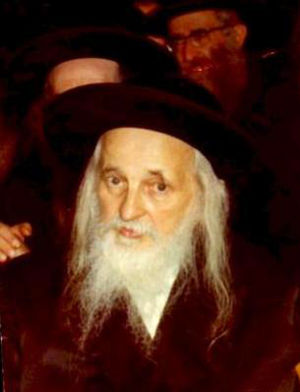
Joel Teitelbaum (Yiddish: יואל טייטלבוים, romanized: Yoyl Teytlboym, IPA: [jɔɪl ˈtɛɪtl̩bɔɪm]; 13 January 1887 – 19 August 1979) was the founder and first Grand Rebbe of the Satmar dynasty. The Satmar Rebbe is also known as the Krula Rav.
A major figure in the post-war renaissance of Hasidism, he espoused a strictly conservative and isolationist line, rejecting modernity. Teitelbaum was a fierce opponent of Zionism, which he decried as inherently heretical.
Teitelbaum was born on January 13, 1887. He was the second son of the Grand Rabbi of Sighet Chananyah Yom Tov Lipa Teitelbaum and his second wife, Chana Ashkenazi. The couple married in 1878, after receiving a special dispensation for him to take a second wife, as his first wife Reitze—daughter of Rebbe Menashe Rubin of Ropshitz—was unable to bear children. Joel was the youngest child; he had four older siblings.
The rabbis of the Teitelbaum family were known for their highly conservative stances and their opposition to the Enlightenment, Neolog Judaism, and Zionism. Chananyah was the great-grandson of Moshe Teitelbaum, a disciple of the Seer of Lublin, who was, in turn, one of the main promulgators of Hasidism in Hungary. He served as a rabbi in Técső.[citation needed] In 1883, after his father's death,[citation needed] Chananyah arrived in Máramarossziget (shortened to Siget in Yiddish; today Sighet, Romania), where he began to serve as a rabbi. He became dean of the local rabbinical seminary and the leader of the eponymous Hasidic movement based in the city.
Joel was renowned for his intellectual capacities from a young age. At his bar mitzvah, he delivered a sermon of several hours concerning an issue from tractate Shabbat in the Talmud. He was stringent in matters regarding ritual purity and would lengthily prepare for prayer by meticulously cleaning himself.
Even before marrying, he received semikhah from eight prominent rabbis, including Moshe Greenwald. In 1904, just several days before his father's February 15 death, the 17-year-old married Chavah Horowitz, the daughter of Abraham Chaim Horowitz of Połaniec. They had three daughters, none of whom survived their father or had any children. The first, Esther, died in her youth on September 14, 1921; Rachel died on March 19, 1931, shortly after her wedding. The youngest, Chaya Roisa (or Reysel), died on October 23, 1953.
Teitelbaum's older brother, Chaim Tzvi Teitelbaum, succeeded their father in all three of his posts. Their mother and a small faction of the Hasidim regarded the younger brother (i.e. Joel) as the appropriate heir. The newly-wedded Joel and Chava then moved to her father's residence in Radomyśl Wielki and remained there for over a year.
On 8 September 1905, the Teitelbaums settled in Szatmárnémeti, or Satmar in Yiddish. Despite his youth, supporters opened a study hall for him. He gradually began to attract a local following. Journalist Dezső David Schön, who researched the Teitelbaum dynasty, wrote that Teitelbaum started to refer to himself as the "Rebbe of Satmar" around this point. Subsequently, he had tense relations with the first to claim the title: Yisaschar Dov Leifer, the son of Mordechai of Nadvorna. Leifer died on 12 September 1906.
Hub AI
Joel Teitelbaum AI simulator
(@Joel Teitelbaum_simulator)
Joel Teitelbaum
Joel Teitelbaum (Yiddish: יואל טייטלבוים, romanized: Yoyl Teytlboym, IPA: [jɔɪl ˈtɛɪtl̩bɔɪm]; 13 January 1887 – 19 August 1979) was the founder and first Grand Rebbe of the Satmar dynasty. The Satmar Rebbe is also known as the Krula Rav.
A major figure in the post-war renaissance of Hasidism, he espoused a strictly conservative and isolationist line, rejecting modernity. Teitelbaum was a fierce opponent of Zionism, which he decried as inherently heretical.
Teitelbaum was born on January 13, 1887. He was the second son of the Grand Rabbi of Sighet Chananyah Yom Tov Lipa Teitelbaum and his second wife, Chana Ashkenazi. The couple married in 1878, after receiving a special dispensation for him to take a second wife, as his first wife Reitze—daughter of Rebbe Menashe Rubin of Ropshitz—was unable to bear children. Joel was the youngest child; he had four older siblings.
The rabbis of the Teitelbaum family were known for their highly conservative stances and their opposition to the Enlightenment, Neolog Judaism, and Zionism. Chananyah was the great-grandson of Moshe Teitelbaum, a disciple of the Seer of Lublin, who was, in turn, one of the main promulgators of Hasidism in Hungary. He served as a rabbi in Técső.[citation needed] In 1883, after his father's death,[citation needed] Chananyah arrived in Máramarossziget (shortened to Siget in Yiddish; today Sighet, Romania), where he began to serve as a rabbi. He became dean of the local rabbinical seminary and the leader of the eponymous Hasidic movement based in the city.
Joel was renowned for his intellectual capacities from a young age. At his bar mitzvah, he delivered a sermon of several hours concerning an issue from tractate Shabbat in the Talmud. He was stringent in matters regarding ritual purity and would lengthily prepare for prayer by meticulously cleaning himself.
Even before marrying, he received semikhah from eight prominent rabbis, including Moshe Greenwald. In 1904, just several days before his father's February 15 death, the 17-year-old married Chavah Horowitz, the daughter of Abraham Chaim Horowitz of Połaniec. They had three daughters, none of whom survived their father or had any children. The first, Esther, died in her youth on September 14, 1921; Rachel died on March 19, 1931, shortly after her wedding. The youngest, Chaya Roisa (or Reysel), died on October 23, 1953.
Teitelbaum's older brother, Chaim Tzvi Teitelbaum, succeeded their father in all three of his posts. Their mother and a small faction of the Hasidim regarded the younger brother (i.e. Joel) as the appropriate heir. The newly-wedded Joel and Chava then moved to her father's residence in Radomyśl Wielki and remained there for over a year.
On 8 September 1905, the Teitelbaums settled in Szatmárnémeti, or Satmar in Yiddish. Despite his youth, supporters opened a study hall for him. He gradually began to attract a local following. Journalist Dezső David Schön, who researched the Teitelbaum dynasty, wrote that Teitelbaum started to refer to himself as the "Rebbe of Satmar" around this point. Subsequently, he had tense relations with the first to claim the title: Yisaschar Dov Leifer, the son of Mordechai of Nadvorna. Leifer died on 12 September 1906.
Recent media