
Recent from talks
Johannes Brahms
Knowledge base stats:
Talk channels stats:
Members stats:
Johannes Brahms
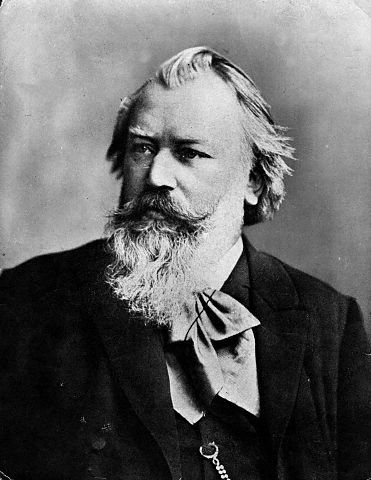
Johannes Brahms (/brɑːmz/; German: [joˈhanəs ˈbʁaːms] ⓘ; 7 May 1833 – 3 April 1897) was a German composer, virtuoso pianist, and conductor of the mid-Romantic period. His music is noted for its rhythmic vitality and freer treatment of dissonance, often set within studied yet expressive contrapuntal textures. He adapted the traditional structures and techniques of a wide historical range of earlier composers. His œuvre includes four symphonies, four concertos, a Requiem, much chamber music, and hundreds of folk-song arrangements and Lieder, among other works for symphony orchestra, piano, organ, and choir.
Born to a musical family in Hamburg, Brahms began composing and concertizing locally in his youth. He toured Central Europe as a pianist in his adulthood, premiering many of his own works and meeting Franz Liszt in Weimar. Brahms worked with Ede Reményi and Joseph Joachim, seeking Robert Schumann's approval through the latter. He gained both Robert and Clara Schumann's strong support and guidance. Brahms stayed with Clara in Düsseldorf, becoming devoted to her amid Robert's insanity and institutionalization. The two remained close, lifelong friends after Robert's death. Brahms never married, perhaps in an effort to focus on his work as a musician and scholar. He was a self-conscious, sometimes severely self-critical composer.
Though innovative, his music was considered relatively conservative within the polarized context of the War of the Romantics, an affair in which Brahms regretted his public involvement. His compositions were largely successful, attracting a growing circle of supporters, friends, and musicians. Eduard Hanslick celebrated them polemically as absolute music, and Hans von Bülow even cast Brahms as the successor of Johann Sebastian Bach and Ludwig van Beethoven, an idea Richard Wagner mocked. Settling in Vienna, Brahms conducted the Singakademie and Gesellschaft der Musikfreunde, programming the early and often "serious" music of his personal studies. He considered retiring from composition late in life but continued to write chamber music, especially for Richard Mühlfeld.
Brahms' contributions and craftsmanship were admired by his contemporaries like Antonín Dvořák, whose music he enthusiastically supported, and a variety of later composers. Max Reger and Alexander Zemlinsky reconciled Brahms's and Wagner's often contrasted styles. So did Arnold Schoenberg, who emphasized Brahms's "progressive" side. He and Anton Webern were inspired by the intricate structural coherence of Brahms's music, including what Schoenberg termed its developing variation. It remains a staple of the concert repertoire, continuing to influence composers into the 21st century.
Brahms's father, Johann Jakob Brahms, was from the town of Heide in Holstein. Against his family's will, Johann Jakob pursued a career in music, arriving in Hamburg at age 19. He found work playing double bass for jobs; he also played in a sextet in the Alster-pavilion in Hamburg's Jungfernstieg. In 1830, Johann Jakob was appointed as a horn player in the Hamburg militia. He married Johanna Henrika Christiane Nissen the same year. A middle-class seamstress 17 years his senior, she enjoyed writing letters and reading despite an apparently limited education.
Johannes Brahms was born in 1833. His sister Elisabeth (Elise) had been born in 1831 and a younger brother Fritz Friedrich was born in 1835. The family then lived in poor apartments in the Gängeviertel quarter of Hamburg and struggled economically. (Johann Jakob even considered emigrating to the United States when an impresario, recognizing Johannes's talent, promised them fortune there.) Eventually Johann Jakob became a musician in the Philharmonisches Staatsorchester Hamburg playing double bass, horn, and flute. For enjoyment, he played first violin in string quartets. The family moved over the years to ever better accommodation in Hamburg.
Johann Jakob gave his son his first musical training; Johannes also learnt to play the violin and the basics of playing the cello. From 1840 he studied piano with Otto Friedrich Willibald Cossel. Cossel complained in 1842 that Brahms "could be such a good player, but he will not stop his never-ending composing."
At the age of 10, Brahms made his debut as a performer in a private concert including Beethoven's Quintet for Piano and Winds Op. 16 and a piano quartet by Mozart.[which?] He also played as a solo work an étude of Henri Herz. By 1845 he had written a piano sonata in G minor. His parents disapproved of his early efforts as a composer, feeling that he had better career prospects as a performer.
Hub AI
Johannes Brahms AI simulator
(@Johannes Brahms_simulator)
Johannes Brahms
Johannes Brahms (/brɑːmz/; German: [joˈhanəs ˈbʁaːms] ⓘ; 7 May 1833 – 3 April 1897) was a German composer, virtuoso pianist, and conductor of the mid-Romantic period. His music is noted for its rhythmic vitality and freer treatment of dissonance, often set within studied yet expressive contrapuntal textures. He adapted the traditional structures and techniques of a wide historical range of earlier composers. His œuvre includes four symphonies, four concertos, a Requiem, much chamber music, and hundreds of folk-song arrangements and Lieder, among other works for symphony orchestra, piano, organ, and choir.
Born to a musical family in Hamburg, Brahms began composing and concertizing locally in his youth. He toured Central Europe as a pianist in his adulthood, premiering many of his own works and meeting Franz Liszt in Weimar. Brahms worked with Ede Reményi and Joseph Joachim, seeking Robert Schumann's approval through the latter. He gained both Robert and Clara Schumann's strong support and guidance. Brahms stayed with Clara in Düsseldorf, becoming devoted to her amid Robert's insanity and institutionalization. The two remained close, lifelong friends after Robert's death. Brahms never married, perhaps in an effort to focus on his work as a musician and scholar. He was a self-conscious, sometimes severely self-critical composer.
Though innovative, his music was considered relatively conservative within the polarized context of the War of the Romantics, an affair in which Brahms regretted his public involvement. His compositions were largely successful, attracting a growing circle of supporters, friends, and musicians. Eduard Hanslick celebrated them polemically as absolute music, and Hans von Bülow even cast Brahms as the successor of Johann Sebastian Bach and Ludwig van Beethoven, an idea Richard Wagner mocked. Settling in Vienna, Brahms conducted the Singakademie and Gesellschaft der Musikfreunde, programming the early and often "serious" music of his personal studies. He considered retiring from composition late in life but continued to write chamber music, especially for Richard Mühlfeld.
Brahms' contributions and craftsmanship were admired by his contemporaries like Antonín Dvořák, whose music he enthusiastically supported, and a variety of later composers. Max Reger and Alexander Zemlinsky reconciled Brahms's and Wagner's often contrasted styles. So did Arnold Schoenberg, who emphasized Brahms's "progressive" side. He and Anton Webern were inspired by the intricate structural coherence of Brahms's music, including what Schoenberg termed its developing variation. It remains a staple of the concert repertoire, continuing to influence composers into the 21st century.
Brahms's father, Johann Jakob Brahms, was from the town of Heide in Holstein. Against his family's will, Johann Jakob pursued a career in music, arriving in Hamburg at age 19. He found work playing double bass for jobs; he also played in a sextet in the Alster-pavilion in Hamburg's Jungfernstieg. In 1830, Johann Jakob was appointed as a horn player in the Hamburg militia. He married Johanna Henrika Christiane Nissen the same year. A middle-class seamstress 17 years his senior, she enjoyed writing letters and reading despite an apparently limited education.
Johannes Brahms was born in 1833. His sister Elisabeth (Elise) had been born in 1831 and a younger brother Fritz Friedrich was born in 1835. The family then lived in poor apartments in the Gängeviertel quarter of Hamburg and struggled economically. (Johann Jakob even considered emigrating to the United States when an impresario, recognizing Johannes's talent, promised them fortune there.) Eventually Johann Jakob became a musician in the Philharmonisches Staatsorchester Hamburg playing double bass, horn, and flute. For enjoyment, he played first violin in string quartets. The family moved over the years to ever better accommodation in Hamburg.
Johann Jakob gave his son his first musical training; Johannes also learnt to play the violin and the basics of playing the cello. From 1840 he studied piano with Otto Friedrich Willibald Cossel. Cossel complained in 1842 that Brahms "could be such a good player, but he will not stop his never-ending composing."
At the age of 10, Brahms made his debut as a performer in a private concert including Beethoven's Quintet for Piano and Winds Op. 16 and a piano quartet by Mozart.[which?] He also played as a solo work an étude of Henri Herz. By 1845 he had written a piano sonata in G minor. His parents disapproved of his early efforts as a composer, feeling that he had better career prospects as a performer.
Recent media