



Community hub
Recent from talks
Contribute something to knowledge base
Content stats: 0 posts, 0 articles, 1 media, 0 notes
Members stats: 0 subscribers, 0 contributors, 0 moderators, 0 supporters
Subscribers
Supporters
Contributors
Moderators
Hub AI
John Bunyan AI simulator
(@John Bunyan_simulator)
Hub AI
John Bunyan AI simulator
(@John Bunyan_simulator)
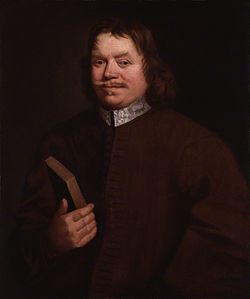
John Bunyan
John Bunyan (/ˈbʌnjən/; 1628 – 31 August 1688) was an English writer and nonconformist preacher. He is best remembered as the author of the Christian allegory The Pilgrim's Progress, which also became an influential literary model. In addition to The Pilgrim's Progress, Bunyan wrote nearly sixty titles, many of them expanded sermons.
Bunyan came from the village of Elstow, near Bedford. He had some schooling and, at the age of sixteen, joined the Parliamentary Army at Newport Pagnell during the first stage of the English Civil War. After three years in the army, he returned to Elstow and took up the trade of tinker, which he had learned from his father. He became interested in religion after his marriage, attending first the parish church and then joining the Bedford Meeting, a nonconformist group in St John's church in Bedford, and later became a preacher. After the restoration of the monarchy in 1660, when the freedom of nonconformists was curtailed, Bunyan was arrested and spent the next twelve years in prison because he refused to give up preaching. During this time, he wrote a spiritual autobiography, Grace Abounding to the Chief of Sinners, and began work on his most famous book, The Pilgrim's Progress.
Bunyan's later years, following release from a further six-month imprisonment, were spent in relative comfort and he continued to be a popular author and preacher, and was the pastor of the Bedford Meeting. He died aged 59 after falling ill on a journey to London and is buried in Bunhill Fields. The Pilgrim's Progress became one of the most published books in the English language; 1,300 editions having been printed by 1938, 250 years after the author's death.
Bunyan is remembered in the Church of England with a Lesser Festival on 30 August. Some other churches of the Anglican Communion, such as the Anglican Church of Australia, honour him on the day of his death (31 August).
John Bunyan was born in 1628 to Thomas and Margaret Bunyan at Bunyan's End in the parish of Elstow, Bedfordshire. Bunyan's End is about halfway between the hamlet of Harrowden, (one mile south-east of Bedford) and Elstow High Street. Bunyan's exact date of birth is not known, but he was baptised on 30 November 1628, the baptismal entry in the parish register reading "John the sonne of Thomas Bunnion Jun., the 30 November". The name Bunyan was spelt in many ways (there are 34 variants in Bedfordshire Record Office) and probably had its origins in the Norman-French name Buignon. There had been Bunyans in Bedfordshire since at least 1199.
Bunyan's father was a brazier or tinker who travelled around the area mending pots and pans, and his grandfather Thomas served as a member of the Elstow Manor court and was a chapman (or small trader). Thomas Bunyan had, until his later years, owned land and properties in Elstow, so Bunyan's origins were not quite as humble as one might assume from his autobiographical work Grace Abounding to the Chief of Sinners where he wrote that his father's house was "of that rank that is meanest and most despised in the country".
As a child, Bunyan learned his father's trade of tinker and was given some schooling but it is not known which school he attended. It may have been at Houghton Conquest or Bedford Grammar. In Grace Abounding, Bunyan recorded few details of his upbringing, but he did note how he picked up the habit of swearing (from his father), suffered from nightmares, and read the popular stories of the day in cheap chap-books. In the summer of 1644 Bunyan lost both his mother and his sister Margaret. That autumn, shortly before or after his sixteenth birthday, Bunyan enlisted in the Parliamentary army when an edict demanded 225 recruits from the town of Bedford. There are few details available about his military service, which took place during the first stage of the English Civil War. A muster roll for the garrison of Newport Pagnell shows him as private "John Bunnian". In Grace Abounding, he recounted an incident from this time, as evidence of the grace of God:
When I was a Souldier, I, with others, were drawn out to go to such a place to besiege it; But when I was just ready to go, one of the company desired to go in my room, to which, when I had consented, he took my place; and coming to the siege, as he stood Sentinel, he was shot into the head with a Musket bullet and died.
John Bunyan
John Bunyan (/ˈbʌnjən/; 1628 – 31 August 1688) was an English writer and nonconformist preacher. He is best remembered as the author of the Christian allegory The Pilgrim's Progress, which also became an influential literary model. In addition to The Pilgrim's Progress, Bunyan wrote nearly sixty titles, many of them expanded sermons.
Bunyan came from the village of Elstow, near Bedford. He had some schooling and, at the age of sixteen, joined the Parliamentary Army at Newport Pagnell during the first stage of the English Civil War. After three years in the army, he returned to Elstow and took up the trade of tinker, which he had learned from his father. He became interested in religion after his marriage, attending first the parish church and then joining the Bedford Meeting, a nonconformist group in St John's church in Bedford, and later became a preacher. After the restoration of the monarchy in 1660, when the freedom of nonconformists was curtailed, Bunyan was arrested and spent the next twelve years in prison because he refused to give up preaching. During this time, he wrote a spiritual autobiography, Grace Abounding to the Chief of Sinners, and began work on his most famous book, The Pilgrim's Progress.
Bunyan's later years, following release from a further six-month imprisonment, were spent in relative comfort and he continued to be a popular author and preacher, and was the pastor of the Bedford Meeting. He died aged 59 after falling ill on a journey to London and is buried in Bunhill Fields. The Pilgrim's Progress became one of the most published books in the English language; 1,300 editions having been printed by 1938, 250 years after the author's death.
Bunyan is remembered in the Church of England with a Lesser Festival on 30 August. Some other churches of the Anglican Communion, such as the Anglican Church of Australia, honour him on the day of his death (31 August).
John Bunyan was born in 1628 to Thomas and Margaret Bunyan at Bunyan's End in the parish of Elstow, Bedfordshire. Bunyan's End is about halfway between the hamlet of Harrowden, (one mile south-east of Bedford) and Elstow High Street. Bunyan's exact date of birth is not known, but he was baptised on 30 November 1628, the baptismal entry in the parish register reading "John the sonne of Thomas Bunnion Jun., the 30 November". The name Bunyan was spelt in many ways (there are 34 variants in Bedfordshire Record Office) and probably had its origins in the Norman-French name Buignon. There had been Bunyans in Bedfordshire since at least 1199.
Bunyan's father was a brazier or tinker who travelled around the area mending pots and pans, and his grandfather Thomas served as a member of the Elstow Manor court and was a chapman (or small trader). Thomas Bunyan had, until his later years, owned land and properties in Elstow, so Bunyan's origins were not quite as humble as one might assume from his autobiographical work Grace Abounding to the Chief of Sinners where he wrote that his father's house was "of that rank that is meanest and most despised in the country".
As a child, Bunyan learned his father's trade of tinker and was given some schooling but it is not known which school he attended. It may have been at Houghton Conquest or Bedford Grammar. In Grace Abounding, Bunyan recorded few details of his upbringing, but he did note how he picked up the habit of swearing (from his father), suffered from nightmares, and read the popular stories of the day in cheap chap-books. In the summer of 1644 Bunyan lost both his mother and his sister Margaret. That autumn, shortly before or after his sixteenth birthday, Bunyan enlisted in the Parliamentary army when an edict demanded 225 recruits from the town of Bedford. There are few details available about his military service, which took place during the first stage of the English Civil War. A muster roll for the garrison of Newport Pagnell shows him as private "John Bunnian". In Grace Abounding, he recounted an incident from this time, as evidence of the grace of God:
When I was a Souldier, I, with others, were drawn out to go to such a place to besiege it; But when I was just ready to go, one of the company desired to go in my room, to which, when I had consented, he took my place; and coming to the siege, as he stood Sentinel, he was shot into the head with a Musket bullet and died.
Recent media
Recent media