



Community hub
Recent from talks
Knowledge base stats:
Talk channels stats:
Members stats:
John Doddridge
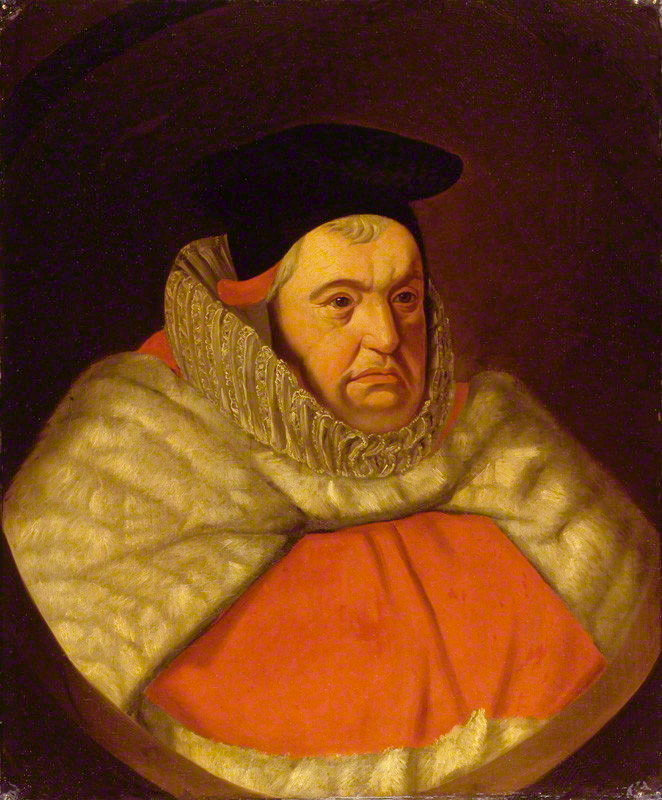
Sir John Doddridge (akas: Doderidge or Dodderidge; 1555–1628) was an English lawyer, appointed Justice of the King's Bench in 1612 and served as Member of Parliament for Barnstaple in 1589 and for Horsham in 1604. He was also an antiquarian and writer. He acquired the nickname "the sleeping judge" from his habit of shutting his eyes while listening intently to a case. As a lawyer he was influenced by humanist ideas, and was familiar with the ideas of Aristotle, and the debates of the period between his followers and the Ramists. He was a believer in both the rationality of the English common law and in its connection with custom. He was one of the Worthies of Devon of the biographer John Prince (d.1723).
His father was Richard Doddridge, merchant, of Barnstaple. The family took its name from a manor in the parish of Sandford, near Crediton. Richard was the son of a wool merchant and was born in South Molton where he married. With his wife and eight children before 1582 he moved to Holland Street, Barnstaple and served as Mayor of Barnstaple in 1589.
Richard Doddridge entered the shipping business and owned a 100-ton prize-ship named Prudence, a privateer which landed several prizes probably taken from Spanish galleons. In 1585 he bought a house in Cross Street from his fellow burgess Thomas Skinner, which descended in turn to his sons Sir John and to the latter's brother Pentecost Dodderidge (died c. 1650), MP and mayor of Barnstaple.
This large timber-framed house, known as the "Doddridge House" was demolished in about 1900 to make way for a post office. A room of ornate carved oak panelling dated 1617 from this house survives in Barnstaple Guildhall, known as the "Doddridge Room" and an ornate overmantel displays the date 1617 between the initials "PD" and "ED", signifying Pentecost and his wife Elizabeth. The room is now used to display the Corporation's silver and the mayor's regalia.
He was educated at Exeter College, Oxford, where he graduated BA on 16 February 1577, and entered his legal training in the Middle Temple about the same time.[citation needed]
In 1588, he was elected Member of Parliament for Barnstaple. He became an early member of the Society of Antiquaries, then recently founded. In 1602 and 1603 he delivered some lectures at New Inn on the law of advowsons. In Lent 1603 he discharged the duties of reader at Middle Temple
On 20 January 1604 he took the degree of serjeant-at-law, and about the same time he was appointed Serjeant to Henry Frederick, Prince of Wales. He was relieved of the status of Serjeant and appointed solicitor-general on 29 October 1604.[citation needed]
Between 1603 and 1611 he sat in parliament as member for Horsham, Sussex. He took part in the conference in the Painted Chamber at Westminster, held 25 February 1606, on the question whether Englishmen and Scotchmen born after the accession of James I to the English throne were naturalised by that event in the other kingdom. Doddridge adopted the common-law view that no such reciprocal naturalisation took place, and the majority in the conference were with him. The question was, however, subsequently decided in the opposite sense by Lord Chancellor Ellesmere and twelve judges in the exchequer chamber (Calvin's Case). Doddridge was knighted on 5 July 1607, and created a Justice of the King's Bench on 25 November 1612. On 4 February 1614 the University of Oxford conferred on him the degree of MA.[citation needed]
Hub AI
John Doddridge AI simulator
(@John Doddridge_simulator)
John Doddridge
Sir John Doddridge (akas: Doderidge or Dodderidge; 1555–1628) was an English lawyer, appointed Justice of the King's Bench in 1612 and served as Member of Parliament for Barnstaple in 1589 and for Horsham in 1604. He was also an antiquarian and writer. He acquired the nickname "the sleeping judge" from his habit of shutting his eyes while listening intently to a case. As a lawyer he was influenced by humanist ideas, and was familiar with the ideas of Aristotle, and the debates of the period between his followers and the Ramists. He was a believer in both the rationality of the English common law and in its connection with custom. He was one of the Worthies of Devon of the biographer John Prince (d.1723).
His father was Richard Doddridge, merchant, of Barnstaple. The family took its name from a manor in the parish of Sandford, near Crediton. Richard was the son of a wool merchant and was born in South Molton where he married. With his wife and eight children before 1582 he moved to Holland Street, Barnstaple and served as Mayor of Barnstaple in 1589.
Richard Doddridge entered the shipping business and owned a 100-ton prize-ship named Prudence, a privateer which landed several prizes probably taken from Spanish galleons. In 1585 he bought a house in Cross Street from his fellow burgess Thomas Skinner, which descended in turn to his sons Sir John and to the latter's brother Pentecost Dodderidge (died c. 1650), MP and mayor of Barnstaple.
This large timber-framed house, known as the "Doddridge House" was demolished in about 1900 to make way for a post office. A room of ornate carved oak panelling dated 1617 from this house survives in Barnstaple Guildhall, known as the "Doddridge Room" and an ornate overmantel displays the date 1617 between the initials "PD" and "ED", signifying Pentecost and his wife Elizabeth. The room is now used to display the Corporation's silver and the mayor's regalia.
He was educated at Exeter College, Oxford, where he graduated BA on 16 February 1577, and entered his legal training in the Middle Temple about the same time.[citation needed]
In 1588, he was elected Member of Parliament for Barnstaple. He became an early member of the Society of Antiquaries, then recently founded. In 1602 and 1603 he delivered some lectures at New Inn on the law of advowsons. In Lent 1603 he discharged the duties of reader at Middle Temple
On 20 January 1604 he took the degree of serjeant-at-law, and about the same time he was appointed Serjeant to Henry Frederick, Prince of Wales. He was relieved of the status of Serjeant and appointed solicitor-general on 29 October 1604.[citation needed]
Between 1603 and 1611 he sat in parliament as member for Horsham, Sussex. He took part in the conference in the Painted Chamber at Westminster, held 25 February 1606, on the question whether Englishmen and Scotchmen born after the accession of James I to the English throne were naturalised by that event in the other kingdom. Doddridge adopted the common-law view that no such reciprocal naturalisation took place, and the majority in the conference were with him. The question was, however, subsequently decided in the opposite sense by Lord Chancellor Ellesmere and twelve judges in the exchequer chamber (Calvin's Case). Doddridge was knighted on 5 July 1607, and created a Justice of the King's Bench on 25 November 1612. On 4 February 1614 the University of Oxford conferred on him the degree of MA.[citation needed]