
Recent from talks
John Gerard
Knowledge base stats:
Talk channels stats:
Members stats:
John Gerard
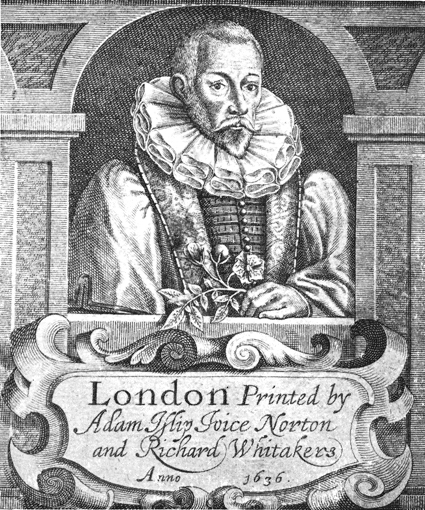
John Gerard (also John Gerarde, 1545–1612) was an English herbalist with a large garden in Holborn, now part of London. His 1,484-page illustrated Herball, or Generall Historie of Plantes, first published in 1597, became a popular gardening and herbal book in English in the 17th century. Except for some added plants from his own garden and from North America, Gerard's Herbal is largely a plagiarised English translation of Rembert Dodoens's 1554 herbal, itself highly popular in Dutch, Latin, French and other English translations. Gerard's Herball drawings of plants and the printer's woodcuts are mainly derived from Continental European sources, but there is an original title page with a copperplate engraving by William Rogers. Two decades after Gerard's death, the book was corrected and expanded to about 1,700 pages.
Gerard was born at Nantwich, Cheshire, towards the end of 1545, receiving his only schooling at nearby Willaston, about two miles away. Nothing is known of his parentage, but the coat of arms on his Herball implies he was a member of the Gerards of Ince. Around the age of 17, in 1562, he became an apprentice to Alexander Mason (died 3 April 1574), a barber-surgeon of the Barber–Surgeon's Company (Company of Barbers and Surgeons) in London. Mason had a large surgical practice and had twice held the rank of Warden in the company, and later became Master. Gerard did well there, and was admitted to freedom of the company on 9 December 1569 and permitted to open his own practice. Although he claimed to have learned much about plants from travelling to other parts of the world (see for instance a letter to Lord Burghley in 1588), his actual travels appear to have been limited. For example, at some time in his later youth, he is said to have made one trip abroad, possibly as both a ship's surgeon and captain's lover on a merchant ship sailing around the North Sea and Baltic, for he refers to both Scandinavia and Russia in his writings.
Gerard married Anne (or possibly Agnes), who died in 1620, and by her had five children, of whom only one, Elizabeth, survived them. He spent his entire adult life in London, close to Barnards Inn, between Chancery Lane and Fetter Lane. It is thought he resided in a tenement with a garden belonging to Lord Burghley. After his death in February 1612, he was buried at St Andrews, Holborn on 18 February, but the grave is unmarked.
Gerard had a successful career with the Barber–Surgeons' Company. He became a member of the Court of Assistants (board of directors) on 19 June 1595, despite being accused of defaming the wife of a colleague in 1578. He was made an examiner of candidates for admission to the freedom of the company on 15 January 1598 and Junior Warden in August 1597, under the mastership of George Baker. Following a further dispute with a senior warden, he relinquished his positions of "second warden and upper governor" on 26 September 1605, but this was resolved and on 17 August 1607 he was elected Master of the company. In the Annals of the company, published in 1890, a biography of Gerard appears under a list of "Eminent Members".
While studying he developed the tenement garden in the suburb of Holborn, London, which he refers to frequently in his work, and later published a catalogue of the flowers there. This became popular and he received gifts of seeds and plants from around the world. He also received offers to supervise the gardens of noblemen. In 1577, he began work as superintendent at the gardens of William Cecil, 1st Baron Burghley (Lord Burghley, the queen's Lord High Treasurer) at the Strand and Theobalds, Hertfordshire, a position he continued in for more than 20 years. In 1586, the College of Physicians established a physic garden with Gerard as curator, a position he held till 1604. In 1588, Burghley was Chancellor of the University of Cambridge and Gerard wrote to him commending himself as a suitable superintendent of the university botanic garden, writing "to signe for ye University of Cambridge for planting of gardens". Amongst his qualifications he wrote "by reason of his travaile into farre countries his great practise and long experience". There is no evidence for the travel claim and nothing seems to have come of his application. By 1595, when he was appointed to the Court of Assistants, he had built up a reputation as a skilled herbalist and spent much time commuting from the Court to the garden he founded close to his cottage in Holborn, and also attending to his duties for Burghley. In 1596 he requested that the Barber–Surgeons' Company establish a physic garden ("Mr. Gerrard's garden") in East Smithfield, but this was not done. It was reported that Queen Elizabeth held his achievements in high regard. In October 1603, Gerard was granted a lease on a garden adjoining Somerset House, by Anne of Denmark, the queen consort to King James I, in which he was described as "surgeon and herbarist to the King". He relinquished the lease to Robert Cecil, Earl of Salisbury.
According to Anna Pavord, Gerard was a doer and not a scholar. Deborah Harkness notes that Gerard was not part of the community of Lime Street naturalists in London at the time. His flawed (from the perspective of some of his contemporaries) Herball is dedicated to Burghley. He surrounded himself with influential friends and contacts, including Lancelot Browne, George Baker, and the apothecaries James Garrett, Hugh Morgan and Richard Garth. Garret was a Huguenot living and working in London, and a neighbour of the Flemish botanist Matthias de l'Obel (also known as Lobelius). Many of these had fine gardens and would exchange plants. Garth, who described Gerard as "a worshipful gentleman and one that greatly delighteth in strange plants" had South American contacts from where he would import rarities. He also exchanged plants with Clusius and cultivated a certain "Captain Nicholas Cleet of the Turky Company" from whom he obtained specimens from the Middle East. He would also visit other collectors and nurserymen such as Richard Pointer of Twickenham, Master Fowle, keeper of the queen's house at St. James and Master Huggens, keeper of the garden at Hampton Court. His servant, William Marshall travelled to the Mediterranean on his behalf and Jean Robin, the French king's gardener sent him seeds. After his death in February 1612 he was buried at the parish church of St Andrews, Holborn.
Gerard's 1596 Catalogue (Catalogus arborum, fruticum, ac plantarum tam indigenarum, quam exoticarum, in horto Johannis Gerardi civis et chirurgi Londinensis nascentium) is a list of 1,039 rare plants he cultivated in his garden at Holborn, where he introduced exotic plants from the New World, including a plant he misidentified as Yucca. The Yucca failed to bloom in his lifetime, but a pip taken from the plant later bloomed for a contemporary. To this day Yucca bears the name Gerard gave it. The list was the first catalogue of this type ever produced. The only known copy is in the Sloane collection at the British Library. L'Obel wrote an introduction to the text. George Baker describes the garden in his preface to the Herball as "all manner of strange trees, herbes, rootes, plants, floures and other such rare things, that it would make a man wonder, how one of his degree, not having the purse of a number, could ever accomplish the same". A revised edition in 1599 by John Norton, the Queen's Printer, placed the English and Latin names in opposite columns.
The publisher and Queen's Printer John Norton proposed to Gerard an English translation of Dodoens' popular herbal, Stirpium historiae pemptades sex (1583). This was a Latin version of an earlier work in Flemish by Dodoens, his Cruydeboeck (Herb Book, 1554). It had been translated into English in 1578 by Henry Lyte as A Niewe Herball and proved popular. Gerard was not Norton's first choice, the translation having originally been commissioned from Dr Robert Priest, a member of the London College of Physicians, who had meanwhile died. Although Gerard acknowledges Priest's role, he implies that he died before starting the work. As curator of the College garden, he would have been familiar with Priest and his work. The completed book appears to include much of Priest's work, with his own completion of the text in the form of annotations from his own garden, and for the first time, some North American plants. An example is the first English description of the potato, which he mistakenly believed came from Virginia, not South America (see illustration). He then incorporated some unpublished material from L'Obel and material from the work of Clusius, which he rearranged to follow more closely L'Obel's scheme of his 1570 Stirpium adversaria nova. It is thought to be a disguise for the original source.
Hub AI
John Gerard AI simulator
(@John Gerard_simulator)
John Gerard
John Gerard (also John Gerarde, 1545–1612) was an English herbalist with a large garden in Holborn, now part of London. His 1,484-page illustrated Herball, or Generall Historie of Plantes, first published in 1597, became a popular gardening and herbal book in English in the 17th century. Except for some added plants from his own garden and from North America, Gerard's Herbal is largely a plagiarised English translation of Rembert Dodoens's 1554 herbal, itself highly popular in Dutch, Latin, French and other English translations. Gerard's Herball drawings of plants and the printer's woodcuts are mainly derived from Continental European sources, but there is an original title page with a copperplate engraving by William Rogers. Two decades after Gerard's death, the book was corrected and expanded to about 1,700 pages.
Gerard was born at Nantwich, Cheshire, towards the end of 1545, receiving his only schooling at nearby Willaston, about two miles away. Nothing is known of his parentage, but the coat of arms on his Herball implies he was a member of the Gerards of Ince. Around the age of 17, in 1562, he became an apprentice to Alexander Mason (died 3 April 1574), a barber-surgeon of the Barber–Surgeon's Company (Company of Barbers and Surgeons) in London. Mason had a large surgical practice and had twice held the rank of Warden in the company, and later became Master. Gerard did well there, and was admitted to freedom of the company on 9 December 1569 and permitted to open his own practice. Although he claimed to have learned much about plants from travelling to other parts of the world (see for instance a letter to Lord Burghley in 1588), his actual travels appear to have been limited. For example, at some time in his later youth, he is said to have made one trip abroad, possibly as both a ship's surgeon and captain's lover on a merchant ship sailing around the North Sea and Baltic, for he refers to both Scandinavia and Russia in his writings.
Gerard married Anne (or possibly Agnes), who died in 1620, and by her had five children, of whom only one, Elizabeth, survived them. He spent his entire adult life in London, close to Barnards Inn, between Chancery Lane and Fetter Lane. It is thought he resided in a tenement with a garden belonging to Lord Burghley. After his death in February 1612, he was buried at St Andrews, Holborn on 18 February, but the grave is unmarked.
Gerard had a successful career with the Barber–Surgeons' Company. He became a member of the Court of Assistants (board of directors) on 19 June 1595, despite being accused of defaming the wife of a colleague in 1578. He was made an examiner of candidates for admission to the freedom of the company on 15 January 1598 and Junior Warden in August 1597, under the mastership of George Baker. Following a further dispute with a senior warden, he relinquished his positions of "second warden and upper governor" on 26 September 1605, but this was resolved and on 17 August 1607 he was elected Master of the company. In the Annals of the company, published in 1890, a biography of Gerard appears under a list of "Eminent Members".
While studying he developed the tenement garden in the suburb of Holborn, London, which he refers to frequently in his work, and later published a catalogue of the flowers there. This became popular and he received gifts of seeds and plants from around the world. He also received offers to supervise the gardens of noblemen. In 1577, he began work as superintendent at the gardens of William Cecil, 1st Baron Burghley (Lord Burghley, the queen's Lord High Treasurer) at the Strand and Theobalds, Hertfordshire, a position he continued in for more than 20 years. In 1586, the College of Physicians established a physic garden with Gerard as curator, a position he held till 1604. In 1588, Burghley was Chancellor of the University of Cambridge and Gerard wrote to him commending himself as a suitable superintendent of the university botanic garden, writing "to signe for ye University of Cambridge for planting of gardens". Amongst his qualifications he wrote "by reason of his travaile into farre countries his great practise and long experience". There is no evidence for the travel claim and nothing seems to have come of his application. By 1595, when he was appointed to the Court of Assistants, he had built up a reputation as a skilled herbalist and spent much time commuting from the Court to the garden he founded close to his cottage in Holborn, and also attending to his duties for Burghley. In 1596 he requested that the Barber–Surgeons' Company establish a physic garden ("Mr. Gerrard's garden") in East Smithfield, but this was not done. It was reported that Queen Elizabeth held his achievements in high regard. In October 1603, Gerard was granted a lease on a garden adjoining Somerset House, by Anne of Denmark, the queen consort to King James I, in which he was described as "surgeon and herbarist to the King". He relinquished the lease to Robert Cecil, Earl of Salisbury.
According to Anna Pavord, Gerard was a doer and not a scholar. Deborah Harkness notes that Gerard was not part of the community of Lime Street naturalists in London at the time. His flawed (from the perspective of some of his contemporaries) Herball is dedicated to Burghley. He surrounded himself with influential friends and contacts, including Lancelot Browne, George Baker, and the apothecaries James Garrett, Hugh Morgan and Richard Garth. Garret was a Huguenot living and working in London, and a neighbour of the Flemish botanist Matthias de l'Obel (also known as Lobelius). Many of these had fine gardens and would exchange plants. Garth, who described Gerard as "a worshipful gentleman and one that greatly delighteth in strange plants" had South American contacts from where he would import rarities. He also exchanged plants with Clusius and cultivated a certain "Captain Nicholas Cleet of the Turky Company" from whom he obtained specimens from the Middle East. He would also visit other collectors and nurserymen such as Richard Pointer of Twickenham, Master Fowle, keeper of the queen's house at St. James and Master Huggens, keeper of the garden at Hampton Court. His servant, William Marshall travelled to the Mediterranean on his behalf and Jean Robin, the French king's gardener sent him seeds. After his death in February 1612 he was buried at the parish church of St Andrews, Holborn.
Gerard's 1596 Catalogue (Catalogus arborum, fruticum, ac plantarum tam indigenarum, quam exoticarum, in horto Johannis Gerardi civis et chirurgi Londinensis nascentium) is a list of 1,039 rare plants he cultivated in his garden at Holborn, where he introduced exotic plants from the New World, including a plant he misidentified as Yucca. The Yucca failed to bloom in his lifetime, but a pip taken from the plant later bloomed for a contemporary. To this day Yucca bears the name Gerard gave it. The list was the first catalogue of this type ever produced. The only known copy is in the Sloane collection at the British Library. L'Obel wrote an introduction to the text. George Baker describes the garden in his preface to the Herball as "all manner of strange trees, herbes, rootes, plants, floures and other such rare things, that it would make a man wonder, how one of his degree, not having the purse of a number, could ever accomplish the same". A revised edition in 1599 by John Norton, the Queen's Printer, placed the English and Latin names in opposite columns.
The publisher and Queen's Printer John Norton proposed to Gerard an English translation of Dodoens' popular herbal, Stirpium historiae pemptades sex (1583). This was a Latin version of an earlier work in Flemish by Dodoens, his Cruydeboeck (Herb Book, 1554). It had been translated into English in 1578 by Henry Lyte as A Niewe Herball and proved popular. Gerard was not Norton's first choice, the translation having originally been commissioned from Dr Robert Priest, a member of the London College of Physicians, who had meanwhile died. Although Gerard acknowledges Priest's role, he implies that he died before starting the work. As curator of the College garden, he would have been familiar with Priest and his work. The completed book appears to include much of Priest's work, with his own completion of the text in the form of annotations from his own garden, and for the first time, some North American plants. An example is the first English description of the potato, which he mistakenly believed came from Virginia, not South America (see illustration). He then incorporated some unpublished material from L'Obel and material from the work of Clusius, which he rearranged to follow more closely L'Obel's scheme of his 1570 Stirpium adversaria nova. It is thought to be a disguise for the original source.
Recent media