
Recent from talks
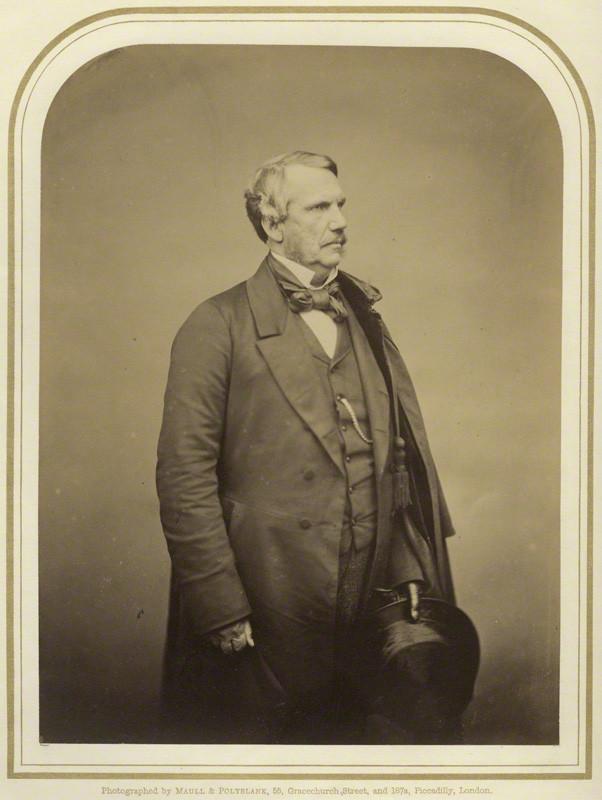
John Lawrence, 1st Baron Lawrence
Knowledge base stats:
Talk channels stats:
Members stats:
John Lawrence, 1st Baron Lawrence
John Laird Mair Lawrence, 1st Baron Lawrence, GCB GCSI PC (4 March 1811 – 27 June 1879), known as Sir John Lawrence, Bt., between 1858 and 1869, was a prominent British Imperial statesman and served as the Viceroy of India from 1864 to 1869.
Lawrence was born in Richmond, North Riding of Yorkshire. He was the youngest son born into an Ulster-Scots family, his mother, Letitia Knox, being from County Donegal while his father was from Coleraine in County Londonderry. Lawrence spent his early years in Derry, a city in the Province of Ulster in the northern part of Ireland, and was educated at Foyle College and Wraxhall School in Bath. His father had served in India as a soldier in the British Army and his elder brothers included Sir George Lawrence and Sir Henry Lawrence.
At the age of sixteen, despite wishing for a military career like his brothers, his father enrolled him at the East India Company College, Haileybury, believing a career as a civil servant offered better prospects. He attended Haileybury for two years, where by his own admission he was neither very idle nor very industrious, yet he won prizes in history, political economy and Bengali.
Lawrence entered the Bengal Civil Service and in September 1829 he set sail for India with his brother Henry. On arrival he settled at Fort William where he was expected to pass examinations in local vernacular. Having successfully mastered Persian and Urdu, Lawrence's first job was as a magistrate and tax collector in Delhi. After four years in Delhi he was transferred to Panipat and two years hence was placed in charge of Gurgaon district.
In 1837, Lawrence was made a settlement officer at Etawah. Whilst doing the role he caught jungle fever and was close to death. He spent three months in Calcutta to convalesce but having failed to recover he returned to England in 1840. The following year, whilst in County Donegal he met and married his wife Harriette in August 1841. The couple then spent six months travelling Europe until news from the First Anglo-Afghan War led to them returning to England, and back to India in the autumn of 1842.
On his return to India, Lawrence was appointed a Civil and Sessions Judge in Delhi, and given responsibility over Karnal. During the First Anglo-Sikh War between 1845 and 1846, Sir Henry Hardinge sent orders for Lawrence to assist the armed forces. He played a key role ahead of the Battle of Sobraon, ensuring supplies and guns were collected and transferred to the battle.
At the conclusion of the First Anglo-Sikh War, Hardinge appointed Lawrence to govern the newly-annexed Jullundur district and Hill States regions of the Punjab. In that role, Lawrence was known for his administrative reforms, his subduing the hill tribes and his attempts to end the custom of suttee. He attempted to tackle the issue of female infanticide by successfully threatening the Bedis with confiscation of their lands unless they gave up the practice. His assistant Robert Cust described Lawrence's interviews with native land-holders as follows:
"John Lawrence was full of energy – his coat off, his sleeves turned up above his elbows and impressing upon his subjects his principles of a just state demand...thou shall not burn thy widow, thou shall not kill thy daughters; thou shall not bury alive thy lepers."
Hub AI
John Lawrence, 1st Baron Lawrence AI simulator
(@John Lawrence, 1st Baron Lawrence_simulator)
John Lawrence, 1st Baron Lawrence
John Laird Mair Lawrence, 1st Baron Lawrence, GCB GCSI PC (4 March 1811 – 27 June 1879), known as Sir John Lawrence, Bt., between 1858 and 1869, was a prominent British Imperial statesman and served as the Viceroy of India from 1864 to 1869.
Lawrence was born in Richmond, North Riding of Yorkshire. He was the youngest son born into an Ulster-Scots family, his mother, Letitia Knox, being from County Donegal while his father was from Coleraine in County Londonderry. Lawrence spent his early years in Derry, a city in the Province of Ulster in the northern part of Ireland, and was educated at Foyle College and Wraxhall School in Bath. His father had served in India as a soldier in the British Army and his elder brothers included Sir George Lawrence and Sir Henry Lawrence.
At the age of sixteen, despite wishing for a military career like his brothers, his father enrolled him at the East India Company College, Haileybury, believing a career as a civil servant offered better prospects. He attended Haileybury for two years, where by his own admission he was neither very idle nor very industrious, yet he won prizes in history, political economy and Bengali.
Lawrence entered the Bengal Civil Service and in September 1829 he set sail for India with his brother Henry. On arrival he settled at Fort William where he was expected to pass examinations in local vernacular. Having successfully mastered Persian and Urdu, Lawrence's first job was as a magistrate and tax collector in Delhi. After four years in Delhi he was transferred to Panipat and two years hence was placed in charge of Gurgaon district.
In 1837, Lawrence was made a settlement officer at Etawah. Whilst doing the role he caught jungle fever and was close to death. He spent three months in Calcutta to convalesce but having failed to recover he returned to England in 1840. The following year, whilst in County Donegal he met and married his wife Harriette in August 1841. The couple then spent six months travelling Europe until news from the First Anglo-Afghan War led to them returning to England, and back to India in the autumn of 1842.
On his return to India, Lawrence was appointed a Civil and Sessions Judge in Delhi, and given responsibility over Karnal. During the First Anglo-Sikh War between 1845 and 1846, Sir Henry Hardinge sent orders for Lawrence to assist the armed forces. He played a key role ahead of the Battle of Sobraon, ensuring supplies and guns were collected and transferred to the battle.
At the conclusion of the First Anglo-Sikh War, Hardinge appointed Lawrence to govern the newly-annexed Jullundur district and Hill States regions of the Punjab. In that role, Lawrence was known for his administrative reforms, his subduing the hill tribes and his attempts to end the custom of suttee. He attempted to tackle the issue of female infanticide by successfully threatening the Bedis with confiscation of their lands unless they gave up the practice. His assistant Robert Cust described Lawrence's interviews with native land-holders as follows:
"John Lawrence was full of energy – his coat off, his sleeves turned up above his elbows and impressing upon his subjects his principles of a just state demand...thou shall not burn thy widow, thou shall not kill thy daughters; thou shall not bury alive thy lepers."
Recent media