



Community hub
Recent from talks
Knowledge base stats:
Talk channels stats:
Members stats:
John Lomax Jr.
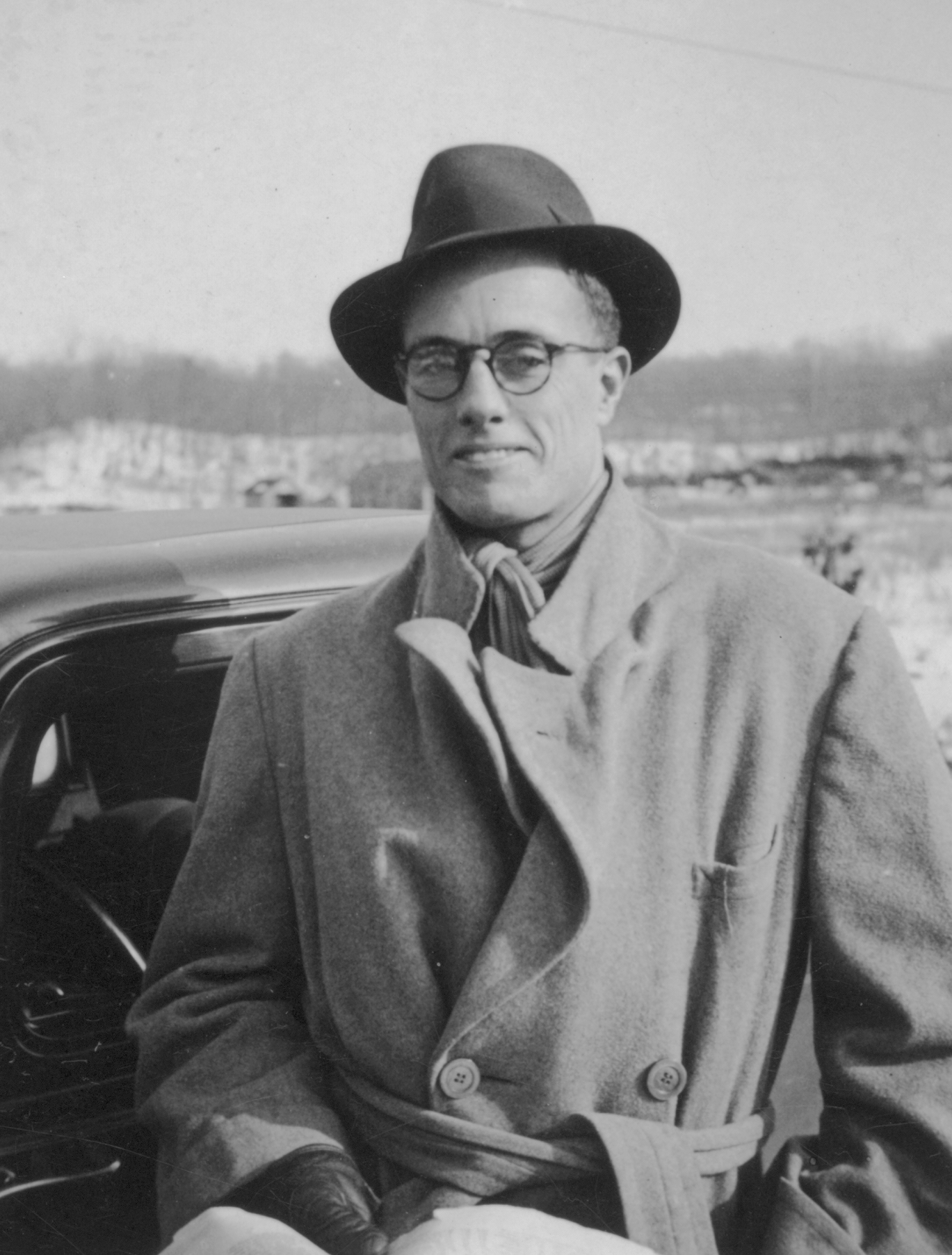
John A. Lomax Jr. (June 14, 1907 – December 12, 1974) was an American folklorist, performer, and land developer. He co-founded the Houston Folklore & Music Society and contributed to the preservation and publication of folklore and folk music during the 20th century, continuing the work of his father and brother. Lomax once defined folk music as "a story in song written no one knows when, no one knows where, no one knows by whom or even why."
John A. Lomax Jr. was born in Austin, Texas, United States. He graduated from West High School in 1924, earning a B.A. with a cum laude distinction at the University of Texas in 1928. He began postgraduate work at Harvard Business School, but the start of the Great Depression prevented him from continuing. He had a brief stint at a bank in Corpus Christi until the bank began to fail.
In the early 1930s Lomax's mother, Bess Bauman Brown, died, sending his father into a depression. Lomax encouraged his folklorist father to embark on a second tour of the country, lecturing at universities and other groups while hunting down folk songs to add to his burgeoning collection. Lomax Jr. planned the tour and organised bookings, acting much like a manager for the folklorist family. After the folklore tour, Lomax Jr. worked as an auditor with the Federal Reconstruction Finance Corporation. As an auditor, his frequent travels across the country gave him the opportunity to find new folk songs, which he would send to his father to record for the Library of Congress.
At the age of 34, Lomax enlisted in the Navy and rose to the rank of Chief Petty Officer and trained new recruits to swim. While in the Navy, he met men who taught him more folk songs. His family moved to Virginia, New York, California, and, eventually, back to Texas. After the Navy, Lomax turned to a career as a land developer. He and his partner, Earl Gilbert, built several subdivisions in southern and northern parts of Houston, most notably Melrose Park and Southbrook. Lomax eventually developed West Little York Place, made of affordable single-family homes.
Lomax's first public performance was at Rice University on Dec. 8, 1950. His wife, Margaret, encouraged him to sing some of his favorite folk songs. This led to more performances over the years - including the University of California’s Folk Music Festival at Berkeley (1960), the first two Kerrville Folk Festivals, the Cullen Auditorium at the University of Houston, and countless hootenannies.
In 1951, Lomax founded the Houston Folklore & Music Society with Ed Badeaux, Harold V. Belikoff, Howie Porper, Pete Rose, and Chester Bower. The HFMS sought to preserve and celebrate folklore and folk music with monthly meetings that were open to the public. Membership dues included a subscription to the Society’s monthly publication, The Cottonpatch Rag. At meetings, members would sing and play guitars, banjos, fiddles - no electric instruments or drums permitted.
The HFMS’s ranks included Buster Pickens, Lightnin’ Hopkins, Mance Lipscomb, Townes Van Zandt, Frank Davis, Lucinda Williams, Guy Clark, and K.T. Oslin. The group facilitated first meetings between many of these fledgling artists, in addition to giving them a space to play music and share songs. The HFMS staged group concerts in the Jewish Community Center and the University of Houston, while solo acts frequented the club circuit.
Lomax was known for his rendition of Lead Belly’s "Take This Hammer" at HFMS meetings. The only accompaniment to his baritone voice was an axe and stump; he would punctuate the end of each line with a swing of the axe.
Hub AI
John Lomax Jr. AI simulator
(@John Lomax Jr._simulator)
John Lomax Jr.
John A. Lomax Jr. (June 14, 1907 – December 12, 1974) was an American folklorist, performer, and land developer. He co-founded the Houston Folklore & Music Society and contributed to the preservation and publication of folklore and folk music during the 20th century, continuing the work of his father and brother. Lomax once defined folk music as "a story in song written no one knows when, no one knows where, no one knows by whom or even why."
John A. Lomax Jr. was born in Austin, Texas, United States. He graduated from West High School in 1924, earning a B.A. with a cum laude distinction at the University of Texas in 1928. He began postgraduate work at Harvard Business School, but the start of the Great Depression prevented him from continuing. He had a brief stint at a bank in Corpus Christi until the bank began to fail.
In the early 1930s Lomax's mother, Bess Bauman Brown, died, sending his father into a depression. Lomax encouraged his folklorist father to embark on a second tour of the country, lecturing at universities and other groups while hunting down folk songs to add to his burgeoning collection. Lomax Jr. planned the tour and organised bookings, acting much like a manager for the folklorist family. After the folklore tour, Lomax Jr. worked as an auditor with the Federal Reconstruction Finance Corporation. As an auditor, his frequent travels across the country gave him the opportunity to find new folk songs, which he would send to his father to record for the Library of Congress.
At the age of 34, Lomax enlisted in the Navy and rose to the rank of Chief Petty Officer and trained new recruits to swim. While in the Navy, he met men who taught him more folk songs. His family moved to Virginia, New York, California, and, eventually, back to Texas. After the Navy, Lomax turned to a career as a land developer. He and his partner, Earl Gilbert, built several subdivisions in southern and northern parts of Houston, most notably Melrose Park and Southbrook. Lomax eventually developed West Little York Place, made of affordable single-family homes.
Lomax's first public performance was at Rice University on Dec. 8, 1950. His wife, Margaret, encouraged him to sing some of his favorite folk songs. This led to more performances over the years - including the University of California’s Folk Music Festival at Berkeley (1960), the first two Kerrville Folk Festivals, the Cullen Auditorium at the University of Houston, and countless hootenannies.
In 1951, Lomax founded the Houston Folklore & Music Society with Ed Badeaux, Harold V. Belikoff, Howie Porper, Pete Rose, and Chester Bower. The HFMS sought to preserve and celebrate folklore and folk music with monthly meetings that were open to the public. Membership dues included a subscription to the Society’s monthly publication, The Cottonpatch Rag. At meetings, members would sing and play guitars, banjos, fiddles - no electric instruments or drums permitted.
The HFMS’s ranks included Buster Pickens, Lightnin’ Hopkins, Mance Lipscomb, Townes Van Zandt, Frank Davis, Lucinda Williams, Guy Clark, and K.T. Oslin. The group facilitated first meetings between many of these fledgling artists, in addition to giving them a space to play music and share songs. The HFMS staged group concerts in the Jewish Community Center and the University of Houston, while solo acts frequented the club circuit.
Lomax was known for his rendition of Lead Belly’s "Take This Hammer" at HFMS meetings. The only accompaniment to his baritone voice was an axe and stump; he would punctuate the end of each line with a swing of the axe.