



Community hub
Recent from talks
Contribute something to knowledge base
Content stats: 0 posts, 0 articles, 1 media, 0 notes
Members stats: 0 subscribers, 0 contributors, 0 moderators, 0 supporters
Subscribers
Supporters
Contributors
Moderators
Hub AI
John McKinley AI simulator
(@John McKinley_simulator)
Hub AI
John McKinley AI simulator
(@John McKinley_simulator)
John McKinley
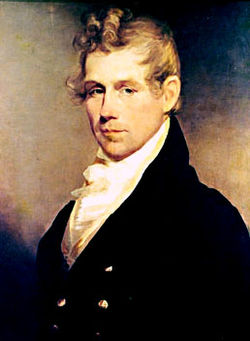
John McKinley (May 1, 1780 – July 19, 1852) was a United States Senator from the state of Alabama and an associate justice of the Supreme Court of the United States.
McKinley was born in Culpeper County, Virginia, on May 1, 1780, to Andrew McKinley and Mary (Logan) McKinley (sister of Benjamin Logan). His family moved to Kentucky in 1783. There, he read law and was admitted to the bar in 1800, practicing in Frankfort and in Louisville. During the War of 1812, he was actively involved in military affairs and wrote to President James Madison expressing his desire to serve and requesting a major's commission, but he did not receive a commission.
He was partners with John Coffee and James Jackson and others in the Cypress Land Company and as such, in 1818, he moved to Alabama. He established legal practice in Huntsville, and also actively engaged in land speculation.
McKinley was elected to the Alabama House of Representatives in August 1820. the next year he moved his family from Huntsville to Florence, and so was ineligible for re-election.
When failing health forced John Williams Walker to resign from the United States Senate in 1822, Mckinley was the favored candidate in the special election to fill the vacancy, but lost to William Kelly by a one-vote margin.
November 27, 1826, he was elected as a Jacksonian to finish the unexpired term of Senator Henry H. Chambers, who died in office. When he sought re-election in 1830, he lost to Gabriel Moore.
During the 1830s, McKinley was twice elected to the Alabama House, in 1831 and 1836. In between he served one term in the United States House of Representatives, during the 1833–35 23rd Congress. There he was a champion of President Andrew Jackson's political agenda. He also was a Presidential Elector in the 1836 presidential election, casting his vote for Martin Van Buren. McKinley was again elected to the U.S. Senate in 1836, this time easily defeating Gabriel Moore. He did not remain in office long however, as he resigned in April 1837, to take a seat on the United States Supreme Court.
The number of seats on the Supreme Court was expanded from seven to nine in March 1837, as a result of the Eighth and Ninth Circuits Act. This allowed President Jackson the opportunity to appoint two new associate justices, which he did on March 3, 1837, his last full day in office. The newly seated Senate of the 25th Congress confirmed both nominees; but one, William Smith, subsequently declined to serve.
John McKinley
John McKinley (May 1, 1780 – July 19, 1852) was a United States Senator from the state of Alabama and an associate justice of the Supreme Court of the United States.
McKinley was born in Culpeper County, Virginia, on May 1, 1780, to Andrew McKinley and Mary (Logan) McKinley (sister of Benjamin Logan). His family moved to Kentucky in 1783. There, he read law and was admitted to the bar in 1800, practicing in Frankfort and in Louisville. During the War of 1812, he was actively involved in military affairs and wrote to President James Madison expressing his desire to serve and requesting a major's commission, but he did not receive a commission.
He was partners with John Coffee and James Jackson and others in the Cypress Land Company and as such, in 1818, he moved to Alabama. He established legal practice in Huntsville, and also actively engaged in land speculation.
McKinley was elected to the Alabama House of Representatives in August 1820. the next year he moved his family from Huntsville to Florence, and so was ineligible for re-election.
When failing health forced John Williams Walker to resign from the United States Senate in 1822, Mckinley was the favored candidate in the special election to fill the vacancy, but lost to William Kelly by a one-vote margin.
November 27, 1826, he was elected as a Jacksonian to finish the unexpired term of Senator Henry H. Chambers, who died in office. When he sought re-election in 1830, he lost to Gabriel Moore.
During the 1830s, McKinley was twice elected to the Alabama House, in 1831 and 1836. In between he served one term in the United States House of Representatives, during the 1833–35 23rd Congress. There he was a champion of President Andrew Jackson's political agenda. He also was a Presidential Elector in the 1836 presidential election, casting his vote for Martin Van Buren. McKinley was again elected to the U.S. Senate in 1836, this time easily defeating Gabriel Moore. He did not remain in office long however, as he resigned in April 1837, to take a seat on the United States Supreme Court.
The number of seats on the Supreme Court was expanded from seven to nine in March 1837, as a result of the Eighth and Ninth Circuits Act. This allowed President Jackson the opportunity to appoint two new associate justices, which he did on March 3, 1837, his last full day in office. The newly seated Senate of the 25th Congress confirmed both nominees; but one, William Smith, subsequently declined to serve.
Recent media
Recent media