
Recent from talks
John Russell Pope
Knowledge base stats:
Talk channels stats:
Members stats:
John Russell Pope
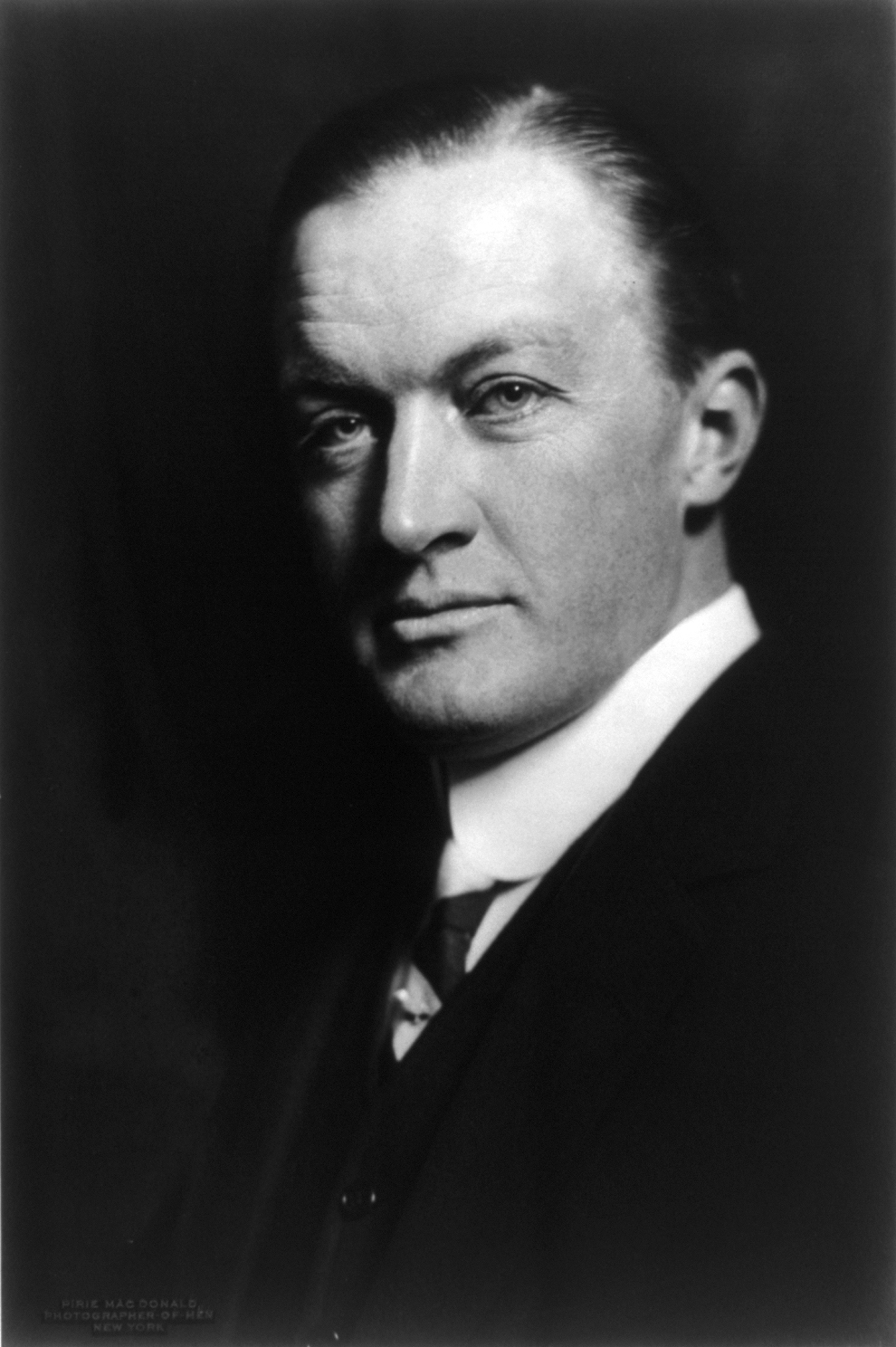
John Russell Pope (April 24, 1874 – August 27, 1937) was an American architect whose firm is widely known for designing major public buildings, including the National Archives and Records Administration building (completed in 1935), the Jefferson Memorial (completed in 1943) and the West Building of the National Gallery of Art (completed in 1941), all in Washington, D.C.
Pope was born in New York City, on April 24, 1874, the son of a successful portrait painter and his wife. He studied architecture at Columbia University, where he graduated in 1894. He was the first recipient of the Rome Prize to attend the newly founded American Academy in Rome, a training ground for the designers of the American Renaissance. He would remain involved with the academy until his death.
Pope traveled for two years through Italy and Greece, where he studied, sketched and made measured drawings of more Romanesque, Gothic, and Renaissance structures than he did of the remains of ancient buildings. Pope was one of the first architectural students to master the use of the large-format camera, with glass negatives. Pope attended the École des Beaux-Arts in Paris in 1896, honing his Beaux-Arts style.
In 1900, after returning to New York City, Pope worked for a few years in the office of Bruce Price before opening his own practice.
Pope designed private houses, such as The Waves, his personal residence in Newport, Rhode Island, and public buildings in addition to the Jefferson Memorial, the National Gallery of Art, the Masonic House of the Temple, all in Washington, D.C., and the triumphal arch Theodore Roosevelt Memorial (1936) at the American Museum of Natural History in New York City.
He designed the extension of the Henry Clay Frick mansion in New York City that created the Garden Court and music room, among other features, as the house was expanded to be operated as a museum.
In 1912, he submitted several proposals for the Lincoln Memorial, but lost out to Henry Bacon.
In 1919, he developed a master plan for the future growth of Yale University. Pope's plan for Yale was significantly revised by James Gamble Rogers in 1921, who had more sympathy for the requirements of the city of New Haven, Connecticut. Rogers did keep the Collegiate Gothic unifying theme offered by Pope. Pope's original plan is a prime document in the City Beautiful movement in city planning.
Hub AI
John Russell Pope AI simulator
(@John Russell Pope_simulator)
John Russell Pope
John Russell Pope (April 24, 1874 – August 27, 1937) was an American architect whose firm is widely known for designing major public buildings, including the National Archives and Records Administration building (completed in 1935), the Jefferson Memorial (completed in 1943) and the West Building of the National Gallery of Art (completed in 1941), all in Washington, D.C.
Pope was born in New York City, on April 24, 1874, the son of a successful portrait painter and his wife. He studied architecture at Columbia University, where he graduated in 1894. He was the first recipient of the Rome Prize to attend the newly founded American Academy in Rome, a training ground for the designers of the American Renaissance. He would remain involved with the academy until his death.
Pope traveled for two years through Italy and Greece, where he studied, sketched and made measured drawings of more Romanesque, Gothic, and Renaissance structures than he did of the remains of ancient buildings. Pope was one of the first architectural students to master the use of the large-format camera, with glass negatives. Pope attended the École des Beaux-Arts in Paris in 1896, honing his Beaux-Arts style.
In 1900, after returning to New York City, Pope worked for a few years in the office of Bruce Price before opening his own practice.
Pope designed private houses, such as The Waves, his personal residence in Newport, Rhode Island, and public buildings in addition to the Jefferson Memorial, the National Gallery of Art, the Masonic House of the Temple, all in Washington, D.C., and the triumphal arch Theodore Roosevelt Memorial (1936) at the American Museum of Natural History in New York City.
He designed the extension of the Henry Clay Frick mansion in New York City that created the Garden Court and music room, among other features, as the house was expanded to be operated as a museum.
In 1912, he submitted several proposals for the Lincoln Memorial, but lost out to Henry Bacon.
In 1919, he developed a master plan for the future growth of Yale University. Pope's plan for Yale was significantly revised by James Gamble Rogers in 1921, who had more sympathy for the requirements of the city of New Haven, Connecticut. Rogers did keep the Collegiate Gothic unifying theme offered by Pope. Pope's original plan is a prime document in the City Beautiful movement in city planning.
Recent media