
Recent from talks
John Singleton Copley
Knowledge base stats:
Talk channels stats:
Members stats:
John Singleton Copley
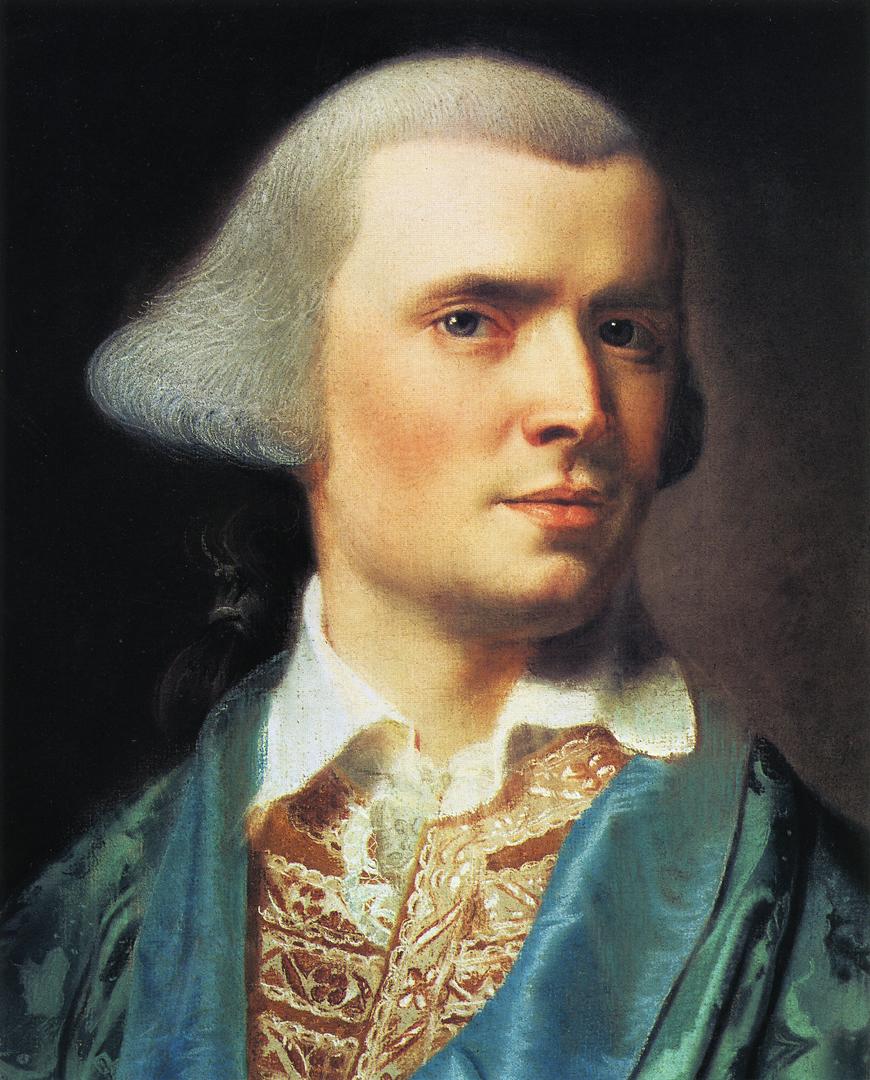
John Singleton Copley /ˈkɑːpli/ RA (July 3, 1738 – September 9, 1815) was an American-born British painter active in both the Thirteen Colonies and England. He is believed to have been born in Boston, Province of Massachusetts Bay, to Richard and Mary Singleton Copley, both Anglo-Irish. After becoming well-established as a portrait painter of the wealthy in colonial New England, he moved to London in 1774, never returning to America. In London, he met considerable success as a portraitist for the next two decades, and also painted a number of large history paintings, which were innovative in their readiness to depict modern subjects and modern dress. His later years were less successful, and he died heavily in debt. He was father of John Copley, 1st Baron Lyndhurst and half-brother of Henry Pelham, the American painter, engraver, and cartographer.
Copley's mother owned a tobacco shop in Boston, Massachusetts, on Long Wharf. The parents, who, according to the artist's granddaughter Martha Babcock Amory, had come to Boston in 1736, were "engaged in trade, like almost all the inhabitants of the North American colonies at that time". His father was from Limerick; his mother, of the Singletons of County Clare, a family of Lancashire origin. Letters from John Singleton, Mrs. Copley's father, are in the Copley-Pelham collection. Richard Copley, described as a tobacconist, is said by several biographers to have arrived in Boston in ill health and to have gone, about the time of John's birth, to the West Indies, where he died. William H. Whitmore gives his death as of 1748, the year of Mrs. Copley's remarriage. James Bernard Cullen says: "Richard Copley was in poor health on his arrival in America and went to the West Indies to improve his failing strength. He died there in 1737." No contemporary evidence has been located for either year.
Except for a family tradition that speaks of his precocity in drawing, nothing is known of Copley's schooling or of the other activities of his boyhood. His letters, the earliest of which is dated September 30, 1762, reveal a fairly well-educated man. He may have been taught various subjects, it is reasonably conjectured, by his future stepfather, who, besides painting portraits and cutting engravings, eked out a living in Boston by teaching dancing and, beginning September 12, 1743, by conducting an "Evening Writing and Arithmetic School", duly advertised. It is certain that the widow Copley was married to Peter Pelham on May 22, 1748, and that at about that time she transferred her tobacco business to his house in Lindall Street (a quieter, more respectable part of town), at which the evening school also continued its sessions. In such a household young Copley may have learned to use the paintbrush and the engraver's tools. Whitmore says plausibly: "Copley at the age of fifteen was able to engrave in mezzotint; his stepfather Pelham, with whom he lived three years, was an excellent engraver and skillful also with the brush." The family lived next to the house occupied by japanner Thomas Johnston and his family, and Copley became friends with Thomas's son William, later to become a painter himself.
The artistic opportunities of the home and town in which Copley grew to manhood should be emphasized because he himself, as well as some of his biographers taking him too literally, have made much of the bleakness of his early surroundings. His son, Lord Lyndhurst, wrote that "he (Copley) was entirely self taught, and never saw a decent picture, with the exception of his own, until he was nearly thirty years of age." Copley himself complained, in a letter to Benjamin West, written November 12, 1766: "In this Country as You rightly observe there is no examples of Art, except what is to [be] met with in a few prints indifferently exicuted, from which it is not possable to learn much." Variants of this thesis are found almost everywhere in his earlier letters. They suggest that, while Copley was industrious and an able executant, he was physically unadventurous and temperamentally inclined toward brooding and self-pity. He could have seen at least a few good paintings and many good prints in the Boston of his youth. The excellence of his own portraits was not accidental or miraculous; it had an academic foundation. A book of Copley's studies of the figure, now at the British Museum, proves that before he was twenty, whether with or without help from a teacher, he was making anatomical drawings with much care and precision. It is likely that through the fortunate associations of a home and workshop in a town which had many craftsmen, he had already learned his trade at an age when the average art student of a later era was only beginning to draw.
Copley was about fourteen and his stepfather had recently died, when he made the earliest of his portraits now preserved, a likeness of his half-brother Charles Pelham, good in color and characterization though it has in its background accessories which are somewhat out of drawing. It is a remarkable work to have come from so young a hand. The artist was only fifteen when (it is believed) he painted the portrait of the Rev. William Welsteed, minister of the Brick Church in Long Lane, a work which, following Peter Pelham's practise, Copley personally engraved to get the benefit from the sale of prints. No other engraving has been attributed to Copley. A self-portrait, undated, depicting a boy of about seventeen in broken straw hat, and a painting of Mars, Venus and Vulcan, signed and dated 1754, disclose crudities of execution which do not obscure the decorative intent and documentary value of the works. Such painting would obviously advertise itself anywhere. Without going after business, for his letters do not indicate that he was ever aggressive or pushy, Copley was started as a professional portrait-painter long before he was of age. In October 1757, Capt. Thomas Ainslie, collector of the Port of Quebec, acknowledged from Halifax the receipt of his portrait, which "gives me great Satisfaction", and advised the artist to visit Nova Scotia "where there are several people who would be glad to employ You." This request to paint in Canada was later repeated from Quebec, Copley replying: "I should receive a singular pleasure in excepting, if my Business was anyways slack, but it is so far otherwise that I have a large Room full of Pictures unfinished, which would ingage me these twelve months if I did not begin any others."
Besides painting portraits in oil, doubtless after a formula learned from Peter Pelham, Copley was a pioneer American pastellist. He wrote, on September 30, 1762, to the Swiss painter Jean-Étienne Liotard, asking him for "a sett of the best Swiss Crayons for drawing of Portraits." The young American anticipated Liotard's surprise "that so remote a corner of the Globe as New England should have any demand for the necessary eutensils for practiceing the fine Arts" by assuring him that "America which has been the seat of war and desolation, I would fain hope will one Day become the School of fine Arts." The requested pastels were duly received and used by Copley in making many portraits in a medium suited to his talent. By this time he had begun to demonstrate his genius for rendering surface textures and capturing emotional immediacy.
Copley's fame was established in England by the exhibition, in 1766, of A Boy with a Flying Squirrel, which depicted his half-brother, Henry Pelham, seated at a table and playing with a pet squirrel. This picture, which made the young Boston painter a Fellow of the Society of Artists of Great Britain, by vote of September 3, 1766, had been painted the preceding year. Copley's letter of September 3, 1765, to Capt. R. G. Bruce, of the John and Sukey, reveals that it was taken to England as a personal favor in the luggage of Roger Hale, surveyor of the port of London. An anecdote relates that the painting, unaccompanied by name or letter of instructions, was delivered to Benjamin West (whom Mrs. Amory describes as then "a member of the Royal Academy," though the academy was not yet in existence). West is said to have "exclaimed with a warmth and enthusiasm of which those who knew him best could scarcely believe him capable, 'What delicious coloring worthy of Titian himself!'" The American squirrel, it is said, disclosed the colonial origin of the picture to the Pennsylvania-born Quaker artist. A letter from Copley was subsequently delivered to him. West got the canvas into the Exhibition of the year and wrote, on August 4, 1766, a letter to Copley in which he referred to Sir Joshua Reynolds' interest in the work and advised the artist to follow his example by making "a viset to Europe for this porpase (of self-improvement) for three or four years."
West's subsequent letters were considerably responsible for making Copley discontented with his situation and prospects in a colonial town. Copley in his letters to West of October 13 and November 12, 1766, gleefully accepted the invitation to send other pictures to the Exhibition and mournfully referred to himself as "peculiarly unlucky in Liveing in a place into which there has not been one portrait brought that is worthy to be call'd a Picture within my memory." In a later letter to West, of June 17, 1768, he displayed a cautious person's reasons for not rashly giving up the good living which his art gave him. He wrote: "I should be glad to go to Europe, but cannot think of it without a very good prospect of doing as well there as I can here. You are sensable that 300 Guineas a Year, which is my present income, is a pretty living in America. ... And what ever my ambition may be to excel in our noble Art, I cannot think of doing it at the expence of not only my own happyness, but that of a tender Mother and a Young Brother whose dependence is intirely upon me". West replied on September 20, 1768, saying that he had talked over Copley's prospects with other artists of London "and find that by their Candid approbation you have nothing to Hazard in Comeing to this Place."
Hub AI
John Singleton Copley AI simulator
(@John Singleton Copley_simulator)
John Singleton Copley
John Singleton Copley /ˈkɑːpli/ RA (July 3, 1738 – September 9, 1815) was an American-born British painter active in both the Thirteen Colonies and England. He is believed to have been born in Boston, Province of Massachusetts Bay, to Richard and Mary Singleton Copley, both Anglo-Irish. After becoming well-established as a portrait painter of the wealthy in colonial New England, he moved to London in 1774, never returning to America. In London, he met considerable success as a portraitist for the next two decades, and also painted a number of large history paintings, which were innovative in their readiness to depict modern subjects and modern dress. His later years were less successful, and he died heavily in debt. He was father of John Copley, 1st Baron Lyndhurst and half-brother of Henry Pelham, the American painter, engraver, and cartographer.
Copley's mother owned a tobacco shop in Boston, Massachusetts, on Long Wharf. The parents, who, according to the artist's granddaughter Martha Babcock Amory, had come to Boston in 1736, were "engaged in trade, like almost all the inhabitants of the North American colonies at that time". His father was from Limerick; his mother, of the Singletons of County Clare, a family of Lancashire origin. Letters from John Singleton, Mrs. Copley's father, are in the Copley-Pelham collection. Richard Copley, described as a tobacconist, is said by several biographers to have arrived in Boston in ill health and to have gone, about the time of John's birth, to the West Indies, where he died. William H. Whitmore gives his death as of 1748, the year of Mrs. Copley's remarriage. James Bernard Cullen says: "Richard Copley was in poor health on his arrival in America and went to the West Indies to improve his failing strength. He died there in 1737." No contemporary evidence has been located for either year.
Except for a family tradition that speaks of his precocity in drawing, nothing is known of Copley's schooling or of the other activities of his boyhood. His letters, the earliest of which is dated September 30, 1762, reveal a fairly well-educated man. He may have been taught various subjects, it is reasonably conjectured, by his future stepfather, who, besides painting portraits and cutting engravings, eked out a living in Boston by teaching dancing and, beginning September 12, 1743, by conducting an "Evening Writing and Arithmetic School", duly advertised. It is certain that the widow Copley was married to Peter Pelham on May 22, 1748, and that at about that time she transferred her tobacco business to his house in Lindall Street (a quieter, more respectable part of town), at which the evening school also continued its sessions. In such a household young Copley may have learned to use the paintbrush and the engraver's tools. Whitmore says plausibly: "Copley at the age of fifteen was able to engrave in mezzotint; his stepfather Pelham, with whom he lived three years, was an excellent engraver and skillful also with the brush." The family lived next to the house occupied by japanner Thomas Johnston and his family, and Copley became friends with Thomas's son William, later to become a painter himself.
The artistic opportunities of the home and town in which Copley grew to manhood should be emphasized because he himself, as well as some of his biographers taking him too literally, have made much of the bleakness of his early surroundings. His son, Lord Lyndhurst, wrote that "he (Copley) was entirely self taught, and never saw a decent picture, with the exception of his own, until he was nearly thirty years of age." Copley himself complained, in a letter to Benjamin West, written November 12, 1766: "In this Country as You rightly observe there is no examples of Art, except what is to [be] met with in a few prints indifferently exicuted, from which it is not possable to learn much." Variants of this thesis are found almost everywhere in his earlier letters. They suggest that, while Copley was industrious and an able executant, he was physically unadventurous and temperamentally inclined toward brooding and self-pity. He could have seen at least a few good paintings and many good prints in the Boston of his youth. The excellence of his own portraits was not accidental or miraculous; it had an academic foundation. A book of Copley's studies of the figure, now at the British Museum, proves that before he was twenty, whether with or without help from a teacher, he was making anatomical drawings with much care and precision. It is likely that through the fortunate associations of a home and workshop in a town which had many craftsmen, he had already learned his trade at an age when the average art student of a later era was only beginning to draw.
Copley was about fourteen and his stepfather had recently died, when he made the earliest of his portraits now preserved, a likeness of his half-brother Charles Pelham, good in color and characterization though it has in its background accessories which are somewhat out of drawing. It is a remarkable work to have come from so young a hand. The artist was only fifteen when (it is believed) he painted the portrait of the Rev. William Welsteed, minister of the Brick Church in Long Lane, a work which, following Peter Pelham's practise, Copley personally engraved to get the benefit from the sale of prints. No other engraving has been attributed to Copley. A self-portrait, undated, depicting a boy of about seventeen in broken straw hat, and a painting of Mars, Venus and Vulcan, signed and dated 1754, disclose crudities of execution which do not obscure the decorative intent and documentary value of the works. Such painting would obviously advertise itself anywhere. Without going after business, for his letters do not indicate that he was ever aggressive or pushy, Copley was started as a professional portrait-painter long before he was of age. In October 1757, Capt. Thomas Ainslie, collector of the Port of Quebec, acknowledged from Halifax the receipt of his portrait, which "gives me great Satisfaction", and advised the artist to visit Nova Scotia "where there are several people who would be glad to employ You." This request to paint in Canada was later repeated from Quebec, Copley replying: "I should receive a singular pleasure in excepting, if my Business was anyways slack, but it is so far otherwise that I have a large Room full of Pictures unfinished, which would ingage me these twelve months if I did not begin any others."
Besides painting portraits in oil, doubtless after a formula learned from Peter Pelham, Copley was a pioneer American pastellist. He wrote, on September 30, 1762, to the Swiss painter Jean-Étienne Liotard, asking him for "a sett of the best Swiss Crayons for drawing of Portraits." The young American anticipated Liotard's surprise "that so remote a corner of the Globe as New England should have any demand for the necessary eutensils for practiceing the fine Arts" by assuring him that "America which has been the seat of war and desolation, I would fain hope will one Day become the School of fine Arts." The requested pastels were duly received and used by Copley in making many portraits in a medium suited to his talent. By this time he had begun to demonstrate his genius for rendering surface textures and capturing emotional immediacy.
Copley's fame was established in England by the exhibition, in 1766, of A Boy with a Flying Squirrel, which depicted his half-brother, Henry Pelham, seated at a table and playing with a pet squirrel. This picture, which made the young Boston painter a Fellow of the Society of Artists of Great Britain, by vote of September 3, 1766, had been painted the preceding year. Copley's letter of September 3, 1765, to Capt. R. G. Bruce, of the John and Sukey, reveals that it was taken to England as a personal favor in the luggage of Roger Hale, surveyor of the port of London. An anecdote relates that the painting, unaccompanied by name or letter of instructions, was delivered to Benjamin West (whom Mrs. Amory describes as then "a member of the Royal Academy," though the academy was not yet in existence). West is said to have "exclaimed with a warmth and enthusiasm of which those who knew him best could scarcely believe him capable, 'What delicious coloring worthy of Titian himself!'" The American squirrel, it is said, disclosed the colonial origin of the picture to the Pennsylvania-born Quaker artist. A letter from Copley was subsequently delivered to him. West got the canvas into the Exhibition of the year and wrote, on August 4, 1766, a letter to Copley in which he referred to Sir Joshua Reynolds' interest in the work and advised the artist to follow his example by making "a viset to Europe for this porpase (of self-improvement) for three or four years."
West's subsequent letters were considerably responsible for making Copley discontented with his situation and prospects in a colonial town. Copley in his letters to West of October 13 and November 12, 1766, gleefully accepted the invitation to send other pictures to the Exhibition and mournfully referred to himself as "peculiarly unlucky in Liveing in a place into which there has not been one portrait brought that is worthy to be call'd a Picture within my memory." In a later letter to West, of June 17, 1768, he displayed a cautious person's reasons for not rashly giving up the good living which his art gave him. He wrote: "I should be glad to go to Europe, but cannot think of it without a very good prospect of doing as well there as I can here. You are sensable that 300 Guineas a Year, which is my present income, is a pretty living in America. ... And what ever my ambition may be to excel in our noble Art, I cannot think of doing it at the expence of not only my own happyness, but that of a tender Mother and a Young Brother whose dependence is intirely upon me". West replied on September 20, 1768, saying that he had talked over Copley's prospects with other artists of London "and find that by their Candid approbation you have nothing to Hazard in Comeing to this Place."
Recent media