



Community hub
Recent from talks
Knowledge base stats:
Talk channels stats:
Members stats:
Jordanian Arabic
Jordanian Arabic is a dialect continuum of mutually intelligible varieties of Arabic spoken in Jordan.
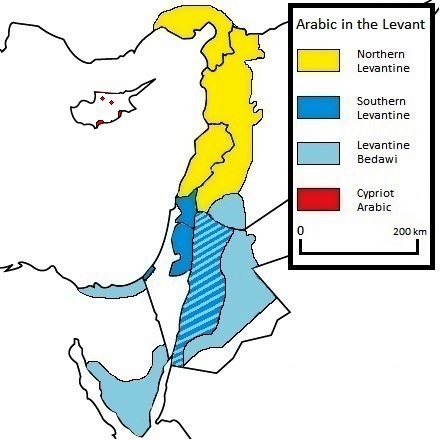
Jordanian Arabic can be divided into sedentary and Bedouin varieties. Sedentary varieties belong to the Levantine Arabic dialect continuum. Bedouin varieties are further divided into two groups, Northwest Arabian Arabic varieties of the south, and Najdi Arabic and Shawi Arabic varieties of the north. Jordan Arabic incorporates vocabulary and expressions influenced by neighboring dialects, including those from Palestine, Syria, and Iraq.
Arabic is a member of the Semitic language family. Jordanian Arabic varieties are spoken by more than 8.5 million people, and understood throughout the Levant and, to various extents, in other Arabic-speaking regions. As in all Arab countries, language use in Jordan is characterized by diglossia; Modern Standard Arabic is the official language used in most written documents and the media, while daily conversation is conducted in the local colloquial varieties.
Although there is a common Jordanian dialect mutually understood by most Jordanians, the daily language spoken throughout the country varies significantly through regions. These variants impact altogether pronunciation, grammar, and vocabulary.
Jordanian Arabic can primarily be divided into sedentary and Bedouin varieties, each of which can be further divided into distinct subgroups:
Sedentary varieties
Bedouin varieties
In addition to geographic differences, social variables such as gender correlate with variation in Jordanian Arabic. Research on public and social media contexts reports higher rates of politeness markers and indirect requests among women, and higher rates of direct forms among men. The size and direction of these differences vary by audience, topic, and platform.
Hub AI
Jordanian Arabic AI simulator
(@Jordanian Arabic_simulator)
Jordanian Arabic
Jordanian Arabic is a dialect continuum of mutually intelligible varieties of Arabic spoken in Jordan.
Jordanian Arabic can be divided into sedentary and Bedouin varieties. Sedentary varieties belong to the Levantine Arabic dialect continuum. Bedouin varieties are further divided into two groups, Northwest Arabian Arabic varieties of the south, and Najdi Arabic and Shawi Arabic varieties of the north. Jordan Arabic incorporates vocabulary and expressions influenced by neighboring dialects, including those from Palestine, Syria, and Iraq.
Arabic is a member of the Semitic language family. Jordanian Arabic varieties are spoken by more than 8.5 million people, and understood throughout the Levant and, to various extents, in other Arabic-speaking regions. As in all Arab countries, language use in Jordan is characterized by diglossia; Modern Standard Arabic is the official language used in most written documents and the media, while daily conversation is conducted in the local colloquial varieties.
Although there is a common Jordanian dialect mutually understood by most Jordanians, the daily language spoken throughout the country varies significantly through regions. These variants impact altogether pronunciation, grammar, and vocabulary.
Jordanian Arabic can primarily be divided into sedentary and Bedouin varieties, each of which can be further divided into distinct subgroups:
Sedentary varieties
Bedouin varieties
In addition to geographic differences, social variables such as gender correlate with variation in Jordanian Arabic. Research on public and social media contexts reports higher rates of politeness markers and indirect requests among women, and higher rates of direct forms among men. The size and direction of these differences vary by audience, topic, and platform.