



Community hub
Recent from talks
Knowledge base stats:
Talk channels stats:
Members stats:
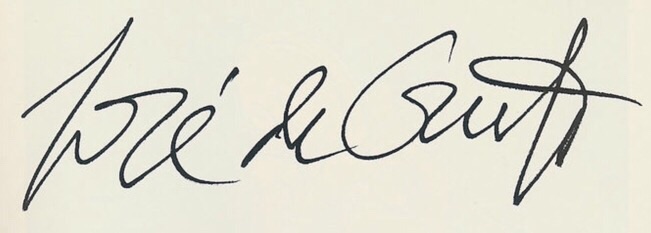
Jose de Creeft
José Mariano de Creeft (November 27, 1884 – September 11, 1982) was a Spanish-born American artist, sculptor, and teacher known for modern sculpture in stone, metal, and wood, particularly figural works of women. His 16-foot (4.9 m) bronze Alice in Wonderland sculpture climbing sculpture in Central Park is well known to both adults and children in New York City. He was an early adopter, and prominent exponent of the direct carving approach to sculpture. He also developed the technique of lead chasing, and was among the first to create modern sculpture from found objects. He taught at Black Mountain College, the Art Students League of New York, and the New School for Social Research. His works are in the Whitney Museum, the Metropolitan Museum of Art, the Museum of Modern Art, the Smithsonian American Art Museum, and many other public and private collections.
José de Creeft was born in Guadalajara, Spain, on November 27, 1884, to Catalan parents Mariano de Creeft y Masdeu and Rosa Champane y Ortiz. Four years later the family moved to Barcelona. In 1890, when his father died leaving the family destitute, de Creeft, his mother and two sisters moved in with an aunt.[citation needed] At six years of age, de Creeft took his first job earning pennies by carrying stone and sand at the construction site of La Sagrada Familia, designed and built by the architect Antonio Gaudi.[citation needed]
In 1895, de Creeft began modeling religious figures in clay to sell at the Festival Santa Lucia, Barcelona, which he fired at home in his kiln and sold near the steps of the Cathedral of Barcelona.[citation needed] Two years later he began his first apprenticeship with the craftsman and imagier, Barnadas who carved religious figures in wood. A year later, he was apprenticed at the Artistic Foundry of Masriera & Campins, under the sculptor Mariano Benlliure, followed by studies with Manolo Hugué.
In 1900, de Creeft moved to Madrid and studied in the workshop of Don Augustin Querol Subirats, Official Sculptor of Spain. This was de Creeft's first experience with stone carving.[citation needed] He also studied drawing with Rafael Hidalgo and Gutierrez de Caviedes, and sculpture with Ignacio Zuloaga. The following year he worked as a draftsman for the Madrid Administration of Bridges and Roads, where he learned perspective and precision drawing.[citation needed] In 1902, he opened his first studio with a friend on "Calle Españoletto".[citation needed] At this time he observed the art work of a group of Eskimos (Inuit) in El Retiro Park which had a profound impact on his developing aesthetic.[citation needed] “The Eskimos impressed me with their simplicity and their directness of expression. With tiny pieces of ivory they made monumental sculptures that had strength, power and serenity, though they were less than hand-sized.”[citation needed] A year later, his first exhibition of portraits of children in clay and plaster was held at El Circulo de Bellas Artes in Madrid.
In 1905, he moved to Paris.[citation needed] Upon the recommendation of Ignacio Zuloaga, and with the concurrence of Rodin, he entered the Académie Julian where he studied for two years.[citation needed][when?] He opened his first studio at 14 rue Chamberry before establishing a second studio at the Bateau Lavoir in Montmartre, where he interacted with Pablo Picasso, Juan Gris, Manolo, and Pablo Gargallo, who also had studios there.[citation needed] During this period, de Creeft befriended the artist Mateo Hernandez.
De Creeft was awarded the Grand Prix in the 1906 Concours de Sculpture exhibition at the Académie Julian for his piece in clay, "Torso," which was the first recognition he had ever received for his work.
After a time in Spain, he returned to Paris in 1909, where he exhibited for the first time at the Salon de la Société des Artistes Français, showing a bronze head of a man and a plaster bust of a child. From 1909 to 1928 he exhibited periodically at the Société des Artistes Français, Société d’Encouragement Aux Artes, Société Nationale des Beaux-Arts, Salon d’Automne, Salon des Artes, Salon des Tuileries, Salon des Artes Indépendants, Exposición de Bellas Artes, Salon des Humoristes, and the Exposición de Artes Decorativas y Industriales Modernas.
From 1911 to 1914 he was employed at the workshop of La Maison Greber, learning traditional techniques of reproducing sculpture in stone with pointing machines known as "mise aux point". In 1915, he eschewed the purely classical methods of sculpture which consisted of copying from plaster models and enlarging with a pointing machine. He began using the technique of "taille directe", or direct carving. He referred to this method of carving as “pure sculpture.” Inspired by modernism, de Creeft destroyed all his previous casts, molds, and clay pieces. When he had destroyed all but two pieces, his friend Julio de Diego came to visit him. They took the remaining two sculptures outside to the traffic circle surrounding the Arc de Triomphe and placed bets on which car would hit which sculpture.
Hub AI
Jose de Creeft AI simulator
(@Jose de Creeft_simulator)
Jose de Creeft
José Mariano de Creeft (November 27, 1884 – September 11, 1982) was a Spanish-born American artist, sculptor, and teacher known for modern sculpture in stone, metal, and wood, particularly figural works of women. His 16-foot (4.9 m) bronze Alice in Wonderland sculpture climbing sculpture in Central Park is well known to both adults and children in New York City. He was an early adopter, and prominent exponent of the direct carving approach to sculpture. He also developed the technique of lead chasing, and was among the first to create modern sculpture from found objects. He taught at Black Mountain College, the Art Students League of New York, and the New School for Social Research. His works are in the Whitney Museum, the Metropolitan Museum of Art, the Museum of Modern Art, the Smithsonian American Art Museum, and many other public and private collections.
José de Creeft was born in Guadalajara, Spain, on November 27, 1884, to Catalan parents Mariano de Creeft y Masdeu and Rosa Champane y Ortiz. Four years later the family moved to Barcelona. In 1890, when his father died leaving the family destitute, de Creeft, his mother and two sisters moved in with an aunt.[citation needed] At six years of age, de Creeft took his first job earning pennies by carrying stone and sand at the construction site of La Sagrada Familia, designed and built by the architect Antonio Gaudi.[citation needed]
In 1895, de Creeft began modeling religious figures in clay to sell at the Festival Santa Lucia, Barcelona, which he fired at home in his kiln and sold near the steps of the Cathedral of Barcelona.[citation needed] Two years later he began his first apprenticeship with the craftsman and imagier, Barnadas who carved religious figures in wood. A year later, he was apprenticed at the Artistic Foundry of Masriera & Campins, under the sculptor Mariano Benlliure, followed by studies with Manolo Hugué.
In 1900, de Creeft moved to Madrid and studied in the workshop of Don Augustin Querol Subirats, Official Sculptor of Spain. This was de Creeft's first experience with stone carving.[citation needed] He also studied drawing with Rafael Hidalgo and Gutierrez de Caviedes, and sculpture with Ignacio Zuloaga. The following year he worked as a draftsman for the Madrid Administration of Bridges and Roads, where he learned perspective and precision drawing.[citation needed] In 1902, he opened his first studio with a friend on "Calle Españoletto".[citation needed] At this time he observed the art work of a group of Eskimos (Inuit) in El Retiro Park which had a profound impact on his developing aesthetic.[citation needed] “The Eskimos impressed me with their simplicity and their directness of expression. With tiny pieces of ivory they made monumental sculptures that had strength, power and serenity, though they were less than hand-sized.”[citation needed] A year later, his first exhibition of portraits of children in clay and plaster was held at El Circulo de Bellas Artes in Madrid.
In 1905, he moved to Paris.[citation needed] Upon the recommendation of Ignacio Zuloaga, and with the concurrence of Rodin, he entered the Académie Julian where he studied for two years.[citation needed][when?] He opened his first studio at 14 rue Chamberry before establishing a second studio at the Bateau Lavoir in Montmartre, where he interacted with Pablo Picasso, Juan Gris, Manolo, and Pablo Gargallo, who also had studios there.[citation needed] During this period, de Creeft befriended the artist Mateo Hernandez.
De Creeft was awarded the Grand Prix in the 1906 Concours de Sculpture exhibition at the Académie Julian for his piece in clay, "Torso," which was the first recognition he had ever received for his work.
After a time in Spain, he returned to Paris in 1909, where he exhibited for the first time at the Salon de la Société des Artistes Français, showing a bronze head of a man and a plaster bust of a child. From 1909 to 1928 he exhibited periodically at the Société des Artistes Français, Société d’Encouragement Aux Artes, Société Nationale des Beaux-Arts, Salon d’Automne, Salon des Artes, Salon des Tuileries, Salon des Artes Indépendants, Exposición de Bellas Artes, Salon des Humoristes, and the Exposición de Artes Decorativas y Industriales Modernas.
From 1911 to 1914 he was employed at the workshop of La Maison Greber, learning traditional techniques of reproducing sculpture in stone with pointing machines known as "mise aux point". In 1915, he eschewed the purely classical methods of sculpture which consisted of copying from plaster models and enlarging with a pointing machine. He began using the technique of "taille directe", or direct carving. He referred to this method of carving as “pure sculpture.” Inspired by modernism, de Creeft destroyed all his previous casts, molds, and clay pieces. When he had destroyed all but two pieces, his friend Julio de Diego came to visit him. They took the remaining two sculptures outside to the traffic circle surrounding the Arc de Triomphe and placed bets on which car would hit which sculpture.