



Community hub
Recent from talks
Contribute something to knowledge base
Content stats: 0 posts, 0 articles, 1 media, 0 notes
Members stats: 0 subscribers, 0 contributors, 0 moderators, 0 supporters
Subscribers
Supporters
Contributors
Moderators
Hub AI
Joseph Goldberger AI simulator
(@Joseph Goldberger_simulator)
Hub AI
Joseph Goldberger AI simulator
(@Joseph Goldberger_simulator)
Joseph Goldberger
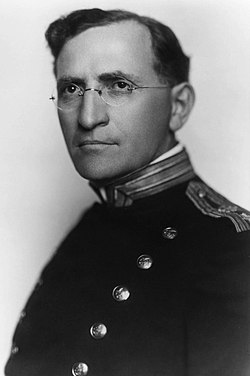
Joseph Goldberger (Slovak: Jozef Goldberger, Hungarian: Goldberger József) (July 16, 1874 – January 17, 1929) was an American physician and epidemiologist in the United States Public Health Service (PHS). As a public health official, he was an advocate for scientific and social recognition of the links between poverty and disease. His early work with arriving immigrants at Ellis Island made him a standout investigator for detecting infectious diseases and he became a well-known epidemiologist.
Goldberger was nominated four times for the Nobel Prize for his important work on the link between pellagra and poor diet.
Goldberger was born in Girált, Sáros County, Kingdom of Hungary (now Giraltovce, Slovakia), into a Jewish family. The youngest of six children, he immigrated to the U.S. with his parents in 1883, eventually settling in Manhattan's Lower East Side.
After completing his secondary education, Goldberger entered the City College of New York intending to pursue an engineering career. A chance encounter in 1892 led Goldberger to become interested in medicine and he transferred to the Bellevue Hospital Medical College (now the New York University School of Medicine), receiving his M.D. degree in 1895.
Setting up a private medical practice in Wilkes-Barre, Pennsylvania, Goldberger soon became intellectually restless. He joined the U.S. Marine Hospital Service (later known as the U.S. Public Health Service or PHS) in 1899, serving first post at the Port of New York, where he conducted health inspections of newly arrived immigrants.
From 1902–1906, Goldberger held a number of PHS epidemiology posts—in Mexico, Puerto Rico, Mississippi and Louisiana. He was involved in PHS efforts to combat yellow fever, typhus, dengue fever, and typhoid fever. He gave a particularly noted lecture in Boston, Massachusetts on the effects of parasites in disease transmission.[citation needed] In 1909, Goldberger published his research on an acarine mite-based parasitic infection common among poor, inner-city populations. He also worked with John F. Anderson investigating the transmission of measles and typhus.
In 1914, Goldberger was asked by US Surgeon General Rupert Blue to investigate pellagra, then an endemic disease in the Southern US. Previously it had been rather rare in the United States, but an epidemic broke out in 1906, primarily in the South, and continued until the 1940s. By 1912, South Carolina alone had 30,000 cases, and with a death rate of 40%, pellagra had devastating effects on the region.
Pellagra was a painful skin disease commonly found in tropical regions. Some physicians at the time believed that the disease arose in consequence of bad genes, airborne germs, or miasma resulting from poor sanitary conditions. Goldberger's theory that pellagra was associated with diet contradicted the most widely accepted medical opinion that pellagra was an infectious disease. The germ theory of disease had recently become popular in not only the medical field but also the public's consciousness. As a result, the germ theory was often generalized to far more ailments than it actually caused. Goldberger, in contrast, suspected that diet was the true cause, which he came to believe through his observation that hospital staff who worked closely with pellagra patients did not fall sick themselves. Furthermore, pellagra cases were overwhelmingly poor Southerners, especially African Americans and sharecroppers. This was a group that often ate filling and starchy but nutrient-poor foods, especially those derived from corn.
Joseph Goldberger
Joseph Goldberger (Slovak: Jozef Goldberger, Hungarian: Goldberger József) (July 16, 1874 – January 17, 1929) was an American physician and epidemiologist in the United States Public Health Service (PHS). As a public health official, he was an advocate for scientific and social recognition of the links between poverty and disease. His early work with arriving immigrants at Ellis Island made him a standout investigator for detecting infectious diseases and he became a well-known epidemiologist.
Goldberger was nominated four times for the Nobel Prize for his important work on the link between pellagra and poor diet.
Goldberger was born in Girált, Sáros County, Kingdom of Hungary (now Giraltovce, Slovakia), into a Jewish family. The youngest of six children, he immigrated to the U.S. with his parents in 1883, eventually settling in Manhattan's Lower East Side.
After completing his secondary education, Goldberger entered the City College of New York intending to pursue an engineering career. A chance encounter in 1892 led Goldberger to become interested in medicine and he transferred to the Bellevue Hospital Medical College (now the New York University School of Medicine), receiving his M.D. degree in 1895.
Setting up a private medical practice in Wilkes-Barre, Pennsylvania, Goldberger soon became intellectually restless. He joined the U.S. Marine Hospital Service (later known as the U.S. Public Health Service or PHS) in 1899, serving first post at the Port of New York, where he conducted health inspections of newly arrived immigrants.
From 1902–1906, Goldberger held a number of PHS epidemiology posts—in Mexico, Puerto Rico, Mississippi and Louisiana. He was involved in PHS efforts to combat yellow fever, typhus, dengue fever, and typhoid fever. He gave a particularly noted lecture in Boston, Massachusetts on the effects of parasites in disease transmission.[citation needed] In 1909, Goldberger published his research on an acarine mite-based parasitic infection common among poor, inner-city populations. He also worked with John F. Anderson investigating the transmission of measles and typhus.
In 1914, Goldberger was asked by US Surgeon General Rupert Blue to investigate pellagra, then an endemic disease in the Southern US. Previously it had been rather rare in the United States, but an epidemic broke out in 1906, primarily in the South, and continued until the 1940s. By 1912, South Carolina alone had 30,000 cases, and with a death rate of 40%, pellagra had devastating effects on the region.
Pellagra was a painful skin disease commonly found in tropical regions. Some physicians at the time believed that the disease arose in consequence of bad genes, airborne germs, or miasma resulting from poor sanitary conditions. Goldberger's theory that pellagra was associated with diet contradicted the most widely accepted medical opinion that pellagra was an infectious disease. The germ theory of disease had recently become popular in not only the medical field but also the public's consciousness. As a result, the germ theory was often generalized to far more ailments than it actually caused. Goldberger, in contrast, suspected that diet was the true cause, which he came to believe through his observation that hospital staff who worked closely with pellagra patients did not fall sick themselves. Furthermore, pellagra cases were overwhelmingly poor Southerners, especially African Americans and sharecroppers. This was a group that often ate filling and starchy but nutrient-poor foods, especially those derived from corn.
Recent media
Recent media