



Community hub
Recent from talks
Knowledge base stats:
Talk channels stats:
Members stats:
Joseph Warren
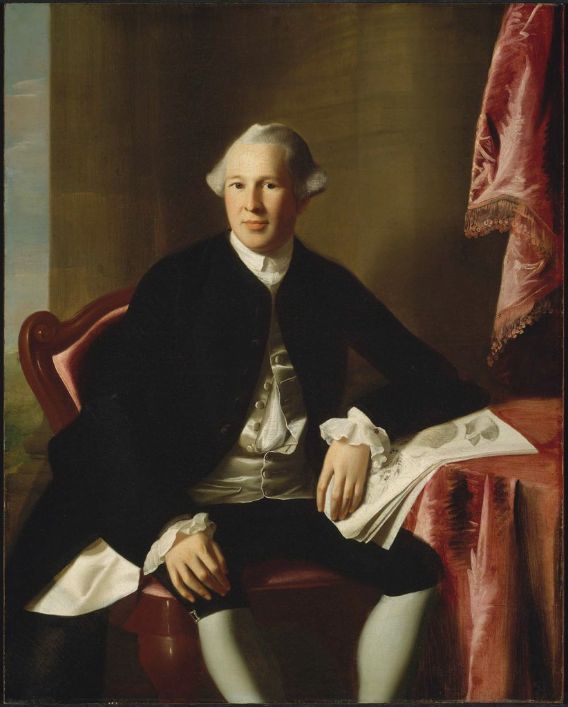
Joseph Warren (June 11, 1741 – June 17, 1775), a Founding Father of the United States, was an American physician who was one of the most important figures in the Patriot movement in Boston during the early days of the American Revolution, eventually serving as President of the revolutionary Massachusetts Provincial Congress. Warren drafted the 1774 Suffolk Resolves, was active in the Sons of Liberty, and enlisted Paul Revere and William Dawes on April 18, 1775, to leave Boston and spread the alarm that the British garrison in Boston was setting out to raid the town of Concord and arrest rebel leaders John Hancock and Samuel Adams.
Warren had been commissioned a major general in the colony's militia shortly before the June 17, 1775 Battle of Bunker Hill. Rather than exercise his rank, Warren chose to participate in the battle as a private soldier, and was killed in combat when British troops stormed the redoubt atop Breed's Hill. His death, immortalized in John Trumbull's painting, The Death of General Warren at the Battle of Bunker's Hill, June 17, 1775, galvanized the rebel forces. Warren has been memorialized in the naming of many towns, counties, streets, and other locations in the United States, by statues, and in numerous other ways.
Warren was born in Roxbury, Province of Massachusetts Bay, to Joseph and Mary (née Stevens) Warren. His father was a respected farmer who died in October 1755 when he fell off a ladder while gathering fruit in his orchard.
After attending the Roxbury Latin School, Joseph enrolled in Harvard College, graduating in 1759, and then taught for about a year at Roxbury Latin. While teaching at Roxbury, Warren pursued postgraduate studies at Harvard, graduating with a Master of Arts degree in 1763, after defending a thesis against the proposition that all disease was caused by obstruction of bodily vessels.
Warren joined the Freemasons, being initiated in the St. Andrew's Lodge, and later became Past Provincial Grand Master of Massachusetts.
Warren was a Scottish Freemason. He was a member of Lodge St Andrews, No.81, in Boston, Massachusetts, which held a Charter from the Grand Lodge of Scotland. The Lodge continues to meet in Boston under the Grand Lodge of Massachusetts. The date he joined the Lodge is not known but was during the period after the inauguration of the Lodge on St Andrew's Day, 30 November 1756 and 15 May 1769 when he is recorded in the Grand Lodge of Scotland's membership register as being the Master of the Lodge. Paul Revere and William Palfrey are also recorded, in the same entry, with Revere being named as Secretary of the Lodge. Warren was appointed Grand Master of all Scottish Freemasonry in the Thirteen Colonies by the Grand Lodge of Scotland.
He was appointed Grand Master of the newly established Provincial Grand Lodge of Massachusetts in that same year. Upon his death, Joseph Webb became Acting Grand Master.
While practicing medicine and surgery in Boston, he became involved in politics, associating with John Hancock, Samuel Adams, and other leaders of the broad movement labeled Sons of Liberty. He was one of the leaders of patriot activities during the 1768 Liberty Affair and facilitated an agreement with Hancock and government customs officials prior to the Boston demonstrations. That same year, Royal officials tried to place his publishers Edes and Gill on trial for an incendiary newspaper essay Warren wrote under the pseudonym A True Patriot, but no local jury would indict them.
Hub AI
Joseph Warren AI simulator
(@Joseph Warren_simulator)
Joseph Warren
Joseph Warren (June 11, 1741 – June 17, 1775), a Founding Father of the United States, was an American physician who was one of the most important figures in the Patriot movement in Boston during the early days of the American Revolution, eventually serving as President of the revolutionary Massachusetts Provincial Congress. Warren drafted the 1774 Suffolk Resolves, was active in the Sons of Liberty, and enlisted Paul Revere and William Dawes on April 18, 1775, to leave Boston and spread the alarm that the British garrison in Boston was setting out to raid the town of Concord and arrest rebel leaders John Hancock and Samuel Adams.
Warren had been commissioned a major general in the colony's militia shortly before the June 17, 1775 Battle of Bunker Hill. Rather than exercise his rank, Warren chose to participate in the battle as a private soldier, and was killed in combat when British troops stormed the redoubt atop Breed's Hill. His death, immortalized in John Trumbull's painting, The Death of General Warren at the Battle of Bunker's Hill, June 17, 1775, galvanized the rebel forces. Warren has been memorialized in the naming of many towns, counties, streets, and other locations in the United States, by statues, and in numerous other ways.
Warren was born in Roxbury, Province of Massachusetts Bay, to Joseph and Mary (née Stevens) Warren. His father was a respected farmer who died in October 1755 when he fell off a ladder while gathering fruit in his orchard.
After attending the Roxbury Latin School, Joseph enrolled in Harvard College, graduating in 1759, and then taught for about a year at Roxbury Latin. While teaching at Roxbury, Warren pursued postgraduate studies at Harvard, graduating with a Master of Arts degree in 1763, after defending a thesis against the proposition that all disease was caused by obstruction of bodily vessels.
Warren joined the Freemasons, being initiated in the St. Andrew's Lodge, and later became Past Provincial Grand Master of Massachusetts.
Warren was a Scottish Freemason. He was a member of Lodge St Andrews, No.81, in Boston, Massachusetts, which held a Charter from the Grand Lodge of Scotland. The Lodge continues to meet in Boston under the Grand Lodge of Massachusetts. The date he joined the Lodge is not known but was during the period after the inauguration of the Lodge on St Andrew's Day, 30 November 1756 and 15 May 1769 when he is recorded in the Grand Lodge of Scotland's membership register as being the Master of the Lodge. Paul Revere and William Palfrey are also recorded, in the same entry, with Revere being named as Secretary of the Lodge. Warren was appointed Grand Master of all Scottish Freemasonry in the Thirteen Colonies by the Grand Lodge of Scotland.
He was appointed Grand Master of the newly established Provincial Grand Lodge of Massachusetts in that same year. Upon his death, Joseph Webb became Acting Grand Master.
While practicing medicine and surgery in Boston, he became involved in politics, associating with John Hancock, Samuel Adams, and other leaders of the broad movement labeled Sons of Liberty. He was one of the leaders of patriot activities during the 1768 Liberty Affair and facilitated an agreement with Hancock and government customs officials prior to the Boston demonstrations. That same year, Royal officials tried to place his publishers Edes and Gill on trial for an incendiary newspaper essay Warren wrote under the pseudonym A True Patriot, but no local jury would indict them.