
Recent from talks
Samuel Adams
Knowledge base stats:
Talk channels stats:
Members stats:
Samuel Adams
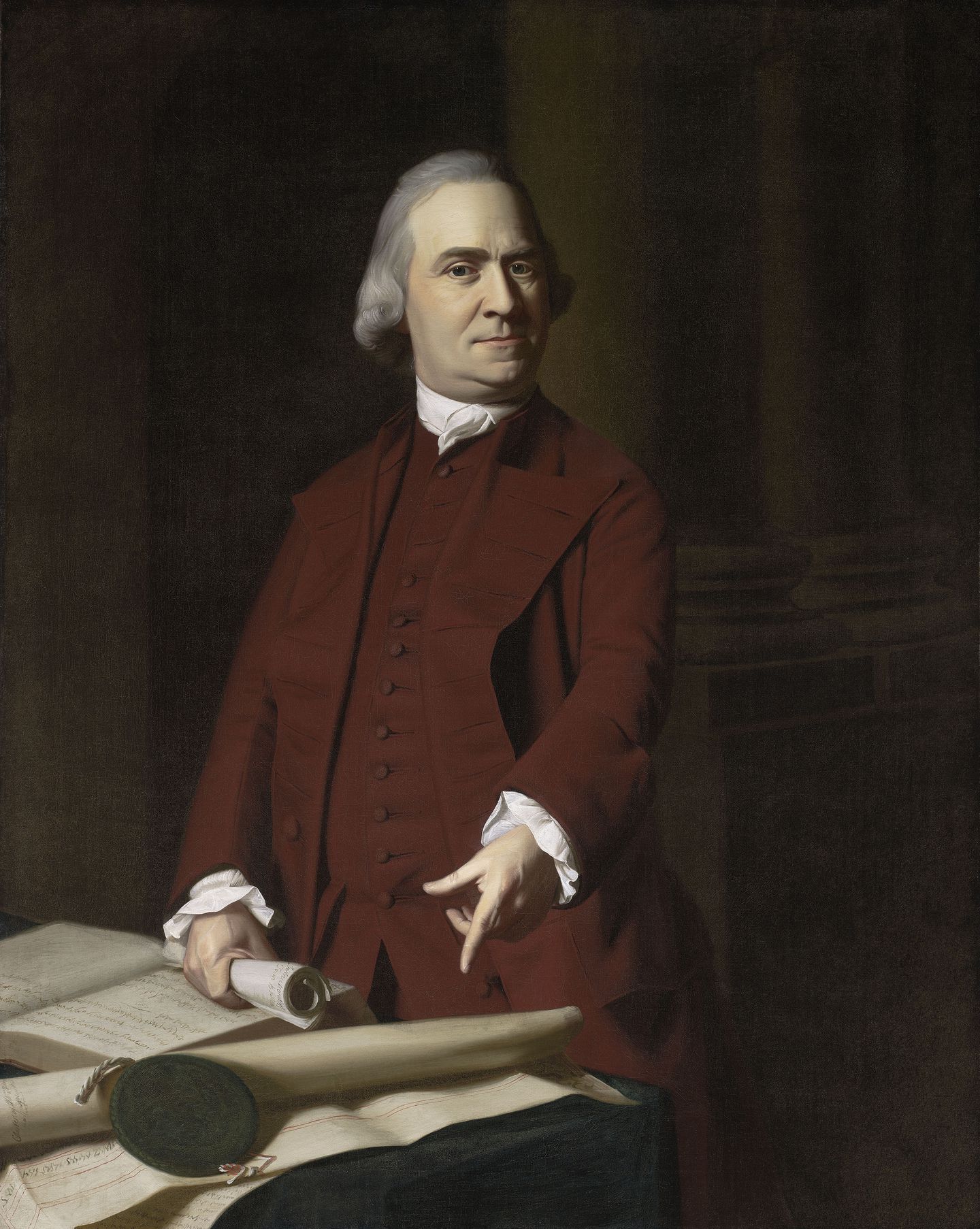
Samuel Adams (September 27 [O.S. September 16], 1722 – October 2, 1803) was an American statesman, political philosopher, and a Founding Father of the United States. He was a politician in colonial Massachusetts, a leader of the movement that became the American Revolution, a signatory of the Declaration of Independence and other founding documents, and one of the architects of the principles of American republicanism that shaped the political culture of the United States. He was a second cousin to his fellow Founding Father, President John Adams. He founded the Sons of Liberty.
Adams was born in Boston, brought up in a religious and politically active family. A graduate of Harvard College, he was an unsuccessful businessman and tax collector before concentrating on politics. He was an influential official of the Massachusetts House of Representatives and the Boston Town Meeting in the 1760s, and he became a part of a movement opposed to the British Parliament's efforts to tax the British American colonies without their consent. His 1768 Massachusetts Circular Letter calling for colonial non-cooperation prompted the occupation of Boston by British troops, eventually resulting in the Boston Massacre of 1770. Adams and his colleagues devised a committee of correspondence system in 1772 to help coordinate resistance to what he saw as the British government's attempts to violate the British Constitution at the expense of the colonies, which linked like-minded Patriots throughout the Thirteen Colonies. Continued resistance to British policy resulted in the 1773 Boston Tea Party and the coming of the American Revolution. Adams was actively involved with colonial newspapers publishing accounts of colonial sentiment over British colonial rule, which were fundamental in uniting the colonies.
Parliament passed the Coercive Acts in 1774, at which time Adams attended the Continental Congress in Philadelphia which was convened to coordinate a colonial response. He helped guide Congress towards issuing the Continental Association in 1774 and the Declaration of Independence in 1776, and he helped draft the Articles of Confederation and the Massachusetts Constitution. Adams returned to Massachusetts after the American Revolution, where he served in the state senate and was eventually elected governor.
Adams later became a controversial figure in American history. Accounts written in the 19th century praised him as someone who had been steering his fellow colonists towards independence long before the outbreak of the Revolutionary War. This view was challenged by negative assessments of Adams in the first half of the 20th century, in which he was portrayed as a master of propaganda who provoked mob violence to achieve his goals. However, according to biographer Mark Puls, a different account emerges upon examination of Adams's many writings regarding the civil rights of the colonists, while the mob referred to were a highly reflective group of men inspired by Adams who made his case with reasoned arguments in pamphlets and newspapers, without the use of emotional rhetoric.
Adams was born in Boston in the British colony of Massachusetts on September 16, 1722, an Old Style date that is sometimes converted to the New Style date of September 27. Adams was one of twelve children born to Samuel Adams Sr., and Mary (Fifield) Adams in an age of high infant mortality; only three of these children lived past their third birthday. Adams's parents were devout Puritans and members of the Old South Congregational Church. The family lived on what is today Purchase Street in Boston. Adams was proud of his Puritan heritage, and emphasized Puritan values in his political career, especially virtue.
Samuel Adams Sr. (1689–1748) was a prosperous merchant and church deacon. Deacon Adams became a leading figure in Boston politics through an organization that became known as the Boston Caucus, which promoted candidates who supported popular causes. Members of the Caucus helped shape the agenda of the Boston Town Meeting. A New England town meeting is a form of local government with elected officials, and not just a gathering of citizens; according to historian William Fowler, it was "the most democratic institution in the British empire". Deacon Adams rose through the political ranks, becoming a justice of the peace, a selectman, and a member of the Massachusetts House of Representatives. He worked closely with Elisha Cooke Jr. (1678–1737), the leader of the "popular party", a faction that resisted any encroachment by royal officials on the colonial rights embodied in the Massachusetts Charter of 1691. In the coming years, members of the "popular party" became known as Whigs or Patriots.
The younger Samuel Adams attended Boston Latin School and then entered Harvard College in 1736. His parents hoped that his schooling would prepare him for the ministry, but Adams gradually shifted his interest to politics. After graduating in 1740, Adams continued his studies, earning a master's degree in 1743. In his thesis, he argued that it was "lawful to resist the Supreme Magistrate, if the Commonwealth cannot otherwise be preserved", which indicated that his political views, like his father's, were oriented towards colonial rights.
Adams's life was greatly affected by his father's involvement in a banking controversy. In 1739, Massachusetts was facing a serious currency shortage, and Deacon Adams and the Boston Caucus created a "land bank" which issued paper money to borrowers who mortgaged their land as security. The land bank was generally supported by the citizenry and the popular party, which dominated the House of Representatives, the lower branch of the General Court. Opposition to the land bank came from the more aristocratic "court party", who were supporters of the royal governor Jonathan Belcher and controlled the Governor's Council, the upper chamber of the General Court. The court party used its influence to have the British Parliament dissolve the land bank in 1741. Directors of the land bank, including Deacon Adams, became personally liable for the currency still in circulation, payable in silver and gold. Lawsuits over the bank persisted for years, even after Deacon Adams's death, and the younger Samuel Adams often had to defend the family estate from seizure by the government. For Adams, these lawsuits "served as a constant personal reminder that Britain's power over the colonies could be exercised in arbitrary and destructive ways."
Hub AI
Samuel Adams AI simulator
(@Samuel Adams_simulator)
Samuel Adams
Samuel Adams (September 27 [O.S. September 16], 1722 – October 2, 1803) was an American statesman, political philosopher, and a Founding Father of the United States. He was a politician in colonial Massachusetts, a leader of the movement that became the American Revolution, a signatory of the Declaration of Independence and other founding documents, and one of the architects of the principles of American republicanism that shaped the political culture of the United States. He was a second cousin to his fellow Founding Father, President John Adams. He founded the Sons of Liberty.
Adams was born in Boston, brought up in a religious and politically active family. A graduate of Harvard College, he was an unsuccessful businessman and tax collector before concentrating on politics. He was an influential official of the Massachusetts House of Representatives and the Boston Town Meeting in the 1760s, and he became a part of a movement opposed to the British Parliament's efforts to tax the British American colonies without their consent. His 1768 Massachusetts Circular Letter calling for colonial non-cooperation prompted the occupation of Boston by British troops, eventually resulting in the Boston Massacre of 1770. Adams and his colleagues devised a committee of correspondence system in 1772 to help coordinate resistance to what he saw as the British government's attempts to violate the British Constitution at the expense of the colonies, which linked like-minded Patriots throughout the Thirteen Colonies. Continued resistance to British policy resulted in the 1773 Boston Tea Party and the coming of the American Revolution. Adams was actively involved with colonial newspapers publishing accounts of colonial sentiment over British colonial rule, which were fundamental in uniting the colonies.
Parliament passed the Coercive Acts in 1774, at which time Adams attended the Continental Congress in Philadelphia which was convened to coordinate a colonial response. He helped guide Congress towards issuing the Continental Association in 1774 and the Declaration of Independence in 1776, and he helped draft the Articles of Confederation and the Massachusetts Constitution. Adams returned to Massachusetts after the American Revolution, where he served in the state senate and was eventually elected governor.
Adams later became a controversial figure in American history. Accounts written in the 19th century praised him as someone who had been steering his fellow colonists towards independence long before the outbreak of the Revolutionary War. This view was challenged by negative assessments of Adams in the first half of the 20th century, in which he was portrayed as a master of propaganda who provoked mob violence to achieve his goals. However, according to biographer Mark Puls, a different account emerges upon examination of Adams's many writings regarding the civil rights of the colonists, while the mob referred to were a highly reflective group of men inspired by Adams who made his case with reasoned arguments in pamphlets and newspapers, without the use of emotional rhetoric.
Adams was born in Boston in the British colony of Massachusetts on September 16, 1722, an Old Style date that is sometimes converted to the New Style date of September 27. Adams was one of twelve children born to Samuel Adams Sr., and Mary (Fifield) Adams in an age of high infant mortality; only three of these children lived past their third birthday. Adams's parents were devout Puritans and members of the Old South Congregational Church. The family lived on what is today Purchase Street in Boston. Adams was proud of his Puritan heritage, and emphasized Puritan values in his political career, especially virtue.
Samuel Adams Sr. (1689–1748) was a prosperous merchant and church deacon. Deacon Adams became a leading figure in Boston politics through an organization that became known as the Boston Caucus, which promoted candidates who supported popular causes. Members of the Caucus helped shape the agenda of the Boston Town Meeting. A New England town meeting is a form of local government with elected officials, and not just a gathering of citizens; according to historian William Fowler, it was "the most democratic institution in the British empire". Deacon Adams rose through the political ranks, becoming a justice of the peace, a selectman, and a member of the Massachusetts House of Representatives. He worked closely with Elisha Cooke Jr. (1678–1737), the leader of the "popular party", a faction that resisted any encroachment by royal officials on the colonial rights embodied in the Massachusetts Charter of 1691. In the coming years, members of the "popular party" became known as Whigs or Patriots.
The younger Samuel Adams attended Boston Latin School and then entered Harvard College in 1736. His parents hoped that his schooling would prepare him for the ministry, but Adams gradually shifted his interest to politics. After graduating in 1740, Adams continued his studies, earning a master's degree in 1743. In his thesis, he argued that it was "lawful to resist the Supreme Magistrate, if the Commonwealth cannot otherwise be preserved", which indicated that his political views, like his father's, were oriented towards colonial rights.
Adams's life was greatly affected by his father's involvement in a banking controversy. In 1739, Massachusetts was facing a serious currency shortage, and Deacon Adams and the Boston Caucus created a "land bank" which issued paper money to borrowers who mortgaged their land as security. The land bank was generally supported by the citizenry and the popular party, which dominated the House of Representatives, the lower branch of the General Court. Opposition to the land bank came from the more aristocratic "court party", who were supporters of the royal governor Jonathan Belcher and controlled the Governor's Council, the upper chamber of the General Court. The court party used its influence to have the British Parliament dissolve the land bank in 1741. Directors of the land bank, including Deacon Adams, became personally liable for the currency still in circulation, payable in silver and gold. Lawsuits over the bank persisted for years, even after Deacon Adams's death, and the younger Samuel Adams often had to defend the family estate from seizure by the government. For Adams, these lawsuits "served as a constant personal reminder that Britain's power over the colonies could be exercised in arbitrary and destructive ways."
Recent media