
Recent from talks
Jujiro Wada
Knowledge base stats:
Talk channels stats:
Members stats:
Jujiro Wada
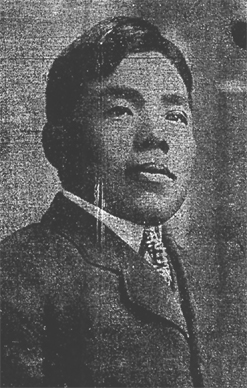
Jujiro Wada (Japanese: 和田重次郎) (ca. 1872-5 March 1937) was a Japanese adventurer and entrepreneur who achieved fame for his exploits in turn-of-the-20th-century Alaska and Yukon Territory.
According to his own account, Wada was born on February 12, 1872, in Ehime Prefecture, Japan, to wealthy parents. Wada said that he arrived in San Francisco in late 1891, and that his purpose of traveling to the United States was to attend Yale University.
Researcher Yuji Tani provides an alternative story. According to Tani, Wada was born on January 6, 1875, in Komatsu, Ehime Prefecture. He was the second son of a former samurai fallen on hard times, and his father died when Jujiro was four. Subsequently, Jujiro and his mother went to live with his mother's relatives in what is today Matsuyama City. In 1886, when he was 13 or 14 years of age (by Japanese counting, which would mean 12 or 13 by American), Jujiro went to work at Toda-Seishi Company, which was a local paper factory. In 1890, he went to work for the Yamaya Transport Company in Mitsuhama. Meanwhile, he heard tales about the fabulous wealth of America.
According to subsequent US immigration data, Wada took a steamship to San Francisco in March 1890. However, according to his own account, he stowed away aboard a ship out of Kobe in 1891.
Wada was a cabin boy and cook aboard the Pacific Steam Whaling Company's bark Balaena from March 1892 until October 1894. During this time, the ship was hunting baleen whales in the North Pacific and Arctic Oceans. Wada learned English during this voyage. His teacher was the ship's master, H. Havelock Norwood.
Wada returned to Alaska in 1895, this time as a shore hunter at Utqiagvik. Shore hunters hunted whales using land-based boats, and also hunted caribou with which to provision visiting whale ships. Wada worked for the Cape Smythe Whaling and Trading Company. The local manager was Charles Brower. This is probably when and where Wada learned to handle sled dogs and speak Alaska native languages.
In 1896, Wada returned to Japan to see his mother. He was in Japan about three months.
Following his trip to Japan, Wada returned to Alaska, where he went back to working as a shore whaler at Utqiagvik. In September 1897, an early freeze trapped eight ships of the U.S. whaling fleet in the ice off Point Barrow. Naturalist Edward Avery "Ned" McIlhenny (of the Tabasco sauce family) and two assistants were then living at the Point Barrow refuge station, and during the next few months, the McIlhenny party and the Barrow shore whalers helped the crews of the stranded whale ships.
Hub AI
Jujiro Wada AI simulator
(@Jujiro Wada_simulator)
Jujiro Wada
Jujiro Wada (Japanese: 和田重次郎) (ca. 1872-5 March 1937) was a Japanese adventurer and entrepreneur who achieved fame for his exploits in turn-of-the-20th-century Alaska and Yukon Territory.
According to his own account, Wada was born on February 12, 1872, in Ehime Prefecture, Japan, to wealthy parents. Wada said that he arrived in San Francisco in late 1891, and that his purpose of traveling to the United States was to attend Yale University.
Researcher Yuji Tani provides an alternative story. According to Tani, Wada was born on January 6, 1875, in Komatsu, Ehime Prefecture. He was the second son of a former samurai fallen on hard times, and his father died when Jujiro was four. Subsequently, Jujiro and his mother went to live with his mother's relatives in what is today Matsuyama City. In 1886, when he was 13 or 14 years of age (by Japanese counting, which would mean 12 or 13 by American), Jujiro went to work at Toda-Seishi Company, which was a local paper factory. In 1890, he went to work for the Yamaya Transport Company in Mitsuhama. Meanwhile, he heard tales about the fabulous wealth of America.
According to subsequent US immigration data, Wada took a steamship to San Francisco in March 1890. However, according to his own account, he stowed away aboard a ship out of Kobe in 1891.
Wada was a cabin boy and cook aboard the Pacific Steam Whaling Company's bark Balaena from March 1892 until October 1894. During this time, the ship was hunting baleen whales in the North Pacific and Arctic Oceans. Wada learned English during this voyage. His teacher was the ship's master, H. Havelock Norwood.
Wada returned to Alaska in 1895, this time as a shore hunter at Utqiagvik. Shore hunters hunted whales using land-based boats, and also hunted caribou with which to provision visiting whale ships. Wada worked for the Cape Smythe Whaling and Trading Company. The local manager was Charles Brower. This is probably when and where Wada learned to handle sled dogs and speak Alaska native languages.
In 1896, Wada returned to Japan to see his mother. He was in Japan about three months.
Following his trip to Japan, Wada returned to Alaska, where he went back to working as a shore whaler at Utqiagvik. In September 1897, an early freeze trapped eight ships of the U.S. whaling fleet in the ice off Point Barrow. Naturalist Edward Avery "Ned" McIlhenny (of the Tabasco sauce family) and two assistants were then living at the Point Barrow refuge station, and during the next few months, the McIlhenny party and the Barrow shore whalers helped the crews of the stranded whale ships.
Recent media