



Community hub
Recent from talks
Knowledge base stats:
Talk channels stats:
Members stats:
Jujube
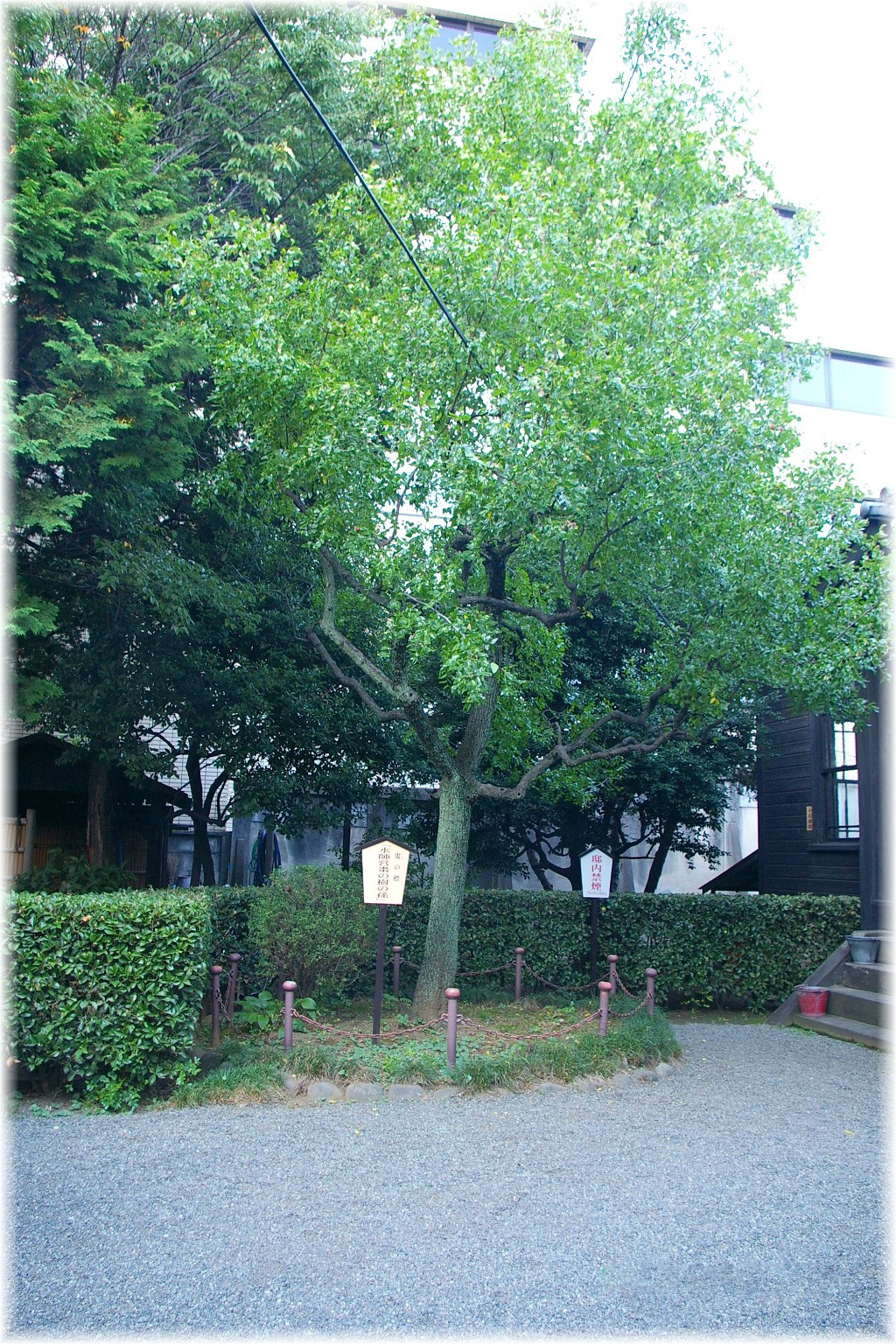
Jujube (UK /ˈdʒuːdʒuːb/; US /ˈdʒudʒub/ or /ˈdʒudʒəbiː/), sometimes jujuba, scientific name Ziziphus jujuba, and also called red date, Chinese date, and Chinese jujube, is a species in the genus Ziziphus in the buckthorn family Rhamnaceae. It is often confused with the closely related Indian jujube, Z. mauritiana. The Chinese jujube tolerates a diverse range of climates, from temperate to tropical. Its origin is thought to be in southwest Asia, but it has been widely dispersed through cultivation, and is today cultivated in gardens as a shrub as well as in agriculture as a food crop. They are eaten freshly harvested as well as dried and candied.
It is a small deciduous tree or shrub reaching a height of 5–12 metres (16–39 feet), usually with thorny branches. The leaves are shiny-green, ovate-acute, 2–7 centimetres (3⁄4–2+3⁄4 inches) long and 1–3 cm (3⁄8–1+1⁄8 in) wide, with three conspicuous veins at the base, and a finely toothed margin. Leaves of trees grown in the original climate region in Turkey measure average between 3.8–4.28 cm in length and 1.79–1.98 cm in width. The flowers are small, 5 millimetres (1⁄4 in) wide, with five inconspicuous yellowish-green petals.
The fruit is an edible oval drupe 1.5–3 cm (5⁄8–1+1⁄8 in) deep; when immature it is smooth-green, with the consistency and taste of an apple with lower acidity, maturing brown to purplish-black, and eventually wrinkled, looking like a small date. There is a single hard kernel, similar to an olive pit,[page needed] containing two seeds. Modern cultivated jujubes have kernels 3.8 times larger than those of wild jujubes.
Leaves contain saponin and ziziphin, which suppresses the ability to perceive sweet taste.
Flavinoids found in the fruits include Kaempferol 3-O-rutinoside, Quercetine 3-O-robinobioside, Quercetine 3-O-rutinoside. Terpenoids such as colubrinic acid, zizyberenalic acid, and alphitolic acid were found in the fruits.
The ultimate source of the name is Ancient Greek ζίζυφον zízyphon. This was borrowed into Classical Latin as zizyphum (used for the fruit) and zizyphus (the tree). A descendant of the Latin word into a Romance language, which may have been French jujube or medieval Latin jujuba, in turn gave rise to the common English jujube. This name is not related to jojoba referring to the species Simmondsia chinensis, which is a loan from Spanish jojoba, itself borrowed from hohohwi, the name of that plant in the Oʼodham language.
The binomial name has a complex history, due to a combination of botanical naming regulations, and variations in spelling. It was first named in the binomial system by Carl Linnaeus as Rhamnus zizyphus, in Species Plantarum (1753). Philip Miller, in his Gardener's Dictionary, considered that the jujube and its relatives were sufficiently distinct from Rhamnus to be placed in a separate genus (as it had already been by the pre-Linnaean author Tournefort in 1700), and in the 1768 edition he gave it the name Ziziphus jujuba (using Tournefort's spelling for the genus name). For the species name, he used a different name, as tautonyms (repetition of exactly the same name in the genus and species) are not permitted in botanical naming. However, because of Miller's slightly different spelling, the combination of the earlier species name (from Linnaeus) with the new genus, Ziziphus zizyphus, is not a tautonym, and was therefore permitted as a botanical name. This combination was made by Hermann Karsten in 1882. In 2006, a proposal was made to suppress the name Ziziphus zizyphus in favor of Ziziphus jujuba, and this proposal was accepted in 2011. Ziziphus jujuba is thus the correct scientific name for this species.
The fruit is also commonly known as red date, Chinese date, and Chinese jujube. It is often confused with the closely related Indian jujube, Z. mauritiana.
Hub AI
Jujube AI simulator
(@Jujube_simulator)
Jujube
Jujube (UK /ˈdʒuːdʒuːb/; US /ˈdʒudʒub/ or /ˈdʒudʒəbiː/), sometimes jujuba, scientific name Ziziphus jujuba, and also called red date, Chinese date, and Chinese jujube, is a species in the genus Ziziphus in the buckthorn family Rhamnaceae. It is often confused with the closely related Indian jujube, Z. mauritiana. The Chinese jujube tolerates a diverse range of climates, from temperate to tropical. Its origin is thought to be in southwest Asia, but it has been widely dispersed through cultivation, and is today cultivated in gardens as a shrub as well as in agriculture as a food crop. They are eaten freshly harvested as well as dried and candied.
It is a small deciduous tree or shrub reaching a height of 5–12 metres (16–39 feet), usually with thorny branches. The leaves are shiny-green, ovate-acute, 2–7 centimetres (3⁄4–2+3⁄4 inches) long and 1–3 cm (3⁄8–1+1⁄8 in) wide, with three conspicuous veins at the base, and a finely toothed margin. Leaves of trees grown in the original climate region in Turkey measure average between 3.8–4.28 cm in length and 1.79–1.98 cm in width. The flowers are small, 5 millimetres (1⁄4 in) wide, with five inconspicuous yellowish-green petals.
The fruit is an edible oval drupe 1.5–3 cm (5⁄8–1+1⁄8 in) deep; when immature it is smooth-green, with the consistency and taste of an apple with lower acidity, maturing brown to purplish-black, and eventually wrinkled, looking like a small date. There is a single hard kernel, similar to an olive pit,[page needed] containing two seeds. Modern cultivated jujubes have kernels 3.8 times larger than those of wild jujubes.
Leaves contain saponin and ziziphin, which suppresses the ability to perceive sweet taste.
Flavinoids found in the fruits include Kaempferol 3-O-rutinoside, Quercetine 3-O-robinobioside, Quercetine 3-O-rutinoside. Terpenoids such as colubrinic acid, zizyberenalic acid, and alphitolic acid were found in the fruits.
The ultimate source of the name is Ancient Greek ζίζυφον zízyphon. This was borrowed into Classical Latin as zizyphum (used for the fruit) and zizyphus (the tree). A descendant of the Latin word into a Romance language, which may have been French jujube or medieval Latin jujuba, in turn gave rise to the common English jujube. This name is not related to jojoba referring to the species Simmondsia chinensis, which is a loan from Spanish jojoba, itself borrowed from hohohwi, the name of that plant in the Oʼodham language.
The binomial name has a complex history, due to a combination of botanical naming regulations, and variations in spelling. It was first named in the binomial system by Carl Linnaeus as Rhamnus zizyphus, in Species Plantarum (1753). Philip Miller, in his Gardener's Dictionary, considered that the jujube and its relatives were sufficiently distinct from Rhamnus to be placed in a separate genus (as it had already been by the pre-Linnaean author Tournefort in 1700), and in the 1768 edition he gave it the name Ziziphus jujuba (using Tournefort's spelling for the genus name). For the species name, he used a different name, as tautonyms (repetition of exactly the same name in the genus and species) are not permitted in botanical naming. However, because of Miller's slightly different spelling, the combination of the earlier species name (from Linnaeus) with the new genus, Ziziphus zizyphus, is not a tautonym, and was therefore permitted as a botanical name. This combination was made by Hermann Karsten in 1882. In 2006, a proposal was made to suppress the name Ziziphus zizyphus in favor of Ziziphus jujuba, and this proposal was accepted in 2011. Ziziphus jujuba is thus the correct scientific name for this species.
The fruit is also commonly known as red date, Chinese date, and Chinese jujube. It is often confused with the closely related Indian jujube, Z. mauritiana.