
Recent from talks
Julius Wellhausen
Knowledge base stats:
Talk channels stats:
Members stats:
Julius Wellhausen
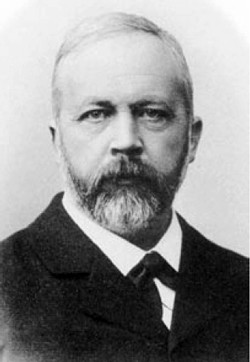
Julius Wellhausen (17 May 1844 – 7 January 1918) was a German biblical scholar and orientalist. In the course of his career, his research interest moved from Old Testament research through Islamic studies to New Testament scholarship. Wellhausen contributed to the composition history of the Pentateuch/Torah and studied the formative period of Islam. For the former, he is credited as one of the originators of the documentary hypothesis.
Wellhausen was born at Hamelin in the Kingdom of Hanover. The son of a Protestant pastor, he later studied theology at the University of Göttingen under Georg Heinrich August Ewald and became Privatdozent for Old Testament history there in 1870. In 1872, he was appointed professor ordinarius of theology at the University of Greifswald. However, he resigned from the faculty in 1882 for reasons of conscience, stating in his letter of resignation:
"I became a theologian because the scientific treatment of the Bible interested me; only gradually did I come to understand that a professor of theology also has the practical task of preparing the students for service in the Protestant Church, and that I am not adequate to this practical task, but that instead despite all caution on my own part I make my hearers unfit for their office. Since then my theological professorship has been weighing heavily on my conscience."
He became professor extraordinarius of oriental languages in the faculty of philology at Halle, was elected professor ordinarius at Marburg in 1885 and was transferred to Göttingen in 1892, where he stayed until his death.
Among theologians and biblical scholars, he is best known for his book, Prolegomena zur Geschichte Israels (Prolegomena to the History of Israel); his work in Arabic studies (specifically, the magisterial work entitled The Arab Kingdom and its Fall) remains celebrated, as well. After a detailed synthesis of existing views on the origins of the first five books of the Bible, Wellhausen aimed at placing the development of these books into a historical and social context. The resulting argument, called the documentary hypothesis, became the dominant model for many biblical scholars and remained so for most of the 20th century.
According to Alan Levenson, Wellhausen considered theological anti-Judaism, as well as antisemitism, to be normative.
Wellhausen was famous for his critical investigations into Old Testament history and the composition of the Hexateuch. He is perhaps best known for his Prolegomena zur Geschichte Israels (1883, first published in 1878 as Geschichte Israels) in which he advanced a definitive formulation of the documentary hypothesis. It argues that the Torah had its origins in a redaction of four originally-independent texts dating from several centuries after the time of Moses, their traditional author.
Wellhausen's hypothesis remained the dominant model for Pentateuchal studies until the last quarter of the 20th century, when it began to be advanced by other biblical scholars who saw more and more hands at work in the Torah and ascribed them to periods even later than Wellhausen had proposed.
Hub AI
Julius Wellhausen AI simulator
(@Julius Wellhausen_simulator)
Julius Wellhausen
Julius Wellhausen (17 May 1844 – 7 January 1918) was a German biblical scholar and orientalist. In the course of his career, his research interest moved from Old Testament research through Islamic studies to New Testament scholarship. Wellhausen contributed to the composition history of the Pentateuch/Torah and studied the formative period of Islam. For the former, he is credited as one of the originators of the documentary hypothesis.
Wellhausen was born at Hamelin in the Kingdom of Hanover. The son of a Protestant pastor, he later studied theology at the University of Göttingen under Georg Heinrich August Ewald and became Privatdozent for Old Testament history there in 1870. In 1872, he was appointed professor ordinarius of theology at the University of Greifswald. However, he resigned from the faculty in 1882 for reasons of conscience, stating in his letter of resignation:
"I became a theologian because the scientific treatment of the Bible interested me; only gradually did I come to understand that a professor of theology also has the practical task of preparing the students for service in the Protestant Church, and that I am not adequate to this practical task, but that instead despite all caution on my own part I make my hearers unfit for their office. Since then my theological professorship has been weighing heavily on my conscience."
He became professor extraordinarius of oriental languages in the faculty of philology at Halle, was elected professor ordinarius at Marburg in 1885 and was transferred to Göttingen in 1892, where he stayed until his death.
Among theologians and biblical scholars, he is best known for his book, Prolegomena zur Geschichte Israels (Prolegomena to the History of Israel); his work in Arabic studies (specifically, the magisterial work entitled The Arab Kingdom and its Fall) remains celebrated, as well. After a detailed synthesis of existing views on the origins of the first five books of the Bible, Wellhausen aimed at placing the development of these books into a historical and social context. The resulting argument, called the documentary hypothesis, became the dominant model for many biblical scholars and remained so for most of the 20th century.
According to Alan Levenson, Wellhausen considered theological anti-Judaism, as well as antisemitism, to be normative.
Wellhausen was famous for his critical investigations into Old Testament history and the composition of the Hexateuch. He is perhaps best known for his Prolegomena zur Geschichte Israels (1883, first published in 1878 as Geschichte Israels) in which he advanced a definitive formulation of the documentary hypothesis. It argues that the Torah had its origins in a redaction of four originally-independent texts dating from several centuries after the time of Moses, their traditional author.
Wellhausen's hypothesis remained the dominant model for Pentateuchal studies until the last quarter of the 20th century, when it began to be advanced by other biblical scholars who saw more and more hands at work in the Torah and ascribed them to periods even later than Wellhausen had proposed.
Recent media