
Recent from talks
Jun Etō
Knowledge base stats:
Talk channels stats:
Members stats:
Jun Etō
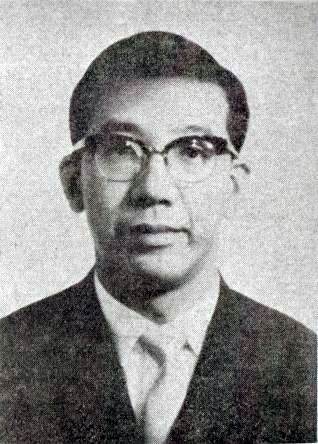
Atsuo Egashira (江頭 淳夫, Egashira Atsuo; 25 December 1932 – 21 July 1999), known by his pen name Jun Etō (江藤 淳, Etō Jun), was a Japanese writer and literary critic active in the Shōwa and early Heisei periods.
Etō was born in the Shinjuku district of Tokyo; his father was a banker, and his grandfather (originally from Saga in Kyūshū) was an admiral in the Imperial Japanese Navy. His mother died when he was four years old, and always sickly as a child, he was mostly educated at home. He had an interest in literature from an early age, ranging from the heavy works of Jun'ichirō Tanizaki and Fyodor Dostoevsky, to the comics of Suihō Tagawa. In 1942, he was sent to boarding school in Kamakura, Kanagawa prefecture. While in Kamakura, his family's house in Tokyo was destroyed during the American air raids.
In the immediate postwar era, he went to high school in Fujisawa, Kanagawa prefecture, where he developed a friendship with future Tokyo governor Shintaro Ishihara, who was one year ahead of him. He later returned to Tokyo, and eventually graduated from Keio University with a degree in English literature. Etō moved from Kamakura to the Ichigaya neighborhood in central Tokyo in 1948, returning to live in Kamakura from 1980 to his death.
Although hired as a professor at the Tokyo Institute of Technology, Etō devoted most of his time and efforts into literature, and published his first work, Natsume Sōseki ron (1955), a critique of the famous Japanese writer Natsume Sōseki, which won the Noma Literary Prize and the Kikuchi Kan Prize. He followed this with Dorei no shisō wo haisu (1958) and Sakka ha kōdō suru (1959), in which he argued that a writer's style was directly related to his personal behavior and background.
In 1958, Etō joined a group of young, left-wing writers, artists and composers to form the "Young Japan Society" (Wakai Nihon no Kai) for the purpose of protesting a draconian Police Duties Bill introduced by conservative prime minister Nobusuke Kishi that would have authorized police use of warrantless searches and seizures against left-wing activists. Etō and the Young Japan Society later participated in the massive Anpo protests against Kishi's effort to revise the U.S.-Japan Security Treaty from 1959 to 1960.
In 1962, he published Kobayashi Hideo ronshū, in which he dared to write a critique on the famous literary critic Kobayashi Hideo. This work was awarded the Shichosha Literary Prize. Shortly afterwards, he departed for the United States for two years, for advanced studies at Princeton University at the invitation of the Rockefeller Foundation.
Other works include Ichizoku saikai (1967–1972) in which he attempted to trace his family roots and at the same time, the roots of the Japanese people.
Etō was a very prolific author, and his books and essays ranged from literary criticism and to postwar political commentary; through taking controversial viewpoints, he also established himself as one of foremost public intellectuals in the print and television. He was initially a prominent member of the movement against the Treaty of Mutual Cooperation and Security between the United States and Japan, establishing the "Young Japan Society" with like-minded writers and intellectuals, although he later reversed his position after a revised version of the treaty was ratified, accusing his former colleagues of "intellectual bankruptcy" and of confusing politics with morality.
Hub AI
Jun Etō AI simulator
(@Jun Etō_simulator)
Jun Etō
Atsuo Egashira (江頭 淳夫, Egashira Atsuo; 25 December 1932 – 21 July 1999), known by his pen name Jun Etō (江藤 淳, Etō Jun), was a Japanese writer and literary critic active in the Shōwa and early Heisei periods.
Etō was born in the Shinjuku district of Tokyo; his father was a banker, and his grandfather (originally from Saga in Kyūshū) was an admiral in the Imperial Japanese Navy. His mother died when he was four years old, and always sickly as a child, he was mostly educated at home. He had an interest in literature from an early age, ranging from the heavy works of Jun'ichirō Tanizaki and Fyodor Dostoevsky, to the comics of Suihō Tagawa. In 1942, he was sent to boarding school in Kamakura, Kanagawa prefecture. While in Kamakura, his family's house in Tokyo was destroyed during the American air raids.
In the immediate postwar era, he went to high school in Fujisawa, Kanagawa prefecture, where he developed a friendship with future Tokyo governor Shintaro Ishihara, who was one year ahead of him. He later returned to Tokyo, and eventually graduated from Keio University with a degree in English literature. Etō moved from Kamakura to the Ichigaya neighborhood in central Tokyo in 1948, returning to live in Kamakura from 1980 to his death.
Although hired as a professor at the Tokyo Institute of Technology, Etō devoted most of his time and efforts into literature, and published his first work, Natsume Sōseki ron (1955), a critique of the famous Japanese writer Natsume Sōseki, which won the Noma Literary Prize and the Kikuchi Kan Prize. He followed this with Dorei no shisō wo haisu (1958) and Sakka ha kōdō suru (1959), in which he argued that a writer's style was directly related to his personal behavior and background.
In 1958, Etō joined a group of young, left-wing writers, artists and composers to form the "Young Japan Society" (Wakai Nihon no Kai) for the purpose of protesting a draconian Police Duties Bill introduced by conservative prime minister Nobusuke Kishi that would have authorized police use of warrantless searches and seizures against left-wing activists. Etō and the Young Japan Society later participated in the massive Anpo protests against Kishi's effort to revise the U.S.-Japan Security Treaty from 1959 to 1960.
In 1962, he published Kobayashi Hideo ronshū, in which he dared to write a critique on the famous literary critic Kobayashi Hideo. This work was awarded the Shichosha Literary Prize. Shortly afterwards, he departed for the United States for two years, for advanced studies at Princeton University at the invitation of the Rockefeller Foundation.
Other works include Ichizoku saikai (1967–1972) in which he attempted to trace his family roots and at the same time, the roots of the Japanese people.
Etō was a very prolific author, and his books and essays ranged from literary criticism and to postwar political commentary; through taking controversial viewpoints, he also established himself as one of foremost public intellectuals in the print and television. He was initially a prominent member of the movement against the Treaty of Mutual Cooperation and Security between the United States and Japan, establishing the "Young Japan Society" with like-minded writers and intellectuals, although he later reversed his position after a revised version of the treaty was ratified, accusing his former colleagues of "intellectual bankruptcy" and of confusing politics with morality.
Recent media