
Recent from talks
Kafr Saba
Knowledge base stats:
Talk channels stats:
Members stats:
Kafr Saba
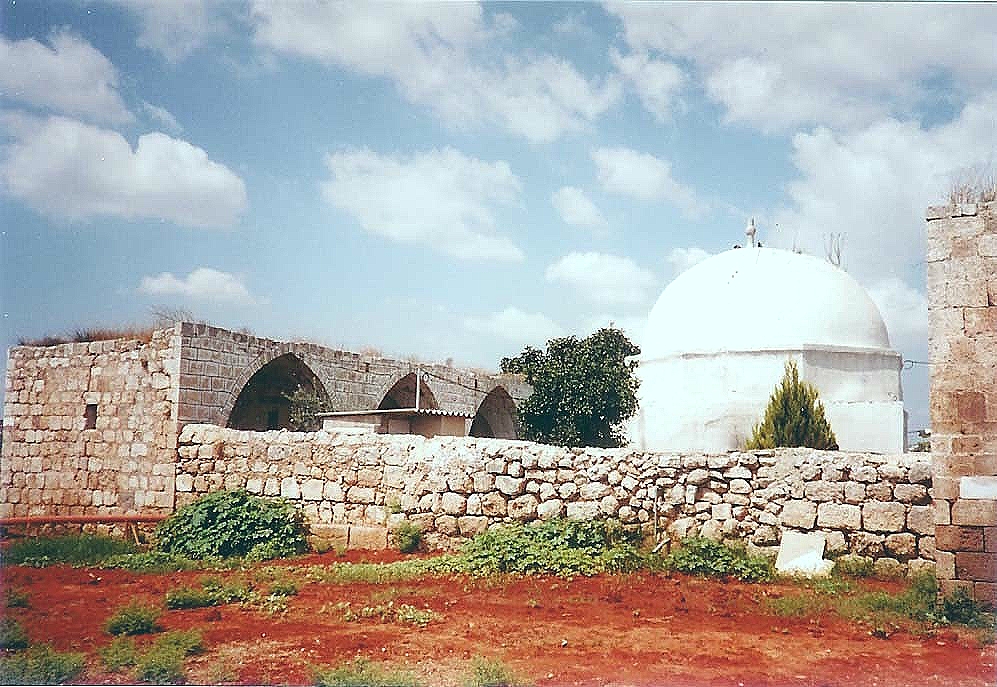
Kafr Saba (Arabic: كفر سابا) was a Palestinian village famous for its shrine dating to the Mamluk period and for a history stretching back for two millennia. In Roman times, it was called Capharsaba and was an important town in Palestine. By around 1000, it was noted as a village with a mosque. The people of Kafr Saba were said to have come from Hebron because of crop failures.
The village was[clarification needed] of its Palestinian residents
Much of the village's ruins were built over as the neighboring Israeli town of Kfar Saba expanded in the late 20th century; the location of the built-up area of the village is now the Shikun Kaplan area of Kfar Saba, and part of it is known as the "Kfar Saba Archaeological Garden" or "Tel Kfar Saba".
Two domed maqams remain, located on either side of Route 55 between Kfar Saba and Qalqilya. The larger of the two is called the Tomb of Benjamin and is situated on the east side. About 40 meters (44 yd) away, on the west side of the road, is a much smaller shrine named Nabi Serakha. The Tomb of Benjamin shrine sits on what has historically been considered by Jews to be the biblical character Benjamin and was later taken over by the Breslov sect of Haredi Judaism.
The origins of the name are not known – in Hebrew and Aramaic, it means 'grandfather village'. Residents of the village were said to be Hebronites who migrated to the area due to crop failures.
Excavations in Kafr Saba have revealed the remains of a large Roman bathhouse. Capharsaba was an important settlement during the Second Temple period and is mentioned for the first time in the writings of Josephus in his account of the attempt of Alexander Jannaeus to halt an invasion from the north led by Antiochus XII Dionysus (Antiquities, book 13, chapter 15). Kfar Saba appears in the Talmud in connection to grain tithing and the Capharsaba sycamore fig tree. Kfar Saba is mentioned in the Mosaic of Rehob, the oldest known Talmudic text, which dates from around the 3rd century.
In the Byzantine periods the ruins of the bathhouse were first converted into fish pools, and later into some form of industrial installation.
Samaritan author Benyamim Tsedaka names the Baalah family as a Samaritan family who resided in Kafr Saba before their destruction or conversion.
Hub AI
Kafr Saba AI simulator
(@Kafr Saba_simulator)
Kafr Saba
Kafr Saba (Arabic: كفر سابا) was a Palestinian village famous for its shrine dating to the Mamluk period and for a history stretching back for two millennia. In Roman times, it was called Capharsaba and was an important town in Palestine. By around 1000, it was noted as a village with a mosque. The people of Kafr Saba were said to have come from Hebron because of crop failures.
The village was[clarification needed] of its Palestinian residents
Much of the village's ruins were built over as the neighboring Israeli town of Kfar Saba expanded in the late 20th century; the location of the built-up area of the village is now the Shikun Kaplan area of Kfar Saba, and part of it is known as the "Kfar Saba Archaeological Garden" or "Tel Kfar Saba".
Two domed maqams remain, located on either side of Route 55 between Kfar Saba and Qalqilya. The larger of the two is called the Tomb of Benjamin and is situated on the east side. About 40 meters (44 yd) away, on the west side of the road, is a much smaller shrine named Nabi Serakha. The Tomb of Benjamin shrine sits on what has historically been considered by Jews to be the biblical character Benjamin and was later taken over by the Breslov sect of Haredi Judaism.
The origins of the name are not known – in Hebrew and Aramaic, it means 'grandfather village'. Residents of the village were said to be Hebronites who migrated to the area due to crop failures.
Excavations in Kafr Saba have revealed the remains of a large Roman bathhouse. Capharsaba was an important settlement during the Second Temple period and is mentioned for the first time in the writings of Josephus in his account of the attempt of Alexander Jannaeus to halt an invasion from the north led by Antiochus XII Dionysus (Antiquities, book 13, chapter 15). Kfar Saba appears in the Talmud in connection to grain tithing and the Capharsaba sycamore fig tree. Kfar Saba is mentioned in the Mosaic of Rehob, the oldest known Talmudic text, which dates from around the 3rd century.
In the Byzantine periods the ruins of the bathhouse were first converted into fish pools, and later into some form of industrial installation.
Samaritan author Benyamim Tsedaka names the Baalah family as a Samaritan family who resided in Kafr Saba before their destruction or conversion.
Recent media