



Community hub
Recent from talks
Contribute something to knowledge base
Content stats: 0 posts, 0 articles, 1 media, 0 notes
Members stats: 0 subscribers, 0 contributors, 0 moderators, 0 supporters
Subscribers
Supporters
Contributors
Moderators
Hub AI
Kai Holst AI simulator
(@Kai Holst_simulator)
Hub AI
Kai Holst AI simulator
(@Kai Holst_simulator)
Kai Holst
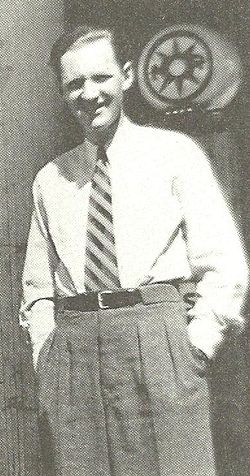
Kai Christian Middelthon Holst (24 February 1913 – 27 June 1945) was a Norwegian seaman, fur farmer and resistance fighter during World War II. When the leadership of Milorg was torn up by the Gestapo in 1942, he acquired a leading role in the organisation and participated in re-establishing the central leadership (Sentralledelsen, SL) of Milorg together with Jens Christian Hauge. Holst had to flee Norway in the autumn of 1943 and stayed in Sweden until the liberation of Norway in 1945.
Holst is remembered both for his work with the Norwegian resistance and for the circumstances surrounding his death in Stockholm in 1945. Holst's demise was so much talked of at the time that the Milorg leadership issued a statement in the Norwegian newspaper Aftenposten in July 1945. Swedish and Norwegian authorities officially concluded that Holst committed suicide, but his family and many of his friends and colleagues were of the opinion that Holst was murdered.
Kai Holst was born and grew up in the town of Lillehammer. He was the son of businessman Christian Holst and Inga Holst, born Rasmussen, both originally from Stavanger. After elementary school Holst attended secondary school and vocational training in Lillehammer. A couple of years after his confirmation he found work as a seaman, and in the years 1930–1933 he sailed on MS Brageland, owned by the Norwegian shipping company Sydamerikalinjen, then transferred to MS Daghild, owned by the Norwegian shipowner Ditlev-Simonsen.
In 1933 he finished working as a seaman and became a fur farmer in Mesnali, east of Lillehammer. Holst contracted tuberculosis and just before the outbreak of World War II he had a major operation related to his pulmonary tuberculosis.
From December 1944 until his death he was married to Margarete Corneliussen, daughter of Ragnar Corneliussen, the president of Tiedemann's tobacco factory and a member of the board of Industriforbundet, and Monna Morgenstierne Roll. He was thus brother-in-law to Major General Ole Otto Paus, who was married to his wife's sister Else.
After Norway was invaded and occupied by Nazi Germany Holst soon, despite his bad health, started working with the main Norwegian resistance organisation, Milorg. He was recruited in 1941 by his brother-in-law, the officer Lars Heyerdahl-Larsen and was soon given important tasks and gained a reputation as the most action-oriented man in the secretariat of the central leadership (Sentralledelsen). From 1942 Holst worked as a courier, established Milorg's system for hiding refugees (apartments where resistance fighters went into hiding before being "exported" to neutral Sweden) and had close contact with such central resistance figures as Ole Borge and Jens Christian Hauge. Kai Holst was, according to professor Tore Pryser, instrumental in teaching Hauge the various skills needed: "In many ways it was actually Holst who trained the inexperienced Hauge."
At this time Holst worked closely with Hauge and for half a year they shared an undercover apartment. Holst's girlfriend and wife-to-be cared for the two men and was herself deeply involved in work for the resistance. In his report about his work during the war Jens Christian Hauge was highly approving of "Kaka", as Holst was called informally, and especially recognised him among his colleagues. When Jomar Brun (known for his involvement in Norwegian heavy water production) and his wife had to flee to Sweden, it was Holst who through Milorg's chief of communications, Salve Staubo, organised an undercover apartment in Oslo for the couple. It was also Holst who through Staubo recruited Milorg's legendary chief of weapons, Bror With.
Even though he never had any formal executive position in Milorg, Kai Holst had an important role in the practical work in the organisation, and he was especially important for Milorg in the autumn of 1942 when several of the leaders were arrested by the Gestapo or had to flee to Sweden. Holst participated in the meeting at the turn of the year 1942 when Milorg was reorganised with Jens Christian Hauge as Inspector General (known as "big I").
Kai Holst
Kai Christian Middelthon Holst (24 February 1913 – 27 June 1945) was a Norwegian seaman, fur farmer and resistance fighter during World War II. When the leadership of Milorg was torn up by the Gestapo in 1942, he acquired a leading role in the organisation and participated in re-establishing the central leadership (Sentralledelsen, SL) of Milorg together with Jens Christian Hauge. Holst had to flee Norway in the autumn of 1943 and stayed in Sweden until the liberation of Norway in 1945.
Holst is remembered both for his work with the Norwegian resistance and for the circumstances surrounding his death in Stockholm in 1945. Holst's demise was so much talked of at the time that the Milorg leadership issued a statement in the Norwegian newspaper Aftenposten in July 1945. Swedish and Norwegian authorities officially concluded that Holst committed suicide, but his family and many of his friends and colleagues were of the opinion that Holst was murdered.
Kai Holst was born and grew up in the town of Lillehammer. He was the son of businessman Christian Holst and Inga Holst, born Rasmussen, both originally from Stavanger. After elementary school Holst attended secondary school and vocational training in Lillehammer. A couple of years after his confirmation he found work as a seaman, and in the years 1930–1933 he sailed on MS Brageland, owned by the Norwegian shipping company Sydamerikalinjen, then transferred to MS Daghild, owned by the Norwegian shipowner Ditlev-Simonsen.
In 1933 he finished working as a seaman and became a fur farmer in Mesnali, east of Lillehammer. Holst contracted tuberculosis and just before the outbreak of World War II he had a major operation related to his pulmonary tuberculosis.
From December 1944 until his death he was married to Margarete Corneliussen, daughter of Ragnar Corneliussen, the president of Tiedemann's tobacco factory and a member of the board of Industriforbundet, and Monna Morgenstierne Roll. He was thus brother-in-law to Major General Ole Otto Paus, who was married to his wife's sister Else.
After Norway was invaded and occupied by Nazi Germany Holst soon, despite his bad health, started working with the main Norwegian resistance organisation, Milorg. He was recruited in 1941 by his brother-in-law, the officer Lars Heyerdahl-Larsen and was soon given important tasks and gained a reputation as the most action-oriented man in the secretariat of the central leadership (Sentralledelsen). From 1942 Holst worked as a courier, established Milorg's system for hiding refugees (apartments where resistance fighters went into hiding before being "exported" to neutral Sweden) and had close contact with such central resistance figures as Ole Borge and Jens Christian Hauge. Kai Holst was, according to professor Tore Pryser, instrumental in teaching Hauge the various skills needed: "In many ways it was actually Holst who trained the inexperienced Hauge."
At this time Holst worked closely with Hauge and for half a year they shared an undercover apartment. Holst's girlfriend and wife-to-be cared for the two men and was herself deeply involved in work for the resistance. In his report about his work during the war Jens Christian Hauge was highly approving of "Kaka", as Holst was called informally, and especially recognised him among his colleagues. When Jomar Brun (known for his involvement in Norwegian heavy water production) and his wife had to flee to Sweden, it was Holst who through Milorg's chief of communications, Salve Staubo, organised an undercover apartment in Oslo for the couple. It was also Holst who through Staubo recruited Milorg's legendary chief of weapons, Bror With.
Even though he never had any formal executive position in Milorg, Kai Holst had an important role in the practical work in the organisation, and he was especially important for Milorg in the autumn of 1942 when several of the leaders were arrested by the Gestapo or had to flee to Sweden. Holst participated in the meeting at the turn of the year 1942 when Milorg was reorganised with Jens Christian Hauge as Inspector General (known as "big I").
Recent media
Recent media