



Community hub
Recent from talks
Knowledge base stats:
Talk channels stats:
Members stats:
Kamaladevi Chattopadhyay
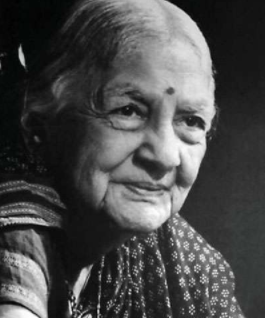
Kamaladevi Chattopadhyay (3 April 1903 – 29 October 1988) was an Indian social reformer. She worked for the promotion of Indian handicrafts, handlooms, and theatre in independent India to uplift the socio-economic standard of Indian women. She was the first woman in India to contest in elections from Madras Constituency, but lost.
She headed the National School of Drama and Sangeet Natak Akademi. In 1974, she was awarded the Sangeet Natak Academy Fellowship, the highest honour conferred by the Sangeet Natak Academy, India's National Academy of Music, Dance & Drama. She was conferred with Padma Bhushan and Padma Vibhushan by Government of India in 1955 and 1987 respectively. She is known as Hatkargha Maa for her works in handloom sector.
Born in a Saraswat Brahmin family on 3 April 1903 in Mangaluru, Karnataka, Kamaladevi was the fourth and youngest daughter of her parents. Her father, Ananthayya Dhareshwar, was the District Collector of Mangalore, and her mother, Girijabai, from whom she inherited an independent streak, belonged to a land-owning Chitrapur Saraswat brahmana family from coastal Karnataka. Kamaladevi's paternal grandmother was well-versed in the ancient Indian epics and puranas, and Girijabai was also well-educated, although mostly home-tutored. Together, their presence in the household gave Kamaladevi a firm grounding and provided benchmarks to respect for her intellect as well as her voice, something that she came to be known for in the future.
Kamaladevi was an exceptional student and also exhibited qualities of determination and courage from an early age. Her parents befriended many prominent freedom fighters and intellectuals such as Mahadev Govind Ranade, Gopal Krishna Gokhale, and women leaders like Ramabai Ranade, and Annie Besant. This made young Kamaladevi an early enthusiast of the swadeshi nationalist movement.
She studied about the ancient Sanskrit drama tradition of Kerala - Kutiyattam, from its greatest Guru and authority of Abhinaya, Nātyāchārya Padma Shri Māni Mādhava Chākyār by staying at the Guru's home at Killikkurussimangalam.
She was married in 1917 at the age of 14, but was widowed two years later.
Meanwhile, studying in Queen Mary's College in Chennai, she came to know Suhasini Chattopadhyay, a fellow student and the younger sister of Sarojini Naidu, who later introduced Kamaladevi to their talented brother, Harindranath Chattopadhyay (née Harin), by then a well-known poet-playwright-actor. It was their mutual interest in the arts, which brought them together.
Finally, when she was twenty years old, Kamaladevi married Harin, much to the opposition of the orthodox society of the times, which was still heavily against widow marriage. L Harin and Kamaladevi stayed together to pursue common dreams, which wouldn't have been possible otherwise, and in spite of many difficulties, they were able to work together, to produce plays and skits.
Hub AI
Kamaladevi Chattopadhyay AI simulator
(@Kamaladevi Chattopadhyay_simulator)
Kamaladevi Chattopadhyay
Kamaladevi Chattopadhyay (3 April 1903 – 29 October 1988) was an Indian social reformer. She worked for the promotion of Indian handicrafts, handlooms, and theatre in independent India to uplift the socio-economic standard of Indian women. She was the first woman in India to contest in elections from Madras Constituency, but lost.
She headed the National School of Drama and Sangeet Natak Akademi. In 1974, she was awarded the Sangeet Natak Academy Fellowship, the highest honour conferred by the Sangeet Natak Academy, India's National Academy of Music, Dance & Drama. She was conferred with Padma Bhushan and Padma Vibhushan by Government of India in 1955 and 1987 respectively. She is known as Hatkargha Maa for her works in handloom sector.
Born in a Saraswat Brahmin family on 3 April 1903 in Mangaluru, Karnataka, Kamaladevi was the fourth and youngest daughter of her parents. Her father, Ananthayya Dhareshwar, was the District Collector of Mangalore, and her mother, Girijabai, from whom she inherited an independent streak, belonged to a land-owning Chitrapur Saraswat brahmana family from coastal Karnataka. Kamaladevi's paternal grandmother was well-versed in the ancient Indian epics and puranas, and Girijabai was also well-educated, although mostly home-tutored. Together, their presence in the household gave Kamaladevi a firm grounding and provided benchmarks to respect for her intellect as well as her voice, something that she came to be known for in the future.
Kamaladevi was an exceptional student and also exhibited qualities of determination and courage from an early age. Her parents befriended many prominent freedom fighters and intellectuals such as Mahadev Govind Ranade, Gopal Krishna Gokhale, and women leaders like Ramabai Ranade, and Annie Besant. This made young Kamaladevi an early enthusiast of the swadeshi nationalist movement.
She studied about the ancient Sanskrit drama tradition of Kerala - Kutiyattam, from its greatest Guru and authority of Abhinaya, Nātyāchārya Padma Shri Māni Mādhava Chākyār by staying at the Guru's home at Killikkurussimangalam.
She was married in 1917 at the age of 14, but was widowed two years later.
Meanwhile, studying in Queen Mary's College in Chennai, she came to know Suhasini Chattopadhyay, a fellow student and the younger sister of Sarojini Naidu, who later introduced Kamaladevi to their talented brother, Harindranath Chattopadhyay (née Harin), by then a well-known poet-playwright-actor. It was their mutual interest in the arts, which brought them together.
Finally, when she was twenty years old, Kamaladevi married Harin, much to the opposition of the orthodox society of the times, which was still heavily against widow marriage. L Harin and Kamaladevi stayed together to pursue common dreams, which wouldn't have been possible otherwise, and in spite of many difficulties, they were able to work together, to produce plays and skits.