
Recent from talks
Mahadev Govind Ranade
Knowledge base stats:
Talk channels stats:
Members stats:
Mahadev Govind Ranade
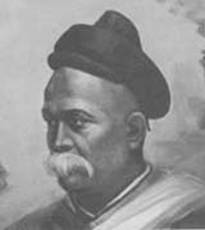
Rao Bahadur Mahadev Govind Ranade CIE (18 January 1842–16 January 1901), popularly referred to as Nyayamurti Ranade (lit. Justice Ranade), was an Indian scholar, social reformer, judge and author. He was one of the founding members of the Indian National Congress party and held several designations such as Member of the Bombay Legislative Council and Member of the Finance Committee at the Centre. He was also a judge of the Bombay High Court, Maharashtra.
As a well-known public figure, his personality as a calm and patient optimist influenced his attitude towards dealings with Britain as well as reform in India. During his life, he helped establish the Poona Sarvajanik Sabha, Maharashtra Granthottejak Sabha and Prarthana Samaj. He also edited a Bombay Anglo-Marathi daily paper—The Induprakash, founded on his ideology of social and religious reform.
He was accorded the title of Rao Bahadur.
Mahadev Govind Ranade was born into a Chitpavan Brahmin family in Niphad, a taluka town in Nashik district. He studied in a Marathi school in Kolhapur and later shifted to an English-medium school. At the age of 14, he studied at Elphinstone College, Bombay. He belonged to the first batch of students at the University of Bombay. In 1862, he obtained a B.A. degree in history & economics, and in 1864 an M.A. in history. Three years later, he obtained his L.L.B. (law degree) in 1866.
After obtaining his L.L.B., Ranade became a subordinate judge in Pune in 1871. Given his political activities and public popularity, the British colonial authorities delayed his promotion to the Bombay High Court until 1895.
Ranade was a progressive social activist whose activities were deeply influenced by western culture and the colonial state. His activities ranged from religious reform to public education and reform within the Indian family. In every area, he was prone to see little virtue in Indian customs and traditions and to strive for reforming the subject into the mould of what prevailed in the west. He himself summarised the mission of the Indian Social Reform Movement as being to "Humanise, Equalise and Spiritualise," the implication being that existing Indian society lacked these qualities.
Ranade joined the Prarthana Samaj, a religious and social reform organisation, in 1867, and the Poona Prarthana Samaj in 1869. Historians have regarded Ranade as an intellectual leader in the movement. Ranade was influenced by Bishop Joseph Butler in linking the social justice work of the Prarthama Samaj with Christian metaphysics.
His efforts to "Humanise and Equalise" Indian society found its primary focus in women. He campaigned against the 'purdah system' (keeping women behind the veil). He was a founder of the Social Conference movement, which he supported till his death, directing his social reform efforts against child marriage, the tonsure of widows, the heavy cost of weddings and other social functions and the caste restrictions on travelling abroad. He strenuously advocated widow remarriage and female education. In 1861, when he was still a teenager, Ranade co-founded the 'Widow Marriage Association'. It promoted marriage for Hindu widows and acted as native compradors for the colonial government's project of passing a law permitting such marriages. He chose to take prayaschitta (religious penance) in the Panch-Houd Mission Case rather than insisting on his opinions.
Hub AI
Mahadev Govind Ranade AI simulator
(@Mahadev Govind Ranade_simulator)
Mahadev Govind Ranade
Rao Bahadur Mahadev Govind Ranade CIE (18 January 1842–16 January 1901), popularly referred to as Nyayamurti Ranade (lit. Justice Ranade), was an Indian scholar, social reformer, judge and author. He was one of the founding members of the Indian National Congress party and held several designations such as Member of the Bombay Legislative Council and Member of the Finance Committee at the Centre. He was also a judge of the Bombay High Court, Maharashtra.
As a well-known public figure, his personality as a calm and patient optimist influenced his attitude towards dealings with Britain as well as reform in India. During his life, he helped establish the Poona Sarvajanik Sabha, Maharashtra Granthottejak Sabha and Prarthana Samaj. He also edited a Bombay Anglo-Marathi daily paper—The Induprakash, founded on his ideology of social and religious reform.
He was accorded the title of Rao Bahadur.
Mahadev Govind Ranade was born into a Chitpavan Brahmin family in Niphad, a taluka town in Nashik district. He studied in a Marathi school in Kolhapur and later shifted to an English-medium school. At the age of 14, he studied at Elphinstone College, Bombay. He belonged to the first batch of students at the University of Bombay. In 1862, he obtained a B.A. degree in history & economics, and in 1864 an M.A. in history. Three years later, he obtained his L.L.B. (law degree) in 1866.
After obtaining his L.L.B., Ranade became a subordinate judge in Pune in 1871. Given his political activities and public popularity, the British colonial authorities delayed his promotion to the Bombay High Court until 1895.
Ranade was a progressive social activist whose activities were deeply influenced by western culture and the colonial state. His activities ranged from religious reform to public education and reform within the Indian family. In every area, he was prone to see little virtue in Indian customs and traditions and to strive for reforming the subject into the mould of what prevailed in the west. He himself summarised the mission of the Indian Social Reform Movement as being to "Humanise, Equalise and Spiritualise," the implication being that existing Indian society lacked these qualities.
Ranade joined the Prarthana Samaj, a religious and social reform organisation, in 1867, and the Poona Prarthana Samaj in 1869. Historians have regarded Ranade as an intellectual leader in the movement. Ranade was influenced by Bishop Joseph Butler in linking the social justice work of the Prarthama Samaj with Christian metaphysics.
His efforts to "Humanise and Equalise" Indian society found its primary focus in women. He campaigned against the 'purdah system' (keeping women behind the veil). He was a founder of the Social Conference movement, which he supported till his death, directing his social reform efforts against child marriage, the tonsure of widows, the heavy cost of weddings and other social functions and the caste restrictions on travelling abroad. He strenuously advocated widow remarriage and female education. In 1861, when he was still a teenager, Ranade co-founded the 'Widow Marriage Association'. It promoted marriage for Hindu widows and acted as native compradors for the colonial government's project of passing a law permitting such marriages. He chose to take prayaschitta (religious penance) in the Panch-Houd Mission Case rather than insisting on his opinions.
Recent media