
Recent from talks
Karl Freund
Knowledge base stats:
Talk channels stats:
Members stats:
Karl Freund
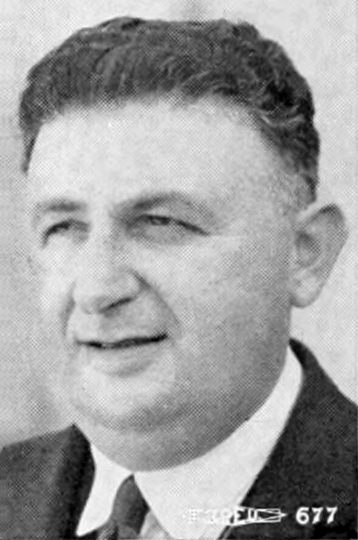
Karl W. Freund, A.S.C. (German: [frɔʏnt]; January 16, 1890 – May 3, 1969) was a German Bohemian and American cinematographer and film director. He is best known for photographing Metropolis (1927), Dracula (1931), and television's I Love Lucy (1951–1957), and for directing The Mummy (1932). Freund was an innovator in the field of cinematography, often noted for pioneering the unchained camera technique, arguably the most important stylistic innovation of the 20th century, setting the stage for some of the most commonly used cinematic techniques of modern contemporary cinema.
Karl Freund was born in Dvůr Králové, Bohemia. When he was 11 his family moved to Berlin. His career began in 1905 when, at age 15, he was hired as an apprentice projectionist for Alfred Duskes films. In 1907, he began work at the International Cinematograph and Light Effect Society. Freund was drafted by the Imperial Army to fight in World War I but was released from duty after only three months.
Freund began his film career in 1905. He was a newsreel cameraman in 1907 and a year later was working for Sascha-Film in Vienna. In 1911, Freund moved to Belgrade to create a film laboratory for the Brothers Savic. Freund worked as a cinematographer on over 100 films, including the German Expressionist films The Golem (1920) and The Last Laugh (1924). Freund worked with director Fritz Lang on a multiple projects, of which Metropolis (1927) is the best known. Freund co-wrote, and was cinematographer on, Berlin: Symphony of a Metropolis (1927), directed by Walter Ruttmann. Between 1926 and 1929, Freund was the production head at Fox Europa Film.
Freund's only known film as an actor is Carl Theodor Dreyer's Michael (1924) in which he appears as a sycophantic art dealer who saves the tobacco ashes dropped by a famous painter.
Early in his career Freund began to experiment with different ways of filming and new aspects of film. In 1914 he worked with Oskar Messter, a pioneering inventor and experimenter with sound film technology.
Unchained camera
Karl Freund was a pioneer of the unchained camera. In films such as Der letzte Mann, the unchained camera was a revolution in early film. For the first time, the camera was free of the tripod and could move around the set. Because it was no longer confined to one position, thousands of new shots were possible. Freund was known to wear the camera on his stomach and walk around while it was filming. He would also put the camera on a cart that moved along a track. Several other innovative ways of moving the camera were introduced by Freund, including putting the camera on a crane.
Freund immigrated to the United States in 1929, where he continued to shoot well-remembered films such as Dracula (1931) and Key Largo (1948). His work on Dracula came under a mostly disorganized shoot; the usually meticulous director Tod Browning left cinematographer Freund to take over during much of filming, making Freund something of an uncredited director on the film. He won an Academy Award for Best Cinematography for The Good Earth (1937).
Hub AI
Karl Freund AI simulator
(@Karl Freund_simulator)
Karl Freund
Karl W. Freund, A.S.C. (German: [frɔʏnt]; January 16, 1890 – May 3, 1969) was a German Bohemian and American cinematographer and film director. He is best known for photographing Metropolis (1927), Dracula (1931), and television's I Love Lucy (1951–1957), and for directing The Mummy (1932). Freund was an innovator in the field of cinematography, often noted for pioneering the unchained camera technique, arguably the most important stylistic innovation of the 20th century, setting the stage for some of the most commonly used cinematic techniques of modern contemporary cinema.
Karl Freund was born in Dvůr Králové, Bohemia. When he was 11 his family moved to Berlin. His career began in 1905 when, at age 15, he was hired as an apprentice projectionist for Alfred Duskes films. In 1907, he began work at the International Cinematograph and Light Effect Society. Freund was drafted by the Imperial Army to fight in World War I but was released from duty after only three months.
Freund began his film career in 1905. He was a newsreel cameraman in 1907 and a year later was working for Sascha-Film in Vienna. In 1911, Freund moved to Belgrade to create a film laboratory for the Brothers Savic. Freund worked as a cinematographer on over 100 films, including the German Expressionist films The Golem (1920) and The Last Laugh (1924). Freund worked with director Fritz Lang on a multiple projects, of which Metropolis (1927) is the best known. Freund co-wrote, and was cinematographer on, Berlin: Symphony of a Metropolis (1927), directed by Walter Ruttmann. Between 1926 and 1929, Freund was the production head at Fox Europa Film.
Freund's only known film as an actor is Carl Theodor Dreyer's Michael (1924) in which he appears as a sycophantic art dealer who saves the tobacco ashes dropped by a famous painter.
Early in his career Freund began to experiment with different ways of filming and new aspects of film. In 1914 he worked with Oskar Messter, a pioneering inventor and experimenter with sound film technology.
Unchained camera
Karl Freund was a pioneer of the unchained camera. In films such as Der letzte Mann, the unchained camera was a revolution in early film. For the first time, the camera was free of the tripod and could move around the set. Because it was no longer confined to one position, thousands of new shots were possible. Freund was known to wear the camera on his stomach and walk around while it was filming. He would also put the camera on a cart that moved along a track. Several other innovative ways of moving the camera were introduced by Freund, including putting the camera on a crane.
Freund immigrated to the United States in 1929, where he continued to shoot well-remembered films such as Dracula (1931) and Key Largo (1948). His work on Dracula came under a mostly disorganized shoot; the usually meticulous director Tod Browning left cinematographer Freund to take over during much of filming, making Freund something of an uncredited director on the film. He won an Academy Award for Best Cinematography for The Good Earth (1937).
Recent media