Hubbry Logo
KarsanKarsanMain
Open search
Karsan
Community hub
Karsan
logo
7 pages, 0 posts
0 subscribers
Be the first to start a discussion here.
Karsan
Karsan
from Wikipedia

Karsan (Turkish: Karsan Otomotiv Sanayii ve Ticaret A.Ş. English: Karsan Automotive Industry and Trade Joint-Stock Company) is a Turkish commercial vehicles manufacturer, based in Akçalar, Nilüfer, Bursa Province. "Karsan" is an acronym for "Karoseri Sanayii" (English: Carrosserie/Bodyworks Industry).

Key Information

History

[edit]

Karsan was founded in 1966 in Bursa, Turkey, to produce light commercial vehicles. Koç Group assumed management control of the company between 1979-1998. Later on, Kıraça Group took over the company in 1998 by acquiring the majority of the shares under the leadership of İnan Kıraç.[1]

Karsan, owned by 100% Turkish capital, produces and sells Peugeot light commercial vehicles under a licensing agreement with the French manufacturer, as well as the Fiat Ducato and its rebadged version the Peugeot Boxer.[2] In addition to these, Karsan produces and sells specialised vehicles such as ambulances, taxis, patrol vehicles and 4x4s.

Karsan also has cooperations with Hyundai for light trucks manufacture, with Renault Trucks for long-distance trailer-trucks and with BredaMenarinibus for bus manufacture.[2]

Karsan's V-1 was one of three finalists, alongside the Ford Transit Connect and Nissan NV200, for New York City's Taxi of Tomorrow. The Nissan NV200 was announced the winning model on 3 May 2011.[3][4]

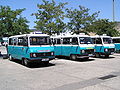
At the end of 2010, the J9 Premier minibus was replaced with the Karsan J10, available in three body versions-with 14, 17 or 20 seats, and powered by a Euro 4 common rail 2,3 liter diesel engine of Iveco origin.[5] At the end of 2013, the J10 minibus has been replaced by the Karsan Jest.[6]

In December 2018 the company acquired the 70% of Industria Italiana Autobus through a capital increase. The following month, after a meeting with Ministry of Economic Development, the participation in IIA fell to 20%.[7]

Current models

[edit]
  • Peugeot Boxer (2001–unknown)
  • Fiat Ducato (2001–present)
  • Hyundai Truck (2007–present)
  • BredaMenarinibus Vivacity (2010–present)
  • BredaMenarinibus Avancity (2010–present)
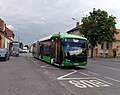
  • Menarinibus CITYMOOD (2014–present)
  • Karsan V-1 (prototype)
  • Karsan Jest (2013–present)
  • Karsan e-Jest (2018–present)
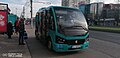
  • Karsan Atak (2014–present)
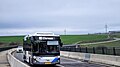
  • Karsan e-Atak (2021–present)
  • Karsan Star (2014–present)
  • Hyundai H350 (2015–present)
  • Renault Megane IV Sedan (2022-present)[8]
  • Karsan e-ATA (20xx-present)
  • Karsan e-ATA Hydrogen (2022–present)

Former models

[edit]

Karsan worldwide

[edit]

See also

[edit]

References

[edit]
[edit]
Revisions and contributorsEdit on WikipediaRead on Wikipedia
from Grokipedia
Karsan Otomotiv Sanayii ve Ticaret A.Ş., commonly known as Karsan, is a Turkish automotive manufacturer specializing in the production of commercial vehicles, including minibuses, buses, and electric vehicles. Founded in 1966 in , , the company has nearly 60 years of experience in the industry and has been producing commercial vehicles since 1981. Headquartered in Hasanağa, , Karsan operates as an independent multi-brand vehicle manufacturer with a focus on innovative and sustainable mobility solutions. Karsan's production facility spans 203,000 square meters, including 99,000 square meters of covered area, and has an annual capacity of 20,000 vehicles (single shift). The company engages in research and development, production, marketing, sales, and after-sales services for its vehicles and spare parts, both domestically and internationally. It also imports and exports motor vehicles for various automotive brands. Key products include the Jest and Atak series of minibuses and buses, as well as electric models such as the e-JEST (launched in 2018), e-ATAK (introduced in 2019 and a market leader in for five consecutive years as of 2025), and the e-ATA family in 10m, 12m, and 18m lengths (developed in 2021). In 2022, Karsan released the e-ATA model and became the first European company to offer a full range from 6m to 18m in length. Notable innovations include the Autonomous e-ATAK (Level 4 autonomy, developed in 2021 with ADASTEC) and the right-hand drive e-JEST for the Japanese market in 2023. Additionally, Karsan produces the Megane Sedan under license. As a publicly traded company on , the in (ticker: KARSN), Karsan continues to expand its presence in global markets, emphasizing electric and autonomous technologies for urban transportation.

History

Founding and Early Years (1966–1978)

Karsan Otomotiv Sanayi ve Ticaret A.Ş. was established in 1966 in , , with an initial capital of TL 10 million, aimed at producing light commercial vehicles through assembly and bodywork manufacturing. From 1966 to 1981, Karsan focused on manufacturing bus, minibus, and midibus bodies for various automotive companies, including . The company emerged during a phase of rapid industrialization in , where the automotive sector was prioritized to support economic self-sufficiency. This founding aligned with the nation's (ISI) strategy, which sought to reduce reliance on foreign imports by fostering domestic production of essential goods, including affordable transport vehicles for urban and rural needs. In the late and , Karsan began producing vehicle bodies and performing assembly for light commercial vehicles, focusing on adaptations for the to emphasize durability and cost-effectiveness. These early efforts supported the sector's development while navigating challenges like foreign exchange shortages and dependencies. During this formative period, Karsan's operations were centered in facilities, focusing on assembly and bodywork. The workforce expanded amid Turkey's ISI-driven economic policies that protected nascent industries through tariffs and incentives. The early years culminated in a pivotal ownership shift in 1979, when the Koç Group assumed management control, setting the stage for further internationalization.

Koç Holding Involvement (1979–1998)

In 1979, amid Turkey's severe economic crisis characterized by high inflation, foreign exchange shortages, and political instability, Koç Holding acquired the majority of Karsan's shares, providing essential capital injection and managerial expertise to stabilize the company's operations. This move allowed Karsan to navigate the turbulent macroeconomic environment, leveraging Koç's industrial resources to shift from early assembly challenges toward structured growth in commercial vehicle manufacturing. Under Koç Holding's management, Karsan expanded its key partnerships, notably securing a licensing agreement with in 1981 to produce the J9 , which became a cornerstone of its product lineup and built on the foundational Peugeot collaborations from the company's founding years. This agreement enabled localized production of the J9 series at the facility, marking a significant step in and production sophistication during the 1980s. Production milestones during this era included the ongoing development and scaling of the J9 series, with annual output reaching substantial levels by the mid-1990s as demand grew for minibuses in domestic and emerging markets. The period also saw notable workforce expansion, reflecting Koç's emphasis on skilled labor development and . Revenue growth followed, driven by diversified production, and Karsan began initiating exports to Middle Eastern markets in 1992, laying the groundwork for international expansion under Koç oversight.

Kıraç Group Era and Recent Developments (1998–present)

In 1998, İnan Kıraç acquired the majority shares of , incorporating it into Kıraça Holding and establishing full Turkish ownership, which prompted a strategic shift toward developing original vehicle designs independent of foreign licensing agreements. This transition marked the end of 's involvement and enabled to rebrand its focus on innovative, domestically engineered public transport solutions, building on the legacy J-series models from the prior era as precursors to its modern lineup. A significant milestone came in 2011 when Karsan's V-1 concept vehicle advanced as a finalist in New York City's "Taxi of Tomorrow" competition, praised for its accessibility features like wheelchair ramps, though it ultimately lost to the Nissan NV200. In 2013, Karsan launched the Jest minibus model, which replaced the older J-series and emphasized compact urban mobility with low-floor design for easier passenger access. To expand its electric vehicle capabilities, Karsan acquired a 70% stake in Italy's Industria Italiana Autobus (IIA) in December 2018 through a capital increase, aiming to collaborate on electric bus production for European markets. This stake was later reduced to approximately 20% by early 2019 following further capital adjustments involving other partners like Invitalia and Leonardo. Building on this, Karsan developed the e-Jest electric minibus in 2018, featuring a BMW motor and up to 210 km range, followed by the e-Atak electric city bus in 2019, which offered zero-emission urban transport solutions. Advancing toward autonomous and sustainable mobility, Karsan introduced a Level 4 driverless prototype of the e-Atak in 2021, developed in partnership with U.S.-based ADASTEC, enabling unmanned operation in controlled environments. In 2023, the company launched the e-ATA series of electric buses in 10-meter, 12-meter, and 18-meter variants, incorporating high-capacity batteries for over 500 km range and fast-charging capabilities to support extended urban and intercity routes. Karsan marked a production milestone in April 2025 with the delivery of its 10,000th Jest unit from the Hasanağa factory, underscoring the model's enduring popularity in global minibus markets. Financially, 2024 saw Karsan achieve a turnover of €296 million, deliver 540 electric vehicles, and record a 28% increase in profitability, reflecting an agile adaptation to rising demand for urban electric mobility. In October 2025, Karsan secured a contract to supply 42 e-ATA 18-meter articulated buses for a bus rapid transit project in Bari, Italy. In November 2025, the company debuted its Level 4 autonomous e-JEST in the United States, marking its entry into the North American autonomous mobility market with the first 10 orders received.

Corporate Profile

Ownership and Leadership

Karsan Otomotiv Sanayii ve Ticaret A.Ş. is majority-owned by Kıraça Holding A.Ş., which holds 58.51% of the company's shares as of 2024, with the remaining 39.44% publicly traded and 2.05% held by other minor shareholders, ensuring control by the Turkish-owned Kıraça Holding and no significant foreign ownership. This structure stems from the 1998 acquisition of majority shares by İnan Kıraç from Koç Holding, establishing long-term family control under the Kıraç Group. The company's leadership is headed by Chairman İnan Kıraç, who has served in this role since the 1998 acquisition and oversees strategic direction as the founder of Kıraça Holding. As Chief Executive Officer and Executive Director, Okan Baş has led operations since his appointment on July 1, 2016, with a focus on advancing Karsan's strategy in electric and autonomous vehicles, including key initiatives in sustainable mobility and innovation. The Board of Directors, comprising seven members including three independents (Nevzat Tüfekçioğlu, Müfit Ataseven, and Ahmet Nezih Olcay), held 11 meetings in 2024 with 98% attendance to guide these priorities. Karsan operates as an anonim şirket (joint-stock company) listed on Borsa Istanbul under the ticker KARSN, adhering to Turkish Capital Markets Board regulations and maintaining a family-controlled governance model that emphasizes stability and transparency through dedicated committees for audit, corporate governance, and early risk detection. This framework supports post-2020 strategic shifts toward sustainability, exemplified by increased R&D investments reaching TRY 393 million in 2024—a 120% rise from 2023—to drive electric vehicle development and innovation.

Facilities and Operations

Karsan's primary manufacturing facility is the Hasanağa Plant in Bursa, Turkey, which serves as the core of its production operations and spans a total area of 200,312 m², including 89,412 m² of covered space dedicated to key processes such as assembly, painting, and testing. The plant, operational since 1981, represents a significant evolution from Karsan's initial facilities in Bursa during the 1960s, where the company began producing vehicle bodies and agricultural machinery. Although no specific expansion is documented for 2010, the facility's design emphasizes flexibility to accommodate various vehicle types, from minibuses to larger commercial models. The Hasanağa Plant maintains an annual production capacity of around 20,000 vehicles in a single shift, with recent expansions enabling up to 61,189 units per year across multiple shifts as reported in 2024. Production processes encompass welding, bodywork, assembly, and rigorous quality control, all aligned with ISO 9001 and standards to ensure consistent standards in automotive manufacturing. In 2019, Karsan enhanced its capabilities by introducing electric vehicle production, highlighted by the launch of the e-ATAK model in partnership with BMW, allowing for the integration of battery assembly and electrification processes into existing lines. As of December 31, 2024, Karsan employs 2,176 workers across its operations, with a dedicated R&D center supporting innovation in vehicle design and sustainability; the company invests in ongoing to upskill staff in areas like environmental advanced . These initiatives, expanded in recent years, focus on fostering expertise in electric vehicle technologies and safe working practices, contributing to a workforce where administrative and production roles are balanced to support efficient output. No significant changes to employee numbers have been reported in 2025. Karsan has adopted elements of Industry 4.0, including automation projects to streamline manufacturing, as outlined in its sustainability strategies, though specific metrics on production time reductions are not publicly detailed. The company's supply chain integrates heavily with local Turkish suppliers. On the sustainability front, Karsan is advancing renewable energy integration through planned solar installations with a potential capacity of 2.7 MW, aimed at offsetting a portion of the facility's energy consumption in line with broader environmental goals.

Models

Current Models

Karsan maintains a diverse portfolio of current models through licensed assemblies and original designs, primarily targeting commercial and public transportation sectors as of 2025. Among licensed models, the company has assembled the Peugeot Boxer panel van since 1997, providing up to 17 m³ of cargo space for light commercial applications. Since 1997, Karsan has produced minibus variants of the , adapted for passenger transport in urban and intercity settings. The Hyundai H350, manufactured since 2015, serves passenger transport roles with configurations for up to 12 seats and diesel engines compliant with Euro 6 standards. Since 2022, Karsan has produced the Renault Megane Sedan under license. Karsan's original minibuses form the core of its independent lineup. The Karsan Jest, introduced in 2013, is available in lengths from 4.5 to 7 meters and accommodates up to 22 passengers, with diesel and electric powertrain options for flexible urban deployment; the Jest family has exceeded 10,000 units produced by 2025. Evolving from the J10 predecessor, it prioritizes maneuverability in congested city environments. The Karsan Atak, launched in 2010, is a 12-meter low-floor city bus designed for up to 90 passengers, incorporating modular designs that allow customization for specific route requirements and accessibility needs. The Karsan Star, introduced in 2015, functions as a midibus optimized for urban routes, balancing capacity for 40-50 passengers with efficient diesel or electric propulsion. Recent developments include the e-ATA LE, a fully electric model for intercity and suburban transport introduced in 2025, and the Autonomous e-JEST, a autonomous electric unveiled at Busworld 2025. These models adhere to Euro 6 emissions regulations across diesel variants, while post-2022 updates integrate advanced driver assistance systems (ADAS) such as automatic emergency braking and lane-keeping assist to improve safety and operational efficiency. The Atak series, in particular, supports modular adaptations for electric and autonomous configurations, enhancing its role in sustainable public transit.

Former Models

Karsan's early production efforts in the late 1960s and 1970s focused on building bodies for Peugeot 404 and 304 pick-up trucks under contract manufacturing agreements, with assembly continuing into the early 1980s until these were phased out in favor of the Peugeot J9 minibus under license starting in 1981. The J9 Premier, introduced in 2006 as a restyled version of the earlier Peugeot J9 minibus that Karsan had produced since 1981 under license, served as a 9- to 12-seater vehicle adapted for urban and intercity transport, accumulating over 100,000 units across its production run from 1981 to 2010 and becoming a cornerstone of the company's output during that period. Its discontinuation in 2010 was primarily driven by stringent emissions regulations requiring compliance beyond its original design capabilities, paving the way for more modern alternatives. Succeeding the J9 Premier, the J10 represented a short-lived update launched in 2010, featuring a modernized 2.3-liter diesel engine compliant with Euro 5 standards and configurations for 14 to 20 seats, with approximately 2,000 units produced through 2013 before being supplanted by the Jest model for improved fuel efficiency and broader market appeal. Prior to 2010, Karsan also manufactured variants of Hyundai trucks, such as the Porter and Mighty series, under licensing agreements starting in the late 1990s, which were eventually shifted toward the platform as part of a strategic pivot to lighter commercial vehicles amid changing export requirements. The J-series models, including the J9 and J10, were pivotal in the 1990s, accounting for roughly 70% of Karsan's revenue and solidifying its reputation in the minibus segment, though their phase-out post-2000 was linked to the need for EU market access through updated environmental and safety standards. This transition briefly referenced the Jest as a direct successor, emphasizing Karsan's move toward proprietary designs.

Global Presence

Export Markets

Karsan's export activities have primarily focused on Europe, where the company has established a strong presence through its electric vehicle lineup. In 2024, Karsan exported 493 vehicles globally, with the majority directed to European markets, accounting for a significant portion of Turkey's electric public transport vehicle shipments to the continent. The e-Atak electric midibus, for instance, has been deployed in countries such as Germany and France since around 2020, contributing to Karsan's 40% market share in Europe's electric midibus segment by 2023. These exports comply with UN ECE regulations, enabling seamless integration into urban transport systems targeting zero-emission zones across the European Union. The Middle East and Africa represent a growing but secondary export region for Karsan, with adaptations for urban transport needs. In 2022, the company delivered 25 Atak buses to Morocco for public transportation services, highlighting its penetration into North African markets through diesel and electric models suited to regional infrastructure. Electric exports to this area have been limited compared to Europe, but Karsan has pursued opportunities in high-volume markets like Morocco by considering local assembly to reduce logistics costs and improve competitiveness. Overall, electric vehicle deliveries reached 540 units in 2024, with a portion supporting sustainable urban mobility initiatives in these regions. Exports to the Americas remain limited, though recent developments signal expansion potential. Following an unsuccessful 2011 bid for New York City's taxi contract, Karsan has navigated trade barriers, including tariff considerations, to enter the North American market. In November 2025, the company debuted its autonomous e-Jest electric minibus in the United States with partners ADASTEC and Beep, securing an initial order of 10 units for public transport trials, marking its first significant foray into the region. Efforts are also underway in Latin America, with strategic focus on emerging electric mobility demands, though volumes remain modest compared to European shipments. To meet diverse international requirements, Karsan customizes vehicles, such as producing right-hand drive versions of the e-Jest for markets like the United Kingdom and Australia. In 2024, the company launched this configuration in the UK, targeting narrow urban streets and left-hand traffic systems, with plans for rollout in Ireland, Malta, and Australia. These adaptations, combined with a 28% profitability increase in 2024, underscore Karsan's strategy for sustained global growth, aiming for 700 electric vehicle sales worldwide in 2025. Since the 1990s, Karsan has built a worldwide service network to support these exports across three continents.

International Partnerships and Subsidiaries

Karsan maintains long-standing licensing agreements with major European and Asian automakers for the assembly of and minibuses in Turkey. These partnerships enable Karsan to produce vehicles under license, incorporating shared components and designs while adapting them for local and export markets. Notable ongoing collaborations include assembly of the Peugeot Boxer since 1994, Fiat Ducato since 2007, Hyundai H-1 since 2010, and Renault Master since 2010, focusing on chassis, bodywork, and parts supply to support Karsan's production capabilities. In terms of subsidiaries and equity stakes, Karsan held a significant in Industria Italiana Autobus (IIA), an Italian bus manufacturer, acquiring an initial 20% stake in 2019 to facilitate electric vehicle technology sharing and joint development. This investment grew to 28.59% by 2023, supporting collaborative efforts in EV components and production expertise, but Karsan terminated its shareholding in IIA during 2024 amid restructuring at the Italian firm. Key collaborative projects highlight Karsan's focus on electrification and autonomy. In 2019, Karsan co-developed the e-Atak electric bus battery system with , integrating advanced energy management for enhanced range and efficiency in urban operations.

References

Add your contribution
Related Hubs
User Avatar
No comments yet.