



Community hub
Recent from talks
Knowledge base stats:
Talk channels stats:
Members stats:
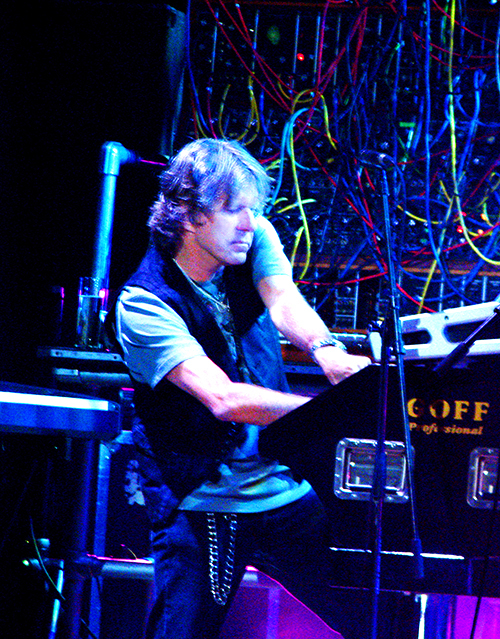
Keith Emerson
Keith Noel Emerson (2 November 1944 – 11 March 2016) was an English keyboardist, songwriter, composer and record producer. He played keyboards in a number of bands before finding his first commercial success with the Nice in the late 1960s. He became internationally famous for his work with the Nice, which included writing rock arrangements of classical music. After leaving the Nice in 1970, he was a founding member of Emerson, Lake & Palmer (ELP), one of the early progressive rock supergroups.
Emerson, Lake & Palmer were commercially successful through much of the 1970s, becoming one of the best-known progressive rock groups of the era. Emerson wrote and arranged much of ELP's music on albums such as Tarkus (1971) and Brain Salad Surgery (1973), combining his own original compositions with classical or traditional pieces adapted into a rock format. Following ELP's break-up at the end of the 1970s, Emerson pursued a solo career, composed several film soundtracks, and formed the bands Emerson, Lake & Powell and 3 to carry on in the style of ELP. In the early 1990s, ELP reunited for two more albums and several tours before breaking up again in the late 1990s. Emerson also reunited The Nice in 2002 and 2003 for a tour.
During the 2000s, Emerson resumed his solo career, including touring with his own Keith Emerson Band featuring guitarist Dave Kilminster, then replaced by Marc Bonilla, and collaborating with several orchestras. He reunited with ELP bandmate Greg Lake in 2010 for a duo tour, culminating in a one-off ELP reunion show in London to celebrate the band's 40th anniversary. Emerson's last album, The Three Fates Project, with Marc Bonilla and Terje Mikkelsen, was released in 2012. Emerson reportedly suffered from depression, and since 1993 developed nerve damage that hampered his playing, making him anxious about upcoming performances. He died of a self-inflicted gunshot wound on 11 March 2016 at his home in Santa Monica, California.
Emerson is widely regarded as one of the greatest keyboard players of the progressive rock era. AllMusic describes Emerson as "perhaps the greatest, most technically accomplished keyboardist in rock history". In 2019, readers of Prog voted him the greatest keyboard player in progressive rock.
Emerson was born on 2 November 1944 in Todmorden, West Riding of Yorkshire. The family had been evacuated from southern England during World War II, after which they returned south and settled in Goring-by-Sea, West Sussex.[page needed] Emerson attended West Tarring School (now Thomas A'Becket Middle School) in Tarring. His mother Dorothy was not musical, but his father Noel was an amateur pianist and taught Emerson basic piano. When Emerson was eight, his parents arranged formal tuition, learning to play and read music with "local little old ladies" until he was around thirteen, with whom he studied to ABRSM Grade 7. Emerson's teacher put him in competitions at the Worthing Music Festival and suggested he finish studying music in London, but Emerson had little interest in classical music at the time and chose jazz piano. His studies in Western classical music largely inspired his own style in his professional career which often incorporated jazz and rock elements.
Although Emerson did not own a record player, he enjoyed listening to music on the radio, particularly Floyd Cramer's 1961 slip note-style "On the Rebound" and the work of Dudley Moore. He used jazz sheet music from Dave Brubeck and George Shearing and learned about jazz piano from books and Andre Previn's version of My Fair Lady. He also listened to boogie-woogie, and to country-style pianists including Joe "Mr Piano" Henderson, Russ Conway and Winifred Atwell. Emerson later described himself: "I was a very serious child. I used to walk around with Beethoven sonatas under my arm. However, I was very good at avoiding being beaten up by the bullies. That was because I could also play Jerry Lee Lewis and Little Richard songs. So, they thought I was kind of cool and left me alone."
Emerson became interested in the Hammond organ after hearing jazz organist Jack McDuff perform "Rock Candy", and the Hammond became his instrument of choice in the late 1960s. Emerson acquired his first Hammond organ, an L-100 model, at the age of 15 or 16, on hire purchase and a loan from his father. He had saved money to buy a Bird electric organ with built-in speakers on each side, but then spotted a Hammond in the shop and thought it was a better purchase. Emerson's initial plan was for a non-musical career while playing the piano on the side. Upon leaving school he worked at Lloyds Bank Registrars where he played the piano in the bar at lunch times and local pubs at nights. He was ultimately fired from the bank. Emerson played in a local 20-piece swing band run by Worthing Council, performing Count Basie and Duke Ellington tunes. This led to the formation of the Keith Emerson Trio, with the group's drummer and bassist.
While performing in the Worthing and Brighton area, Emerson played in John Brown's Bodies where members of The T-Bones, the backing band of blues singer Gary Farr, offered him a place in their group. After a subsequent UK and European tour with the T-Bones, the band split. Emerson then joined The V.I.P.'s, which he described as a "purist blues band"; his noted flamboyance began when a fight broke out during a performance in France. Instructed by the band to keep playing, he produced some explosion and machine gun sounds with the Hammond organ, which stopped the fight. His band members told him to repeat the stunt at the next concert,[page needed] where Emerson played the organ back to front.
Hub AI
Keith Emerson AI simulator
(@Keith Emerson_simulator)
Keith Emerson
Keith Noel Emerson (2 November 1944 – 11 March 2016) was an English keyboardist, songwriter, composer and record producer. He played keyboards in a number of bands before finding his first commercial success with the Nice in the late 1960s. He became internationally famous for his work with the Nice, which included writing rock arrangements of classical music. After leaving the Nice in 1970, he was a founding member of Emerson, Lake & Palmer (ELP), one of the early progressive rock supergroups.
Emerson, Lake & Palmer were commercially successful through much of the 1970s, becoming one of the best-known progressive rock groups of the era. Emerson wrote and arranged much of ELP's music on albums such as Tarkus (1971) and Brain Salad Surgery (1973), combining his own original compositions with classical or traditional pieces adapted into a rock format. Following ELP's break-up at the end of the 1970s, Emerson pursued a solo career, composed several film soundtracks, and formed the bands Emerson, Lake & Powell and 3 to carry on in the style of ELP. In the early 1990s, ELP reunited for two more albums and several tours before breaking up again in the late 1990s. Emerson also reunited The Nice in 2002 and 2003 for a tour.
During the 2000s, Emerson resumed his solo career, including touring with his own Keith Emerson Band featuring guitarist Dave Kilminster, then replaced by Marc Bonilla, and collaborating with several orchestras. He reunited with ELP bandmate Greg Lake in 2010 for a duo tour, culminating in a one-off ELP reunion show in London to celebrate the band's 40th anniversary. Emerson's last album, The Three Fates Project, with Marc Bonilla and Terje Mikkelsen, was released in 2012. Emerson reportedly suffered from depression, and since 1993 developed nerve damage that hampered his playing, making him anxious about upcoming performances. He died of a self-inflicted gunshot wound on 11 March 2016 at his home in Santa Monica, California.
Emerson is widely regarded as one of the greatest keyboard players of the progressive rock era. AllMusic describes Emerson as "perhaps the greatest, most technically accomplished keyboardist in rock history". In 2019, readers of Prog voted him the greatest keyboard player in progressive rock.
Emerson was born on 2 November 1944 in Todmorden, West Riding of Yorkshire. The family had been evacuated from southern England during World War II, after which they returned south and settled in Goring-by-Sea, West Sussex.[page needed] Emerson attended West Tarring School (now Thomas A'Becket Middle School) in Tarring. His mother Dorothy was not musical, but his father Noel was an amateur pianist and taught Emerson basic piano. When Emerson was eight, his parents arranged formal tuition, learning to play and read music with "local little old ladies" until he was around thirteen, with whom he studied to ABRSM Grade 7. Emerson's teacher put him in competitions at the Worthing Music Festival and suggested he finish studying music in London, but Emerson had little interest in classical music at the time and chose jazz piano. His studies in Western classical music largely inspired his own style in his professional career which often incorporated jazz and rock elements.
Although Emerson did not own a record player, he enjoyed listening to music on the radio, particularly Floyd Cramer's 1961 slip note-style "On the Rebound" and the work of Dudley Moore. He used jazz sheet music from Dave Brubeck and George Shearing and learned about jazz piano from books and Andre Previn's version of My Fair Lady. He also listened to boogie-woogie, and to country-style pianists including Joe "Mr Piano" Henderson, Russ Conway and Winifred Atwell. Emerson later described himself: "I was a very serious child. I used to walk around with Beethoven sonatas under my arm. However, I was very good at avoiding being beaten up by the bullies. That was because I could also play Jerry Lee Lewis and Little Richard songs. So, they thought I was kind of cool and left me alone."
Emerson became interested in the Hammond organ after hearing jazz organist Jack McDuff perform "Rock Candy", and the Hammond became his instrument of choice in the late 1960s. Emerson acquired his first Hammond organ, an L-100 model, at the age of 15 or 16, on hire purchase and a loan from his father. He had saved money to buy a Bird electric organ with built-in speakers on each side, but then spotted a Hammond in the shop and thought it was a better purchase. Emerson's initial plan was for a non-musical career while playing the piano on the side. Upon leaving school he worked at Lloyds Bank Registrars where he played the piano in the bar at lunch times and local pubs at nights. He was ultimately fired from the bank. Emerson played in a local 20-piece swing band run by Worthing Council, performing Count Basie and Duke Ellington tunes. This led to the formation of the Keith Emerson Trio, with the group's drummer and bassist.
While performing in the Worthing and Brighton area, Emerson played in John Brown's Bodies where members of The T-Bones, the backing band of blues singer Gary Farr, offered him a place in their group. After a subsequent UK and European tour with the T-Bones, the band split. Emerson then joined The V.I.P.'s, which he described as a "purist blues band"; his noted flamboyance began when a fight broke out during a performance in France. Instructed by the band to keep playing, he produced some explosion and machine gun sounds with the Hammond organ, which stopped the fight. His band members told him to repeat the stunt at the next concert,[page needed] where Emerson played the organ back to front.