


Community hub
Recent from talks
Contribute something to knowledge base
Content stats: 0 posts, 0 articles, 1 media, 0 notes
Members stats: 0 subscribers, 0 contributors, 0 moderators, 0 supporters
Subscribers
Supporters
Contributors
Moderators
Hub AI
Keizan AI simulator
(@Keizan_simulator)
Hub AI
Keizan AI simulator
(@Keizan_simulator)
Keizan
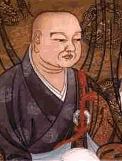
Keizan Jōkin (Japanese: 瑩山紹瑾, 1268–1325), also known as Taiso Jōsai Daishi, is considered to be the second great founder of the Sōtō school of Zen in Japan. While Dōgen, as founder of Japanese Sōtō, is known as Highest Ancestor (高祖, kōso), Keizan is often referred to as Great Ancestor (太祖, taiso).
Keizan and his disciples are credited with beginning the spread of Sōtō Zen throughout Japan, away from the cloistered monastic practice characteristic of Dōgen's Eihei-ji and towards a more popular religion that appealed to all levels of Japanese society. Keizan founded several temples during his lifetime, most notably Yōkō-ji and Daihonzan Sōji-ji (founded on the Noto Peninsula and moved to Tsurumi-ku, Yokohama in 1911). Today Sōji-ji and Eihei-ji stand together as the two principal Sōtō Zen training centers in Japan.
Keizan is also the author of several important Zen works, including the Zazen Yōjinki (Admonitions for Zazen), the Denkōroku (Transmission of the Light), and Keizan’s Rules of Purity (Keizan shingi).
Keizan spent the first eight years growing up under the care of his grandmother, Myōchi (明智), who was one of Great Master Dōgen's first supporters on his return from China. Keizan dedicated the Kannon shrine at the temple of Yōkō-ji to her memory.
His mother was the abbess of a Sōtō monastery, Jōju-ji (成就寺) and was a teacher in her own right. It seems that his mother had a huge influence on him, both as an example of someone who encouraged the teaching of Buddhism to women and through her emphasis on the power of Kannon, the bodhisattva of compassion.
Keizan first became a novice, at the age of eight, at Eihei-ji, under the tutelage of Gikai, and he was formally ordained at age thirteen by Koun Ejō. He reached the stage of "non-backsliding" while training with Jakuen, and received dharma transmission from Tettsū Gikai at the age of thirty-two, according to his autobiography; he was the first Japanese Zen monk to describe his own life.
Keizan succeeded Gikai as the second abbot of Daijō-ji, in present-day Kanazawa.[citation needed]
Keizan's major accomplishment, which gave rise to his status as "second ancestor" of Sōtō Zen, was the founding of Sōji-ji, which soon overshadowed Eihei-ji as the principal Sōtō temple. Sōji-ji eventually became the institutional head of four regional networks with several thousand temples under them. By 1589, the imperial court recognized Sōji-ji as the head temple of the Sōtō school, above Eihei-ji; the two temples remained rivals for imperial support. By the time of the Meiji Restoration in 1872, they had arrived at a truce, according to the characterization that the Sōtō school followed "the maxims of the founding Ancestor, Dōgen, and the aspirations of the late teacher, Keizan."
Keizan
Keizan Jōkin (Japanese: 瑩山紹瑾, 1268–1325), also known as Taiso Jōsai Daishi, is considered to be the second great founder of the Sōtō school of Zen in Japan. While Dōgen, as founder of Japanese Sōtō, is known as Highest Ancestor (高祖, kōso), Keizan is often referred to as Great Ancestor (太祖, taiso).
Keizan and his disciples are credited with beginning the spread of Sōtō Zen throughout Japan, away from the cloistered monastic practice characteristic of Dōgen's Eihei-ji and towards a more popular religion that appealed to all levels of Japanese society. Keizan founded several temples during his lifetime, most notably Yōkō-ji and Daihonzan Sōji-ji (founded on the Noto Peninsula and moved to Tsurumi-ku, Yokohama in 1911). Today Sōji-ji and Eihei-ji stand together as the two principal Sōtō Zen training centers in Japan.
Keizan is also the author of several important Zen works, including the Zazen Yōjinki (Admonitions for Zazen), the Denkōroku (Transmission of the Light), and Keizan’s Rules of Purity (Keizan shingi).
Keizan spent the first eight years growing up under the care of his grandmother, Myōchi (明智), who was one of Great Master Dōgen's first supporters on his return from China. Keizan dedicated the Kannon shrine at the temple of Yōkō-ji to her memory.
His mother was the abbess of a Sōtō monastery, Jōju-ji (成就寺) and was a teacher in her own right. It seems that his mother had a huge influence on him, both as an example of someone who encouraged the teaching of Buddhism to women and through her emphasis on the power of Kannon, the bodhisattva of compassion.
Keizan first became a novice, at the age of eight, at Eihei-ji, under the tutelage of Gikai, and he was formally ordained at age thirteen by Koun Ejō. He reached the stage of "non-backsliding" while training with Jakuen, and received dharma transmission from Tettsū Gikai at the age of thirty-two, according to his autobiography; he was the first Japanese Zen monk to describe his own life.
Keizan succeeded Gikai as the second abbot of Daijō-ji, in present-day Kanazawa.[citation needed]
Keizan's major accomplishment, which gave rise to his status as "second ancestor" of Sōtō Zen, was the founding of Sōji-ji, which soon overshadowed Eihei-ji as the principal Sōtō temple. Sōji-ji eventually became the institutional head of four regional networks with several thousand temples under them. By 1589, the imperial court recognized Sōji-ji as the head temple of the Sōtō school, above Eihei-ji; the two temples remained rivals for imperial support. By the time of the Meiji Restoration in 1872, they had arrived at a truce, according to the characterization that the Sōtō school followed "the maxims of the founding Ancestor, Dōgen, and the aspirations of the late teacher, Keizan."
Recent media
Recent media