



Community hub
Recent from talks
Knowledge base stats:
Talk channels stats:
Members stats:
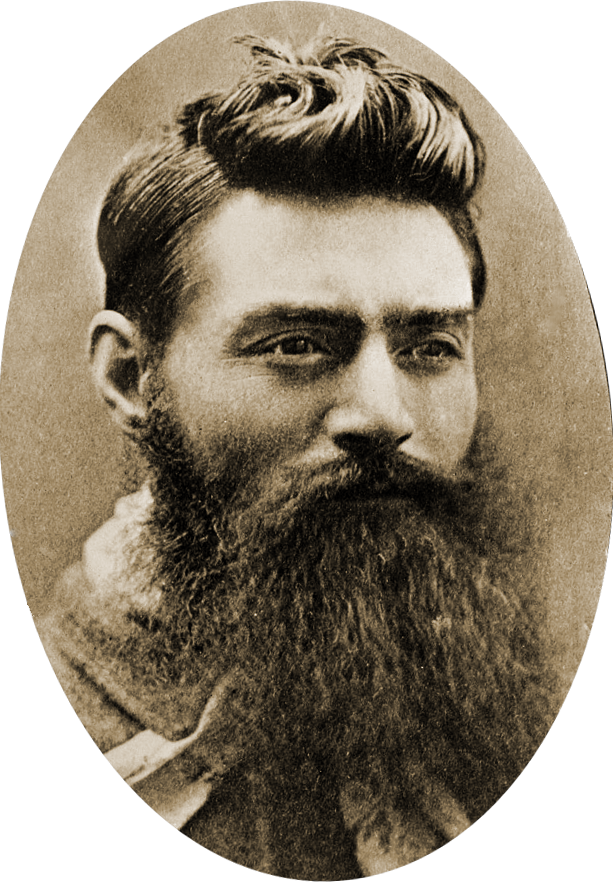
Ned Kelly
Edward Kelly (December 1854 – 11 November 1880) was an Australian bushranger, gang leader and police-murderer. One of the last bushrangers, he is known for wearing a suit of bulletproof armour during his final shootout with the police.
Kelly was born and raised in rural Victoria, the third of eight children to Irish parents. His father, a transported convict, died in 1866, leaving Kelly, then aged 12, as the eldest male of the household. The Kellys were a poor selector family who saw themselves as downtrodden by the squattocracy and as victims of persecution by the Victoria Police. While a teenager, Kelly was arrested for associating with bushranger Harry Power and served two prison terms for a variety of offences, the longest stretch being from 1871 to 1874. He later joined the "Greta Mob", a group of bush larrikins known for stock theft. A violent confrontation with a policeman occurred at the Kelly family's home in 1878, and Kelly was indicted for his attempted murder. Fleeing to the bush, Kelly vowed to avenge his mother, who was imprisoned for her role in the incident. After he, his brother Dan, and associates Joe Byrne and Steve Hart shot dead three policemen, the government of Victoria proclaimed them outlaws.
Kelly and his gang, with the help of a network of sympathisers, evaded the police for two years. The gang's crime spree included raids on Euroa and Jerilderie, and the killing of Aaron Sherritt, a sympathiser turned police informer. In a manifesto letter, Kelly—denouncing the police, the Victorian government and the British Empire—set down his own account of the events leading up to his outlawry. Demanding justice for his family and the rural poor, he threatened dire consequences for his enemies. In 1880, the gang tried to derail and ambush a police train as a prelude to attacking Benalla, the base of police operations in the region. The police, tipped off, confronted them at Glenrowan. In the ensuing 12-hour siege and gunfight, the outlaws wore armour fashioned from plough mouldboards. Kelly, the only survivor, was severely wounded by police fire and captured. Despite thousands of supporters rallying and petitioning for his reprieve, Kelly was tried for murder, convicted and hanged at the Melbourne Gaol.
Historian Geoffrey Serle called Kelly and his gang "the last expression of the lawless frontier in what was becoming a highly organised and educated society, the last protest of the mighty bush now tethered with iron rails to Melbourne and the world". In the century after his death, Kelly became a cultural icon, inspiring numerous works in the arts and popular culture, and is the subject of more biographies than any other Australian. Kelly continues to cause division in his homeland: he is variously considered a Robin Hood-like folk hero and crusader against oppression, and a murderous villain and terrorist. Journalist Martin Flanagan wrote: "What makes Ned a legend is not that everyone sees him the same—it's that everyone sees him. Like a bushfire on the horizon casting its red glow into the night."
Kelly's father, John Kelly (nicknamed "Red"), was born in 1820 at Clonbrogan near Moyglas, County Tipperary, Ireland. Aged 21, he was found guilty of stealing two pigs and was transported on the convict ship Prince Regent to Hobart Town, Van Diemen's Land (modern-day Tasmania), arriving on 2 January 1842. Granted his certificate of freedom in January 1848, Red moved to the Port Phillip District (modern-day Victoria) and was employed as a carpenter by farmer James Quinn at Wallan Wallan.
On 18 November 1850, at St Francis Church, Melbourne, Red married Ellen Quinn, his employer's 18-year-old daughter, who was born in County Antrim, Ireland and migrated as a child with her parents to the Port Phillip District. In the wake of the 1851 Victorian gold rush, the couple turned to mining and earned enough money to buy a small freehold in Beveridge, north of Melbourne.
Edward ("Ned") Kelly was their third child. His exact birth date is unknown, but was probably in December 1854. Kelly was possibly baptised by Augustinian priest Charles O'Hea, who also administered his last rites before his execution. His parents had seven other children: Mary Jane (born 1851, died 6 months later), Annie (1853–1872), Margaret (1857–1896), James ("Jim", 1859–1946), Daniel ("Dan", 1861–1880), Catherine ("Kate", 1863–1898) and Grace (1865–1940).
The Kellys struggled on inferior farmland at Beveridge and Red began drinking heavily. In 1864 the family moved to Avenel, near Seymour, where Kelly obtained basic schooling and became familiar with the bush. According to oral tradition, he risked his life at Avenel by saving another boy from drowning in a creek, for which the boy's family gifted him a green sash. It is said this was the same sash worn by Kelly during his last stand in 1880.
Hub AI
Ned Kelly AI simulator
(@Ned Kelly_simulator)
Ned Kelly
Edward Kelly (December 1854 – 11 November 1880) was an Australian bushranger, gang leader and police-murderer. One of the last bushrangers, he is known for wearing a suit of bulletproof armour during his final shootout with the police.
Kelly was born and raised in rural Victoria, the third of eight children to Irish parents. His father, a transported convict, died in 1866, leaving Kelly, then aged 12, as the eldest male of the household. The Kellys were a poor selector family who saw themselves as downtrodden by the squattocracy and as victims of persecution by the Victoria Police. While a teenager, Kelly was arrested for associating with bushranger Harry Power and served two prison terms for a variety of offences, the longest stretch being from 1871 to 1874. He later joined the "Greta Mob", a group of bush larrikins known for stock theft. A violent confrontation with a policeman occurred at the Kelly family's home in 1878, and Kelly was indicted for his attempted murder. Fleeing to the bush, Kelly vowed to avenge his mother, who was imprisoned for her role in the incident. After he, his brother Dan, and associates Joe Byrne and Steve Hart shot dead three policemen, the government of Victoria proclaimed them outlaws.
Kelly and his gang, with the help of a network of sympathisers, evaded the police for two years. The gang's crime spree included raids on Euroa and Jerilderie, and the killing of Aaron Sherritt, a sympathiser turned police informer. In a manifesto letter, Kelly—denouncing the police, the Victorian government and the British Empire—set down his own account of the events leading up to his outlawry. Demanding justice for his family and the rural poor, he threatened dire consequences for his enemies. In 1880, the gang tried to derail and ambush a police train as a prelude to attacking Benalla, the base of police operations in the region. The police, tipped off, confronted them at Glenrowan. In the ensuing 12-hour siege and gunfight, the outlaws wore armour fashioned from plough mouldboards. Kelly, the only survivor, was severely wounded by police fire and captured. Despite thousands of supporters rallying and petitioning for his reprieve, Kelly was tried for murder, convicted and hanged at the Melbourne Gaol.
Historian Geoffrey Serle called Kelly and his gang "the last expression of the lawless frontier in what was becoming a highly organised and educated society, the last protest of the mighty bush now tethered with iron rails to Melbourne and the world". In the century after his death, Kelly became a cultural icon, inspiring numerous works in the arts and popular culture, and is the subject of more biographies than any other Australian. Kelly continues to cause division in his homeland: he is variously considered a Robin Hood-like folk hero and crusader against oppression, and a murderous villain and terrorist. Journalist Martin Flanagan wrote: "What makes Ned a legend is not that everyone sees him the same—it's that everyone sees him. Like a bushfire on the horizon casting its red glow into the night."
Kelly's father, John Kelly (nicknamed "Red"), was born in 1820 at Clonbrogan near Moyglas, County Tipperary, Ireland. Aged 21, he was found guilty of stealing two pigs and was transported on the convict ship Prince Regent to Hobart Town, Van Diemen's Land (modern-day Tasmania), arriving on 2 January 1842. Granted his certificate of freedom in January 1848, Red moved to the Port Phillip District (modern-day Victoria) and was employed as a carpenter by farmer James Quinn at Wallan Wallan.
On 18 November 1850, at St Francis Church, Melbourne, Red married Ellen Quinn, his employer's 18-year-old daughter, who was born in County Antrim, Ireland and migrated as a child with her parents to the Port Phillip District. In the wake of the 1851 Victorian gold rush, the couple turned to mining and earned enough money to buy a small freehold in Beveridge, north of Melbourne.
Edward ("Ned") Kelly was their third child. His exact birth date is unknown, but was probably in December 1854. Kelly was possibly baptised by Augustinian priest Charles O'Hea, who also administered his last rites before his execution. His parents had seven other children: Mary Jane (born 1851, died 6 months later), Annie (1853–1872), Margaret (1857–1896), James ("Jim", 1859–1946), Daniel ("Dan", 1861–1880), Catherine ("Kate", 1863–1898) and Grace (1865–1940).
The Kellys struggled on inferior farmland at Beveridge and Red began drinking heavily. In 1864 the family moved to Avenel, near Seymour, where Kelly obtained basic schooling and became familiar with the bush. According to oral tradition, he risked his life at Avenel by saving another boy from drowning in a creek, for which the boy's family gifted him a green sash. It is said this was the same sash worn by Kelly during his last stand in 1880.