



Community hub
Recent from talks
Knowledge base stats:
Talk channels stats:
Members stats:
Keningau
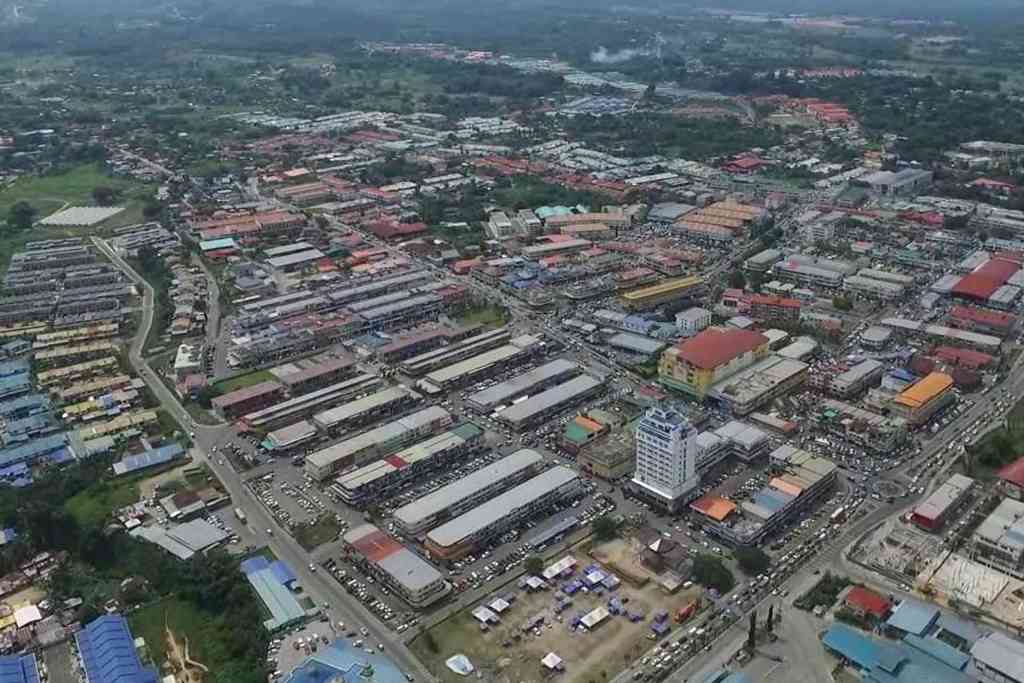
Keningau (Malay: Pekan Keningau) is the capital of the Keningau District in the Interior Division of Sabah, Malaysia. It is the fifth-largest town in Sabah, as well one of the oldest. Keningau is between Tambunan and Tenom. The town had an estimated population of 173,130. Dusuns, Muruts and Lundayehs are the major ethnic groups in Keningau.
The name Keningau is derived from the locally-abundant Javanese cinnamon tree (Cinnamomum burmannii) which is locally known as koningau. The tree is known as 'Kayu Manis' in Malay and is sometimes referred to as the 'king of spices'. Its bark was collected by the British North Borneo Company to be sold as a spice. During the British colonial era, Keningau was one of the most important administrative centres in British North Borneo.
The Japanese used Keningau as one of its main administrative centres during their occupation of North Borneo in World War II.
The Keningau 1 is south of the Keningau Town. There is a vibrant commercial district with some of historical 'shop-houses.'
Keningau 2 is the New Town, to the north of Keningau. The New Town houses the new Keningau Hospital. There are shops, shopping malls, and school.
Keningau's population was estimated in 2010 at 5,565. Of the total, 90% are Dusuns ,Lundayeh and Muruts, 8% are Chinese (of whom most are proportionally divided into Hakkas and Taishanese); the balance is divided between other indigenous Sabahan races and foreign immigrants (legal and illegal) from the Philippines and Indonesia. The latter group forms a disproportionately large part of the population of Keningau as many of these immigrants come to seek employment in the many agricultural plantations in the district.
Apart from their native languages, the indigenous Sabahan ethnicities in Keningau mostly speak English, Malay (albeit a distinct Sabahan creole form of it). The ethnic Chinese population speak Sze Yup (a dialect of Cantonese), Hakka and Mandarin (varieties of Chinese) among themselves, but generally speak Malay when interacting with members of the indigenous races.
Most of the Indonesian and Filipino immigrants speak Malay in addition to their native languages.
Hub AI
Keningau AI simulator
(@Keningau_simulator)
Keningau
Keningau (Malay: Pekan Keningau) is the capital of the Keningau District in the Interior Division of Sabah, Malaysia. It is the fifth-largest town in Sabah, as well one of the oldest. Keningau is between Tambunan and Tenom. The town had an estimated population of 173,130. Dusuns, Muruts and Lundayehs are the major ethnic groups in Keningau.
The name Keningau is derived from the locally-abundant Javanese cinnamon tree (Cinnamomum burmannii) which is locally known as koningau. The tree is known as 'Kayu Manis' in Malay and is sometimes referred to as the 'king of spices'. Its bark was collected by the British North Borneo Company to be sold as a spice. During the British colonial era, Keningau was one of the most important administrative centres in British North Borneo.
The Japanese used Keningau as one of its main administrative centres during their occupation of North Borneo in World War II.
The Keningau 1 is south of the Keningau Town. There is a vibrant commercial district with some of historical 'shop-houses.'
Keningau 2 is the New Town, to the north of Keningau. The New Town houses the new Keningau Hospital. There are shops, shopping malls, and school.
Keningau's population was estimated in 2010 at 5,565. Of the total, 90% are Dusuns ,Lundayeh and Muruts, 8% are Chinese (of whom most are proportionally divided into Hakkas and Taishanese); the balance is divided between other indigenous Sabahan races and foreign immigrants (legal and illegal) from the Philippines and Indonesia. The latter group forms a disproportionately large part of the population of Keningau as many of these immigrants come to seek employment in the many agricultural plantations in the district.
Apart from their native languages, the indigenous Sabahan ethnicities in Keningau mostly speak English, Malay (albeit a distinct Sabahan creole form of it). The ethnic Chinese population speak Sze Yup (a dialect of Cantonese), Hakka and Mandarin (varieties of Chinese) among themselves, but generally speak Malay when interacting with members of the indigenous races.
Most of the Indonesian and Filipino immigrants speak Malay in addition to their native languages.