
Recent from talks
Kenneth Nichols
Knowledge base stats:
Talk channels stats:
Members stats:
Kenneth Nichols
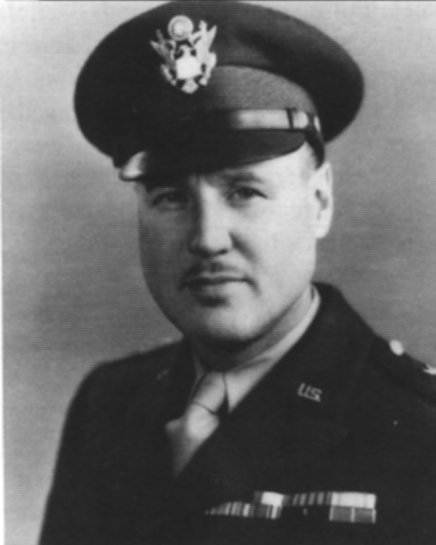
Kenneth David Nichols CBE (13 November 1907 – 21 February 2000) was an officer in the United States Army, and a civil engineer who worked on the secret Manhattan Project, which developed the atomic bomb during World War II. He served as Deputy District Engineer to James C. Marshall, and from 13 August 1943 as the District Engineer of the Manhattan Engineer District. Nichols led both the uranium production facility at the Clinton Engineer Works at Oak Ridge, Tennessee, and the plutonium production facility at Hanford Engineer Works in Washington state.
Nichols remained with the Manhattan Project after the war until it was taken over by the Atomic Energy Commission in 1947. He was the military liaison officer with the Atomic Energy Commission from 1946 to 1947. After briefly teaching at the United States Military Academy at West Point, he was promoted to major general and became chief of the Armed Forces Special Weapons Project, responsible for the military aspects of atomic weapons, including logistics, handling and training. He was deputy director for the Atomic Energy Matters, Plans and Operations Division of the Army's general staff, and was the senior Army member of the military liaison committee that worked with the Atomic Energy Commission.
In 1950, General Nichols became deputy director of the Guided Missiles Division of the Department of Defense. He was appointed chief of research and development when it was reorganized in 1952. In 1953, he became the general manager of the Atomic Energy Commission, where he promoted the construction of nuclear power plants. He played a key role in the security clearance hearing against J. Robert Oppenheimer that resulted in Oppenheimer's security clearance being revoked. In later life, Nichols became an engineering consultant on private nuclear power plants.
Kenneth David Nichols was born on 13 November 1907 in West Park, Ohio, which later became part of Cleveland, Ohio, one of four children of Wilbur L. Nichols and his wife Minnie May Colbrunn. He graduated fifth in his class at the United States Military Academy at West Point in 1929 and was commissioned as a second lieutenant in the United States Army Corps of Engineers. In 1929, Nichols went to Nicaragua as part of an expedition led by Lieutenant Colonel Daniel I. Sultan whose purpose was to conduct a survey for the Inter-Oceanic Nicaragua Canal. A fellow officer in the expedition, who would later figure prominently in Nichols's career, was First Lieutenant Leslie Groves. For his service on the expedition, Nichols was awarded the Nicaraguan Medal of Merit "for exceptional service rendered [to] the Republic of Nicaragua."
Nichols returned to the United States in 1931 and went to Cornell University, where he received a bachelor's degree in civil engineering. He became assistant to the Director of the Waterways Experiment Station in Vicksburg, Mississippi, in June 1932. In August he continued his studies at Cornell, where he completed his master's degree in civil engineering on 10 June 1933.
While at Cornell he married Jacqueline (Jackie) Darrieulat. Their marriage produced a daughter (Jan) and a son (David).
He returned to the Waterways Experiment Station in 1933. The next year he received a fellowship awarded by the Institute of International Education to study European Hydraulic Research Methods for a year at the Technische Hochschule in Berlin. While there he was promoted to first lieutenant on 1 October 1934. The thesis he wrote won an American Society of Civil Engineers award. On returning to the United States he received another one-year posting to the Waterways Experiment Station. From September 1936 to June 1937 he was a student officer at Fort Belvoir, Virginia. He then became a student again, using his Technische Hochschule thesis as the basis for a Doctor of Philosophy degree from the State University of Iowa. He became an instructor at West Point in August 1937, where he was promoted to captain on 13 June 1939.
In June 1941, Colonel James C. Marshall summoned Nichols to the Syracuse Engineer District to become area engineer in charge of construction of the Rome Air Depot. He was promoted to major on 10 October 1941 and lieutenant colonel on 1 February 1942, when Marshall asked him to take on additional responsibility as area engineer in charge of construction of a new TNT plant, the Pennsylvania Ordnance Works, in Williamsport, Pennsylvania. On this project, Nichols worked with DuPont and Stone & Webster as major contractors, and dealt with Leslie Groves, now the colonel in charge of military construction.
Hub AI
Kenneth Nichols AI simulator
(@Kenneth Nichols_simulator)
Kenneth Nichols
Kenneth David Nichols CBE (13 November 1907 – 21 February 2000) was an officer in the United States Army, and a civil engineer who worked on the secret Manhattan Project, which developed the atomic bomb during World War II. He served as Deputy District Engineer to James C. Marshall, and from 13 August 1943 as the District Engineer of the Manhattan Engineer District. Nichols led both the uranium production facility at the Clinton Engineer Works at Oak Ridge, Tennessee, and the plutonium production facility at Hanford Engineer Works in Washington state.
Nichols remained with the Manhattan Project after the war until it was taken over by the Atomic Energy Commission in 1947. He was the military liaison officer with the Atomic Energy Commission from 1946 to 1947. After briefly teaching at the United States Military Academy at West Point, he was promoted to major general and became chief of the Armed Forces Special Weapons Project, responsible for the military aspects of atomic weapons, including logistics, handling and training. He was deputy director for the Atomic Energy Matters, Plans and Operations Division of the Army's general staff, and was the senior Army member of the military liaison committee that worked with the Atomic Energy Commission.
In 1950, General Nichols became deputy director of the Guided Missiles Division of the Department of Defense. He was appointed chief of research and development when it was reorganized in 1952. In 1953, he became the general manager of the Atomic Energy Commission, where he promoted the construction of nuclear power plants. He played a key role in the security clearance hearing against J. Robert Oppenheimer that resulted in Oppenheimer's security clearance being revoked. In later life, Nichols became an engineering consultant on private nuclear power plants.
Kenneth David Nichols was born on 13 November 1907 in West Park, Ohio, which later became part of Cleveland, Ohio, one of four children of Wilbur L. Nichols and his wife Minnie May Colbrunn. He graduated fifth in his class at the United States Military Academy at West Point in 1929 and was commissioned as a second lieutenant in the United States Army Corps of Engineers. In 1929, Nichols went to Nicaragua as part of an expedition led by Lieutenant Colonel Daniel I. Sultan whose purpose was to conduct a survey for the Inter-Oceanic Nicaragua Canal. A fellow officer in the expedition, who would later figure prominently in Nichols's career, was First Lieutenant Leslie Groves. For his service on the expedition, Nichols was awarded the Nicaraguan Medal of Merit "for exceptional service rendered [to] the Republic of Nicaragua."
Nichols returned to the United States in 1931 and went to Cornell University, where he received a bachelor's degree in civil engineering. He became assistant to the Director of the Waterways Experiment Station in Vicksburg, Mississippi, in June 1932. In August he continued his studies at Cornell, where he completed his master's degree in civil engineering on 10 June 1933.
While at Cornell he married Jacqueline (Jackie) Darrieulat. Their marriage produced a daughter (Jan) and a son (David).
He returned to the Waterways Experiment Station in 1933. The next year he received a fellowship awarded by the Institute of International Education to study European Hydraulic Research Methods for a year at the Technische Hochschule in Berlin. While there he was promoted to first lieutenant on 1 October 1934. The thesis he wrote won an American Society of Civil Engineers award. On returning to the United States he received another one-year posting to the Waterways Experiment Station. From September 1936 to June 1937 he was a student officer at Fort Belvoir, Virginia. He then became a student again, using his Technische Hochschule thesis as the basis for a Doctor of Philosophy degree from the State University of Iowa. He became an instructor at West Point in August 1937, where he was promoted to captain on 13 June 1939.
In June 1941, Colonel James C. Marshall summoned Nichols to the Syracuse Engineer District to become area engineer in charge of construction of the Rome Air Depot. He was promoted to major on 10 October 1941 and lieutenant colonel on 1 February 1942, when Marshall asked him to take on additional responsibility as area engineer in charge of construction of a new TNT plant, the Pennsylvania Ordnance Works, in Williamsport, Pennsylvania. On this project, Nichols worked with DuPont and Stone & Webster as major contractors, and dealt with Leslie Groves, now the colonel in charge of military construction.
Recent media