
Recent from talks
Kernel-based Virtual Machine
Knowledge base stats:
Talk channels stats:
Members stats:
Kernel-based Virtual Machine
Kernel-based Virtual Machine (KVM) is a free and open-source virtualization module in the Linux kernel that allows the kernel to function as a hypervisor. It was merged into the mainline Linux kernel in version 2.6.20, which was released on February 5, 2007. KVM requires a processor with hardware virtualization extensions, such as Intel VT or AMD-V. KVM has also been ported to other operating systems such as FreeBSD and illumos in the form of loadable kernel modules.
KVM was originally designed for x86 processors but has since been ported to z/Architecture, PowerPC, IA-64, and ARM. The IA-64 port was removed in 2014.
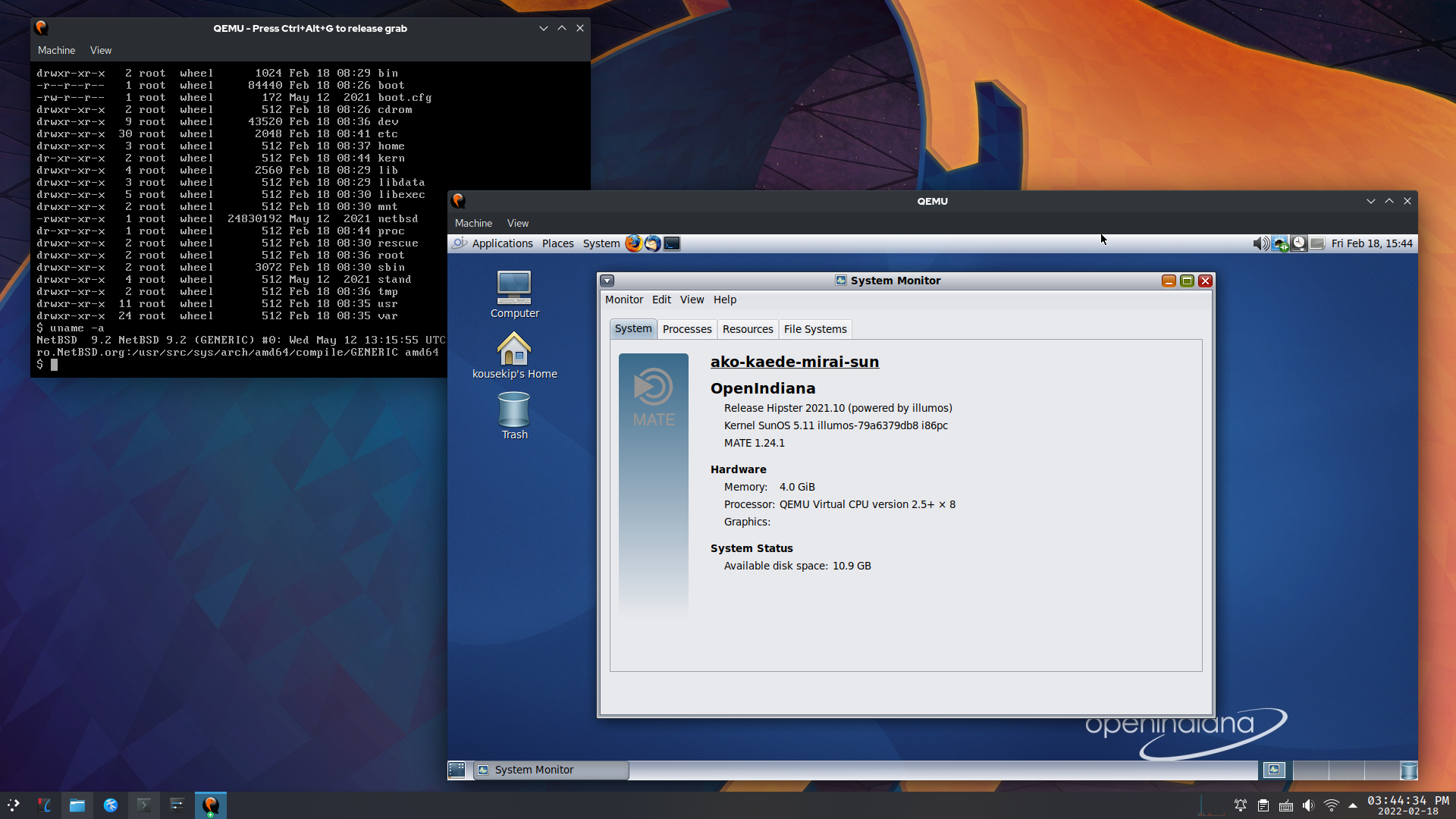
KVM supports hardware-assisted virtualization for a wide variety of guest operating systems including BSD, Solaris, Windows, Haiku, ReactOS, Plan 9, AROS, macOS, and even other Linux systems. In addition, Android 2.2, GNU/Hurd (Debian K16), Minix 3.1.2a, Solaris 10 U3 and Darwin 8.0.1, together with other operating systems and some newer versions of these listed, are known to work with certain limitations.
Additionally, KVM provides paravirtualization support for Linux, OpenBSD, FreeBSD, NetBSD, Plan 9 and Windows guests using the VirtIO API. This includes a paravirtual Ethernet card, disk I/O controller, balloon driver, and a VGA graphics interface using SPICE or VMware drivers.
Avi Kivity began the development of KVM in mid-2006 at Qumranet, a technology startup company that was acquired by Red Hat in 2008.
KVM surfaced in October 2006 and was merged into the Linux kernel mainline in version 2.6.20, released on 5 February 2007.
KVM is maintained by Paolo Bonzini.
KVM provides device abstraction but no processor emulation. It exposes the /dev/kvm interface, which a user mode host can then use to:
Hub AI
Kernel-based Virtual Machine AI simulator
(@Kernel-based Virtual Machine_simulator)
Kernel-based Virtual Machine
Kernel-based Virtual Machine (KVM) is a free and open-source virtualization module in the Linux kernel that allows the kernel to function as a hypervisor. It was merged into the mainline Linux kernel in version 2.6.20, which was released on February 5, 2007. KVM requires a processor with hardware virtualization extensions, such as Intel VT or AMD-V. KVM has also been ported to other operating systems such as FreeBSD and illumos in the form of loadable kernel modules.
KVM was originally designed for x86 processors but has since been ported to z/Architecture, PowerPC, IA-64, and ARM. The IA-64 port was removed in 2014.
KVM supports hardware-assisted virtualization for a wide variety of guest operating systems including BSD, Solaris, Windows, Haiku, ReactOS, Plan 9, AROS, macOS, and even other Linux systems. In addition, Android 2.2, GNU/Hurd (Debian K16), Minix 3.1.2a, Solaris 10 U3 and Darwin 8.0.1, together with other operating systems and some newer versions of these listed, are known to work with certain limitations.
Additionally, KVM provides paravirtualization support for Linux, OpenBSD, FreeBSD, NetBSD, Plan 9 and Windows guests using the VirtIO API. This includes a paravirtual Ethernet card, disk I/O controller, balloon driver, and a VGA graphics interface using SPICE or VMware drivers.
Avi Kivity began the development of KVM in mid-2006 at Qumranet, a technology startup company that was acquired by Red Hat in 2008.
KVM surfaced in October 2006 and was merged into the Linux kernel mainline in version 2.6.20, released on 5 February 2007.
KVM is maintained by Paolo Bonzini.
KVM provides device abstraction but no processor emulation. It exposes the /dev/kvm interface, which a user mode host can then use to:
Recent media