
Recent from talks
Khecheopalri Lake
Knowledge base stats:
Talk channels stats:
Members stats:
Khecheopalri Lake
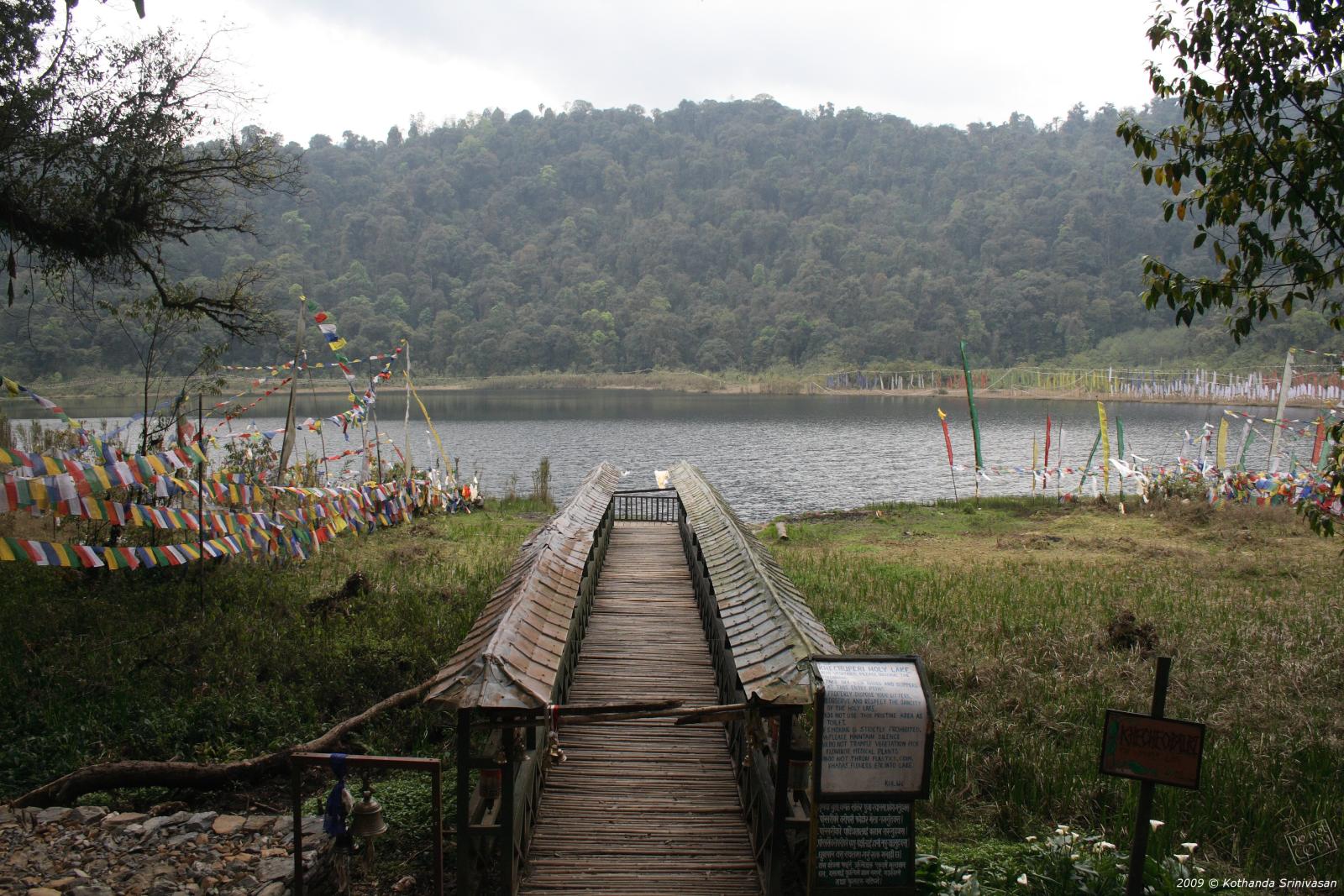
Khecheopalri Lake, originally known as Kha-Chot-Palri (meaning the heaven of Padmasambhava), is a lake located near Khecheopalri village, 147 kilometres (91 mi) west of Gangtok in the West Sikkim district of the Northeastern Indian state of Sikkim.
Located 34 kilometres (21 mi) to the northwest of Pelling town, the lake is sacred for both Buddhists and Hindus, and is believed to be a wish fulfilling lake. The local name for the lake is Sho Dzo Sho, which means "Oh Lady, Sit Here". The popularly known name of the lake, considering its location is Khecheopalri Lake, ensconced in the midst of the Khechoedpaldri hill, which is also considered a sacred hill.
The lake is an integral part of the much revered valley of "Demazong" meaning valley of rice. This landscape is also known as a land of hidden treasures blessed by Guru Padmasambhava.
The Khecheopalri Lake is also part of Buddhist religious pilgrimage circuit involving the Yuksom, the Dubdi Monastery in Yuksom, Pemayangtse Monastery, the Rabdentse ruins, the Sanga Choeling Monastery, and the Tashiding Monastery. An interesting feature of the lake is that leaves are not allowed to float on the lake, which is ensured by the birds which industriously pick them up as soon as they drop into the lake surface.
The Khecheopalri Lake and the Khangchendzonga National Park are conserved from the biodiversity perspective with ecotourism and pilgrimage as essential offshoots. As a result, their recreational and sacredness values are enhanced.
According to folklore morphometry, Khecheopalri is made up of two words, Kheecheo and palri. 'Khecheo' means "flying yoginis" or "Taras" (female manifestations of Avalokiteshvara, the Bodhisattva of Compassion) and 'palri' means "palace".
According to folklore legend related to Sikkim topography, the Khecheopalri is said to represent one of the four plexus of the human body namely, the thorax; the other three plexes are said to be represented by Yuksom (the third eye), Tashiding (head) and Pemayangtse (the heart).
The mythological links to the origin of all the lakes in Sikkim make them sacred and so is the case with the Khecheopalri Lake. Many legends are narrated such as: Guru Padmasambahava preached to sixty-four yoginis here; it is the residing place of the Goddess Tara Jetsun Dolma and the Khecheopalri Lake is her footprint; the lake represents the Goddess Chho Pema; footprints of Macha Zemu Rinpoche are on a stone near the chorten (stupa) near the lake; Hindu god Shiva meditated in Dupukney Cave that is situated above the lake and hence worshipped on "Nag Panchami" day at the lake; a Lepcha girl named Nenjo Asha Lham was blessed by the lake goddess and was gifted with a precious gem which was lost, and it is the belief of the local people that the gem is hidden in the lake; the lake water has curative properties and hence permitted to be used only for performing rites and rituals; and with all these legends, the lake is called a "wish fulfilling lake".
Hub AI
Khecheopalri Lake AI simulator
(@Khecheopalri Lake_simulator)
Khecheopalri Lake
Khecheopalri Lake, originally known as Kha-Chot-Palri (meaning the heaven of Padmasambhava), is a lake located near Khecheopalri village, 147 kilometres (91 mi) west of Gangtok in the West Sikkim district of the Northeastern Indian state of Sikkim.
Located 34 kilometres (21 mi) to the northwest of Pelling town, the lake is sacred for both Buddhists and Hindus, and is believed to be a wish fulfilling lake. The local name for the lake is Sho Dzo Sho, which means "Oh Lady, Sit Here". The popularly known name of the lake, considering its location is Khecheopalri Lake, ensconced in the midst of the Khechoedpaldri hill, which is also considered a sacred hill.
The lake is an integral part of the much revered valley of "Demazong" meaning valley of rice. This landscape is also known as a land of hidden treasures blessed by Guru Padmasambhava.
The Khecheopalri Lake is also part of Buddhist religious pilgrimage circuit involving the Yuksom, the Dubdi Monastery in Yuksom, Pemayangtse Monastery, the Rabdentse ruins, the Sanga Choeling Monastery, and the Tashiding Monastery. An interesting feature of the lake is that leaves are not allowed to float on the lake, which is ensured by the birds which industriously pick them up as soon as they drop into the lake surface.
The Khecheopalri Lake and the Khangchendzonga National Park are conserved from the biodiversity perspective with ecotourism and pilgrimage as essential offshoots. As a result, their recreational and sacredness values are enhanced.
According to folklore morphometry, Khecheopalri is made up of two words, Kheecheo and palri. 'Khecheo' means "flying yoginis" or "Taras" (female manifestations of Avalokiteshvara, the Bodhisattva of Compassion) and 'palri' means "palace".
According to folklore legend related to Sikkim topography, the Khecheopalri is said to represent one of the four plexus of the human body namely, the thorax; the other three plexes are said to be represented by Yuksom (the third eye), Tashiding (head) and Pemayangtse (the heart).
The mythological links to the origin of all the lakes in Sikkim make them sacred and so is the case with the Khecheopalri Lake. Many legends are narrated such as: Guru Padmasambahava preached to sixty-four yoginis here; it is the residing place of the Goddess Tara Jetsun Dolma and the Khecheopalri Lake is her footprint; the lake represents the Goddess Chho Pema; footprints of Macha Zemu Rinpoche are on a stone near the chorten (stupa) near the lake; Hindu god Shiva meditated in Dupukney Cave that is situated above the lake and hence worshipped on "Nag Panchami" day at the lake; a Lepcha girl named Nenjo Asha Lham was blessed by the lake goddess and was gifted with a precious gem which was lost, and it is the belief of the local people that the gem is hidden in the lake; the lake water has curative properties and hence permitted to be used only for performing rites and rituals; and with all these legends, the lake is called a "wish fulfilling lake".
Recent media