
Recent from talks
Padmasambhava
Knowledge base stats:
Talk channels stats:
Members stats:
Padmasambhava
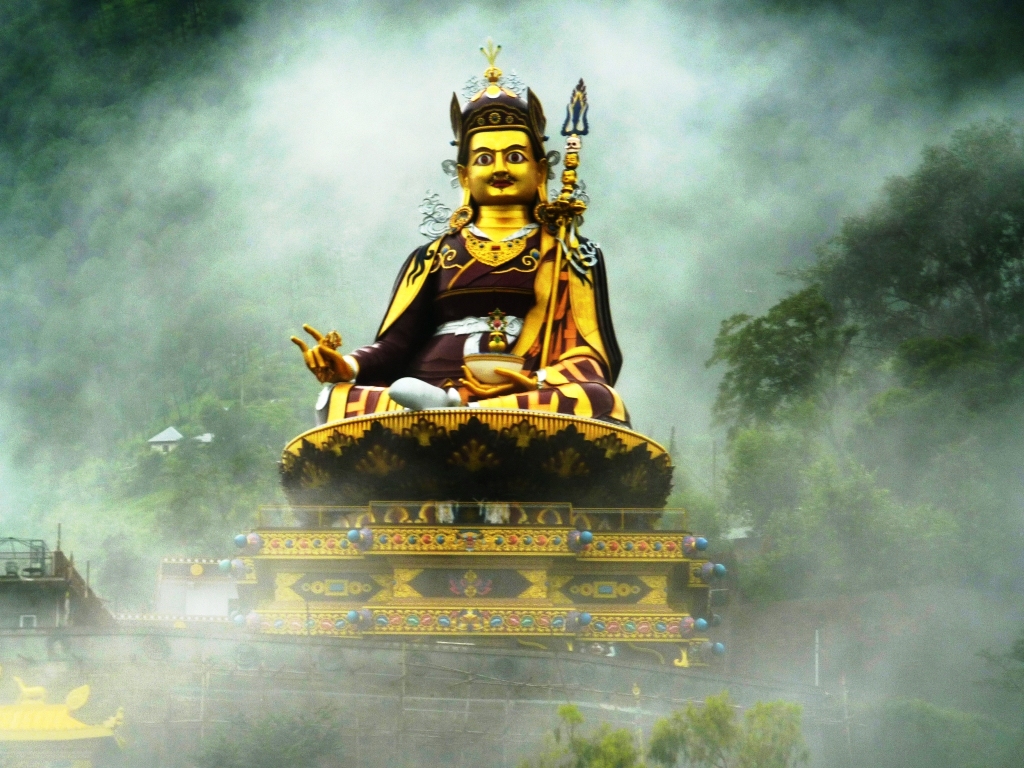
Padmasambhava ('Born from a Lotus'), also known as Guru Rinpoche ('Precious Guru'), was a semi-legendary tantric Buddhist Vajra master from medieval India, who according to hagiographical sources fully revealed the Vajrayana in Tibet, circa 8th – 9th centuries. He is considered an emanation or Nirmāṇakāya of Shakyamuni Buddha as foretold by the Buddha himself. According to early Tibetan sources including the Testament of Ba, he came to Tibet in the 8th century and designed Samye Monastery, the first Buddhist monastery in Tibet during the reign of King Trisong Detsen. He, the king, and Khenpo Shantarakshita are also responsible for creating the Tibetan Canon through translating all of the Buddha's teachings and their commentaries into the Tibetan language.
According to Lewis Doney, while his historical authenticity was questioned by earlier Tibetologists, it is now "cautiously accepted.” Padmasambhava himself was recorded as saying he was an historical person, and his footprints left in rocks are evidence. Padmasambhava later came to be viewed as a central figure in the transmission of Buddhism to Tibet. Starting from around the 12th century, hagiographies concerning Padmasambhava were written. These works expanded the profile and activities of Padmasambhava, now seen as taming all the Tibetan spirits and gods, and concealing various secret texts (terma) for future tertöns. Nyangral Nyima Özer (1124–1192) was the author of the Zangling-ma (Jeweled Rosary), the earliest biography of Padmasambhava. He has been called "one of the main architects of the Padmasambhava mythos – who first linked Padmasambhava to the Great Perfection in a high-profile manner."
In modern Tibetan Buddhism, Padmasambhava is considered to be a Buddha that was foretold by Buddha Shakyamuni. According to traditional hagiographies, his students include the great female masters Yeshe Tsogyal and Mandarava. The contemporary Nyingma school considers Padmasambhava to be a founding figure. The Nyingma school also traditionally holds that its Dzogchen lineage has its origins in Garab Dorje through a lineage of transmission to Padmasambhava.
In Tibetan Buddhism, the teachings of Padmasambava are said to include an oral lineage (kama), and a lineage of the hidden treasure texts (termas). Tibetan Buddhism holds that Padmasambhava's termas are discovered by fortunate beings and tertöns (treasure finders) when conditions are ripe for their reception. Padmasambhava is said to appear to tertöns in visionary encounters, and his form is visualized during guru yoga practice, particularly in the Nyingma school. Padmasambhava is widely venerated by Buddhists in Tibet, Nepal, Bhutan, the Himalayan states of India, and in countries around the world.
One of the earliest chronicle sources for Padmasambhava as a historical figure is the Testament of Ba (Dba' bzhed, c. 9th–12th centuries), which records the founding of Samye Monastery under the reign of King Trisong Detsen (r. 755–797/804). Other early manuscripts from Dunhuang also mention a tantric master associated with kilaya rituals named Padmasambhava who tames demons, though they do not associate this figure with Trisong Detsen.
According to the Testament of Ba, Trisong Detsen had invited the Buddhist abbot and Indian philosopher Śāntarakṣita (725–788) to Tibet to propagate Buddhism and help found the first Buddhist monastery at Samye ('The Inconceivable'). However, certain events like the flooding of a Buddhist temple and lightning striking the royal palace had caused some at the Tibetan court to believe that the local gods were angry.
Śāntarakṣita was sent to Nepal, but was then asked to return after the anti-Buddhist sentiments had subsided. On his return, Śāntarakṣita brought Padmasambhava who was an Indian tantric adept from Oddiyana. Padmasambhava's task was to tame the local spirits and impress the Tibetans with his magical and ritual powers. The Tibetan sources then explain how Padmasambhava identified the local gods and spirits, called them out and threatened them with his powers. After they had been tamed, the construction of Samye went ahead. Padmasambhava was also said to have taught various forms of tantric Buddhist yoga.
When the royal court began to suspect that Padmasambhava wanted to seize power, he was asked to leave by the king. The Testament of Ba also mentions other miracles by Padmasambhava, mostly associated with the taming of demons and spirits as well as longevity rituals and water magic.
Hub AI
Padmasambhava AI simulator
(@Padmasambhava_simulator)
Padmasambhava
Padmasambhava ('Born from a Lotus'), also known as Guru Rinpoche ('Precious Guru'), was a semi-legendary tantric Buddhist Vajra master from medieval India, who according to hagiographical sources fully revealed the Vajrayana in Tibet, circa 8th – 9th centuries. He is considered an emanation or Nirmāṇakāya of Shakyamuni Buddha as foretold by the Buddha himself. According to early Tibetan sources including the Testament of Ba, he came to Tibet in the 8th century and designed Samye Monastery, the first Buddhist monastery in Tibet during the reign of King Trisong Detsen. He, the king, and Khenpo Shantarakshita are also responsible for creating the Tibetan Canon through translating all of the Buddha's teachings and their commentaries into the Tibetan language.
According to Lewis Doney, while his historical authenticity was questioned by earlier Tibetologists, it is now "cautiously accepted.” Padmasambhava himself was recorded as saying he was an historical person, and his footprints left in rocks are evidence. Padmasambhava later came to be viewed as a central figure in the transmission of Buddhism to Tibet. Starting from around the 12th century, hagiographies concerning Padmasambhava were written. These works expanded the profile and activities of Padmasambhava, now seen as taming all the Tibetan spirits and gods, and concealing various secret texts (terma) for future tertöns. Nyangral Nyima Özer (1124–1192) was the author of the Zangling-ma (Jeweled Rosary), the earliest biography of Padmasambhava. He has been called "one of the main architects of the Padmasambhava mythos – who first linked Padmasambhava to the Great Perfection in a high-profile manner."
In modern Tibetan Buddhism, Padmasambhava is considered to be a Buddha that was foretold by Buddha Shakyamuni. According to traditional hagiographies, his students include the great female masters Yeshe Tsogyal and Mandarava. The contemporary Nyingma school considers Padmasambhava to be a founding figure. The Nyingma school also traditionally holds that its Dzogchen lineage has its origins in Garab Dorje through a lineage of transmission to Padmasambhava.
In Tibetan Buddhism, the teachings of Padmasambava are said to include an oral lineage (kama), and a lineage of the hidden treasure texts (termas). Tibetan Buddhism holds that Padmasambhava's termas are discovered by fortunate beings and tertöns (treasure finders) when conditions are ripe for their reception. Padmasambhava is said to appear to tertöns in visionary encounters, and his form is visualized during guru yoga practice, particularly in the Nyingma school. Padmasambhava is widely venerated by Buddhists in Tibet, Nepal, Bhutan, the Himalayan states of India, and in countries around the world.
One of the earliest chronicle sources for Padmasambhava as a historical figure is the Testament of Ba (Dba' bzhed, c. 9th–12th centuries), which records the founding of Samye Monastery under the reign of King Trisong Detsen (r. 755–797/804). Other early manuscripts from Dunhuang also mention a tantric master associated with kilaya rituals named Padmasambhava who tames demons, though they do not associate this figure with Trisong Detsen.
According to the Testament of Ba, Trisong Detsen had invited the Buddhist abbot and Indian philosopher Śāntarakṣita (725–788) to Tibet to propagate Buddhism and help found the first Buddhist monastery at Samye ('The Inconceivable'). However, certain events like the flooding of a Buddhist temple and lightning striking the royal palace had caused some at the Tibetan court to believe that the local gods were angry.
Śāntarakṣita was sent to Nepal, but was then asked to return after the anti-Buddhist sentiments had subsided. On his return, Śāntarakṣita brought Padmasambhava who was an Indian tantric adept from Oddiyana. Padmasambhava's task was to tame the local spirits and impress the Tibetans with his magical and ritual powers. The Tibetan sources then explain how Padmasambhava identified the local gods and spirits, called them out and threatened them with his powers. After they had been tamed, the construction of Samye went ahead. Padmasambhava was also said to have taught various forms of tantric Buddhist yoga.
When the royal court began to suspect that Padmasambhava wanted to seize power, he was asked to leave by the king. The Testament of Ba also mentions other miracles by Padmasambhava, mostly associated with the taming of demons and spirits as well as longevity rituals and water magic.
Recent media