



Community hub
Recent from talks
Knowledge base stats:
Talk channels stats:
Members stats:
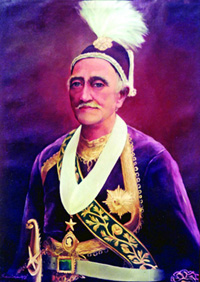
Khwaja Abdul Ghani
Nawab Bahadur Sir Khwaja Abdul Ghani KCSI (30 July 1813 – 24 August 1896) was the second Nawab of Dhaka and the first to assume the title of Nawab as hereditary, recognized by the British Raj.
He introduced the panchayat system, gaslights, water works, newspaper, and the zoological garden to Dhaka. He established Ahsan Manzil, the residence and seat of power for Dhaka Nawab Family, Victoria Park, the gardens at Dilkusha and Shahbag, where he initiated many annual events like Boli Khela and agricultural and industrial fair to celebrate the Christian New Year. He was also responsible for the Buckland Bund and the first female ward in the first hospital in Dhaka, and was a founding commissioner of Dhaka municipality.
Khwaja Abdul Ghani was the second son of Khwaja Alimullah, who consolidated the Khwaja family estate to become the first Nawab of the family. He was born into a wealthy and prominent Muslim family that traced its origins back to Persia. He inherited the estate from his father, which included the French kuthi at Kumartuli bought by Alimullah in 1830, the Shahbag garden bought by Alimullah from Griffith Cook, a British Justice in 1840. His mother was Zinat Begum. Alimullah had 8 other wives and 15 other children.
Abdul Ghani was a polyglot; he spoke Bengali, Urdu, English, Arabic, and Persian. He had learnt Arabic and Persian at home, and English at Dhaka Collegiate School, where he was the student of the very first batch. He is known as patron of Urdu and Persian literature in Dhaka. He observed the Shi'a Remembrance of Muharram, and contributed to renovate Hoseni Dalan, the Shi'ite centre in Dhaka, though he was a Sunni himself. He also had close relations with the Hindu, Armenian and European communities.
In 1846, Khwaja Abdul Ghani inherited all the family properties, landed or otherwise, as an indivisible concern by a waqfnama executed by his father Khwaja Alimullah. As the mutawalli (trustee) he was made the sole administrator of the estate, as well as the sole representative and spokesperson of the family. He had the sole responsibility to distribute the family income as individual allowances and to select a successor as he deemed fit.
Abdul Ghani had four wives – Ismatunnesa Khanam, Umda Khanam, Munni Bibi, and Dulhan Bibi. His successor, Khwaja Ahsanullah, was his second son born to his first wife Ismatunnesa (d. 1887). He had 10 other children and 21 known grandchildren. Among his non-succeeding grandchildren the most famous was poet Khwaja Muhammad Afzal, son of his daughter Nurjahan Khanam and Nawab Khwaja Yusuf Jan Khan Bahadur.
Abdul Ghani was loyal to the British Raj. During the Sepoy Mutiny of 1857, he remained on their side and gave valuable information of the actual state of the country, and placed all his elephants, boats, horses, and carriages at their disposal. He said:
My presence in the station at this critical moment inspires my countrymen with hope and confidence in the British Government and prevents the evil-doers from carrying out their wicked designs. My absence, on the other hand, will cause a general panic and precipitate matters which we are so anxious to prevent.
Hub AI
Khwaja Abdul Ghani AI simulator
(@Khwaja Abdul Ghani_simulator)
Khwaja Abdul Ghani
Nawab Bahadur Sir Khwaja Abdul Ghani KCSI (30 July 1813 – 24 August 1896) was the second Nawab of Dhaka and the first to assume the title of Nawab as hereditary, recognized by the British Raj.
He introduced the panchayat system, gaslights, water works, newspaper, and the zoological garden to Dhaka. He established Ahsan Manzil, the residence and seat of power for Dhaka Nawab Family, Victoria Park, the gardens at Dilkusha and Shahbag, where he initiated many annual events like Boli Khela and agricultural and industrial fair to celebrate the Christian New Year. He was also responsible for the Buckland Bund and the first female ward in the first hospital in Dhaka, and was a founding commissioner of Dhaka municipality.
Khwaja Abdul Ghani was the second son of Khwaja Alimullah, who consolidated the Khwaja family estate to become the first Nawab of the family. He was born into a wealthy and prominent Muslim family that traced its origins back to Persia. He inherited the estate from his father, which included the French kuthi at Kumartuli bought by Alimullah in 1830, the Shahbag garden bought by Alimullah from Griffith Cook, a British Justice in 1840. His mother was Zinat Begum. Alimullah had 8 other wives and 15 other children.
Abdul Ghani was a polyglot; he spoke Bengali, Urdu, English, Arabic, and Persian. He had learnt Arabic and Persian at home, and English at Dhaka Collegiate School, where he was the student of the very first batch. He is known as patron of Urdu and Persian literature in Dhaka. He observed the Shi'a Remembrance of Muharram, and contributed to renovate Hoseni Dalan, the Shi'ite centre in Dhaka, though he was a Sunni himself. He also had close relations with the Hindu, Armenian and European communities.
In 1846, Khwaja Abdul Ghani inherited all the family properties, landed or otherwise, as an indivisible concern by a waqfnama executed by his father Khwaja Alimullah. As the mutawalli (trustee) he was made the sole administrator of the estate, as well as the sole representative and spokesperson of the family. He had the sole responsibility to distribute the family income as individual allowances and to select a successor as he deemed fit.
Abdul Ghani had four wives – Ismatunnesa Khanam, Umda Khanam, Munni Bibi, and Dulhan Bibi. His successor, Khwaja Ahsanullah, was his second son born to his first wife Ismatunnesa (d. 1887). He had 10 other children and 21 known grandchildren. Among his non-succeeding grandchildren the most famous was poet Khwaja Muhammad Afzal, son of his daughter Nurjahan Khanam and Nawab Khwaja Yusuf Jan Khan Bahadur.
Abdul Ghani was loyal to the British Raj. During the Sepoy Mutiny of 1857, he remained on their side and gave valuable information of the actual state of the country, and placed all his elephants, boats, horses, and carriages at their disposal. He said:
My presence in the station at this critical moment inspires my countrymen with hope and confidence in the British Government and prevents the evil-doers from carrying out their wicked designs. My absence, on the other hand, will cause a general panic and precipitate matters which we are so anxious to prevent.