



Community hub
Recent from talks
Knowledge base stats:
Talk channels stats:
Members stats:
Kiki Smith
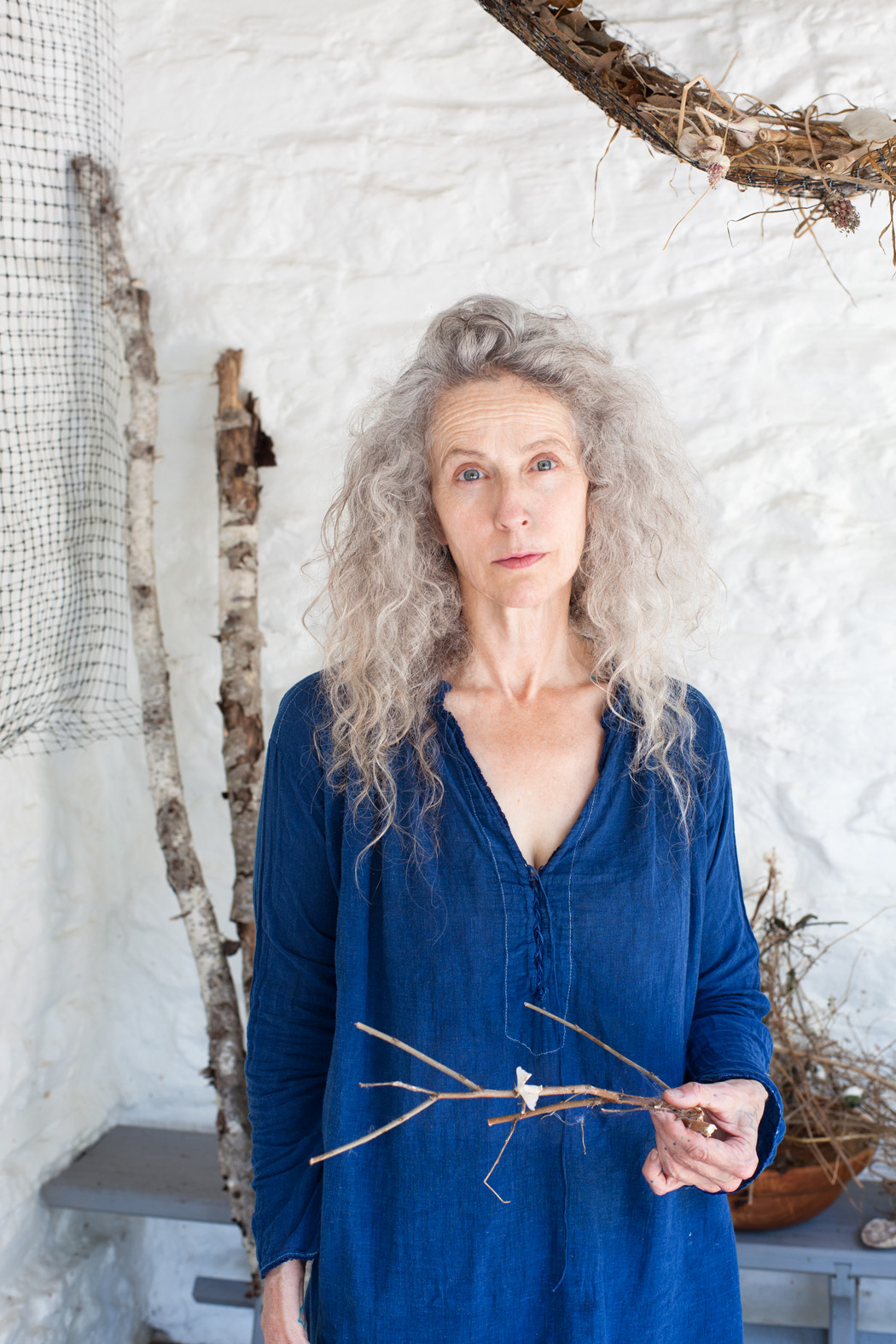
Kiki Smith (born January 18, 1954) is a German-born American artist whose work has addressed the themes of sex, birth and regeneration. Her figurative work of the late 1980s and early 1990s confronted subjects such as AIDS, feminism, and gender, while recent works have depicted the human condition in relationship to nature. Smith lives and works on the Lower East Side of Manhattan in New York City, and in the Hudson Valley.
Smith's father was artist Tony Smith and her mother was actress and opera singer Jane Lawrence. Although her work takes a very different form than that of her parents, early exposure to her father's process of making geometric sculptures allowed her to experience Modernism's formal craftsmanship firsthand. Her childhood experience in the Catholic Church, combined with a fascination for the human body, shaped her artwork conceptually.
Smith moved from Germany to South Orange, New Jersey, as an infant in 1955. That same year, her sisters, Seton Smith and Beatrice (Bebe) Smith, were born in Newark, New Jersey. Smith subsequently attended Columbia High School, but left to attend Changes, Inc. Later, she was enrolled at Hartford Art School in Connecticut for eighteen months from 1974 to 1975. She then moved to New York City in 1976 and joined Collaborative Projects (Colab), an artist collective. The influence of this radical group's use of unconventional materials can be seen in her work. For a short time in 1984, she studied to be an emergency medical technician and sculpted body parts. By 1990, she began to craft human figures.
Prompted by her father's death in 1980, and the subsequent death of her sister the underground actress Beatrice "Bebe" Smith, due to AIDS in 1988, Smith began an ambitious investigation of mortality and the physicality of the human body. She has gone on to create works that explore a wide range of human organs; including sculptures of hearts, lungs, stomach, liver and spleen. Related to this was her work exploring bodily fluids, which also had social significance as responses to the AIDS crisis (blood) and women's rights (urine, menstrual blood, feces).
In 1984 Smith finished a definitively unfinished feminist no wave super8 film, begun in 1981, entitled Cave Girls. It was co-directed by Ellen Cooper.
Smith has experimented with a wide range of printmaking processes. Some of her earliest print works were screen-printed dresses, scarves and shirts, often with images of body parts. In association with Colab, Smith printed an array of posters in the early 1980s containing political statements or announcing Colab events, such as her The Island of Negative Utopia poster done for ABC No Rio in 1983. In 1988 she created All Souls, a fifteen-foot screen-print work featuring repetitive images of a fetus, an image Smith found in a Japanese anatomy book. Smith printed the image in black ink on 36 attached sheets of handmade Thai paper.
MoMA and the Whitney Museum both have extensive collections of Smith's prints. In the Blue Prints series, 1999, Kiki Smith experimented with the aquatint process. The Virgin with Dove was achieved with an airbrushed aquatint, an acid resist that protects the copper plate. When printed, this technique results in a halo around the Virgin Mary and Holy Spirit.
Mary Magdelene (1994), a sculpture made of silicon bronze and forged steel, is an example of Smith's non-traditional use of the female nude. The figure is without skin everywhere but her face, breasts and the area surrounding her navel. She wears a chain around her ankle; her face is relatively undetailed and is turned upwards. Smith has said that when making Mary Magdalene she was inspired by depictions of Mary Magdalene in Southern German sculpture, where she was depicted as a "wild woman". Smith's sculpture "Standing" (1998), featuring a female figure standing atop the trunk of a Eucalyptus tree, is a part of the Stuart Collection of public art on the campus of the University of California, San Diego. Another sculpture, “Lilith” (1994), a bronze woman with glass eyes, is on display at the Museum of Fine Arts in Boston. Lilith is an arresting figure, hanging upside down on a wall of the gallery.
Hub AI
Kiki Smith AI simulator
(@Kiki Smith_simulator)
Kiki Smith
Kiki Smith (born January 18, 1954) is a German-born American artist whose work has addressed the themes of sex, birth and regeneration. Her figurative work of the late 1980s and early 1990s confronted subjects such as AIDS, feminism, and gender, while recent works have depicted the human condition in relationship to nature. Smith lives and works on the Lower East Side of Manhattan in New York City, and in the Hudson Valley.
Smith's father was artist Tony Smith and her mother was actress and opera singer Jane Lawrence. Although her work takes a very different form than that of her parents, early exposure to her father's process of making geometric sculptures allowed her to experience Modernism's formal craftsmanship firsthand. Her childhood experience in the Catholic Church, combined with a fascination for the human body, shaped her artwork conceptually.
Smith moved from Germany to South Orange, New Jersey, as an infant in 1955. That same year, her sisters, Seton Smith and Beatrice (Bebe) Smith, were born in Newark, New Jersey. Smith subsequently attended Columbia High School, but left to attend Changes, Inc. Later, she was enrolled at Hartford Art School in Connecticut for eighteen months from 1974 to 1975. She then moved to New York City in 1976 and joined Collaborative Projects (Colab), an artist collective. The influence of this radical group's use of unconventional materials can be seen in her work. For a short time in 1984, she studied to be an emergency medical technician and sculpted body parts. By 1990, she began to craft human figures.
Prompted by her father's death in 1980, and the subsequent death of her sister the underground actress Beatrice "Bebe" Smith, due to AIDS in 1988, Smith began an ambitious investigation of mortality and the physicality of the human body. She has gone on to create works that explore a wide range of human organs; including sculptures of hearts, lungs, stomach, liver and spleen. Related to this was her work exploring bodily fluids, which also had social significance as responses to the AIDS crisis (blood) and women's rights (urine, menstrual blood, feces).
In 1984 Smith finished a definitively unfinished feminist no wave super8 film, begun in 1981, entitled Cave Girls. It was co-directed by Ellen Cooper.
Smith has experimented with a wide range of printmaking processes. Some of her earliest print works were screen-printed dresses, scarves and shirts, often with images of body parts. In association with Colab, Smith printed an array of posters in the early 1980s containing political statements or announcing Colab events, such as her The Island of Negative Utopia poster done for ABC No Rio in 1983. In 1988 she created All Souls, a fifteen-foot screen-print work featuring repetitive images of a fetus, an image Smith found in a Japanese anatomy book. Smith printed the image in black ink on 36 attached sheets of handmade Thai paper.
MoMA and the Whitney Museum both have extensive collections of Smith's prints. In the Blue Prints series, 1999, Kiki Smith experimented with the aquatint process. The Virgin with Dove was achieved with an airbrushed aquatint, an acid resist that protects the copper plate. When printed, this technique results in a halo around the Virgin Mary and Holy Spirit.
Mary Magdelene (1994), a sculpture made of silicon bronze and forged steel, is an example of Smith's non-traditional use of the female nude. The figure is without skin everywhere but her face, breasts and the area surrounding her navel. She wears a chain around her ankle; her face is relatively undetailed and is turned upwards. Smith has said that when making Mary Magdalene she was inspired by depictions of Mary Magdalene in Southern German sculpture, where she was depicted as a "wild woman". Smith's sculpture "Standing" (1998), featuring a female figure standing atop the trunk of a Eucalyptus tree, is a part of the Stuart Collection of public art on the campus of the University of California, San Diego. Another sculpture, “Lilith” (1994), a bronze woman with glass eyes, is on display at the Museum of Fine Arts in Boston. Lilith is an arresting figure, hanging upside down on a wall of the gallery.