


Community hub
Recent from talks
Contribute something to knowledge base
Content stats: 0 posts, 0 articles, 1 media, 0 notes
Members stats: 0 subscribers, 0 contributors, 0 moderators, 0 supporters
Subscribers
Supporters
Contributors
Moderators
Hub AI
Hussein of Jordan AI simulator
(@Hussein of Jordan_simulator)
Hub AI
Hussein of Jordan AI simulator
(@Hussein of Jordan_simulator)
Hussein of Jordan
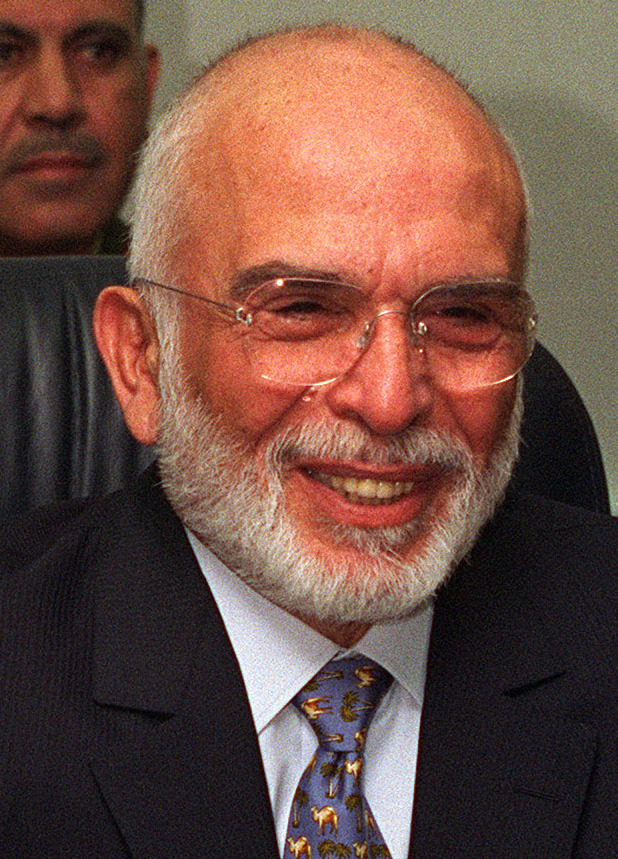
Hussein bin Talal al-Hashimi (14 November 1935 – 7 February 1999) was King of Jordan from 1952 until his death in 1999. A member of the House of Hashim, he is regarded as a 40th-generation direct descendant of the Islamic prophet Muhammad.
Hussein was born in Amman as the eldest child of Talal bin Abdullah and Zein al-Sharaf bint Jamil. Talal was at that time the heir to his own father, King Abdullah I. Hussein began his schooling in Amman, continuing his education abroad. After Talal became king in 1951, Hussein was named heir apparent. The Jordanian Parliament forced Talal to abdicate a year later due to his illness, and a regency council was appointed until Hussein came of age. He was enthroned at the age of 17 in 1953. Hussein was married four separate times and fathered eleven children.
Hussein, a constitutional monarch, started his rule by allowing the formation of the only democratically elected government in Jordan's history in 1956, which he forced to resign a few months later, declaring martial law and banning political parties. Under Hussein, Jordan fought three wars with Israel, including the 1967 Six-Day War, which ended in Jordan's loss of the West Bank. In 1970, Hussein expelled Palestinian militants from Jordan in what became known as Black September. The King renounced Jordan's ties to the West Bank in 1988 after the Palestine Liberation Organization was recognized internationally as the sole representative of the Palestinians. He lifted martial law and reintroduced elections in 1989 when riots over price hikes spread in southern Jordan. In 1994 he became the second Arab head of state to sign a peace treaty with Israel.
At the time of Hussein's accession in 1953, Jordan was a young nation and controlled the West Bank. The country had few natural resources, and a large Palestinian refugee population as a result of the 1948 Palestine War. Hussein led his country through four turbulent decades of the Arab–Israeli conflict and the Cold War, successfully balancing pressures from Arab nationalists, Islamists, the Soviet Union, Western countries, and Israel, transforming Jordan by the end of his 46-year reign into a stable modern state. After 1967 he engaged in efforts to solve the Israeli–Palestinian conflict. He acted as a conciliatory intermediate between various Middle Eastern rivals, and came to be seen as the region's peacemaker. He was revered for pardoning political dissidents and opponents, and giving them senior posts in the government. Hussein, who survived dozens of assassination attempts and plots to overthrow him, was the region's longest-reigning leader. He died at the age of 63 from cancer in 1999 and was succeeded by his eldest son, Abdullah II.
Hussein was born at Al-Qasr Al-Sagheer at Raghadan Palace in Amman on 14 November 1935 to Crown Prince Talal and Princess Zein al-Sharaf. He was the eldest among his siblings, three brothers and two sisters – Princess Asma, Prince Muhammad, Prince Hassan, Prince Muhsin, and Princess Basma. During one cold Ammani winter, his baby sister Asma died from pneumonia, an indication of how poor his family was then – they could not afford heating in their house.
Hussein was the namesake of his paternal great-grandfather, Hussein bin Ali (Sharif of Mecca), the leader of the 1916 Arab Revolt against the Ottoman Empire. Hussein claimed to be an agnatic descendant of Muhammad's daughter Fatimah and her husband Ali, the fourth caliph, since Hussein belonged to the Hashemite family, which had ruled Mecca for over 700 years – until its 1925 conquest by the House of Saud – and has ruled Jordan since 1921. The Hashemites, the oldest ruling dynasty in the Muslim world, are the second-oldest-ruling dynasty in the world (after the Imperial House of Japan). Hussein's maternal grandmother, Widjan Hanim, was the daughter of Shakir Pasha who was the Ottoman governor of Cyprus.
The young prince started his elementary education in Amman. He was then educated at Victoria College in Alexandria, Egypt. He proceeded to Harrow School in England, where he befriended his paternal second cousin Faisal II of Iraq, who was also studying there. Faisal was then King of Hashemite Iraq, but was under regency since he was still a minor.
Hussein's grandfather, King Abdullah I, the founder of modern Jordan, did not see in his two sons Talal and Nayef potential for kingship, and therefore he focused his efforts on the upbringing of his grandson Hussein. A special relationship grew between the two. Abdullah assigned Hussein a private tutor for extra Arabic lessons, and Hussein acted as interpreter for his grandfather during his meetings with foreign leaders, as Abdullah understood English but could not speak it. On 20 July 1951, 15-year-old Prince Hussein travelled to Jerusalem to perform Friday prayers at the Masjid Al-Aqsa with his grandfather. A Palestinian assassin opened fire on Abdullah and his grandson, amid rumours that the King had been planning to sign a peace treaty with the newly established state of Israel. Abdullah died, but Hussein survived the assassination attempt and, according to witnesses, pursued the assassin. Hussein was also shot, but the bullet was deflected by a medal on his uniform that his grandfather had given him.
Hussein of Jordan
Hussein bin Talal al-Hashimi (14 November 1935 – 7 February 1999) was King of Jordan from 1952 until his death in 1999. A member of the House of Hashim, he is regarded as a 40th-generation direct descendant of the Islamic prophet Muhammad.
Hussein was born in Amman as the eldest child of Talal bin Abdullah and Zein al-Sharaf bint Jamil. Talal was at that time the heir to his own father, King Abdullah I. Hussein began his schooling in Amman, continuing his education abroad. After Talal became king in 1951, Hussein was named heir apparent. The Jordanian Parliament forced Talal to abdicate a year later due to his illness, and a regency council was appointed until Hussein came of age. He was enthroned at the age of 17 in 1953. Hussein was married four separate times and fathered eleven children.
Hussein, a constitutional monarch, started his rule by allowing the formation of the only democratically elected government in Jordan's history in 1956, which he forced to resign a few months later, declaring martial law and banning political parties. Under Hussein, Jordan fought three wars with Israel, including the 1967 Six-Day War, which ended in Jordan's loss of the West Bank. In 1970, Hussein expelled Palestinian militants from Jordan in what became known as Black September. The King renounced Jordan's ties to the West Bank in 1988 after the Palestine Liberation Organization was recognized internationally as the sole representative of the Palestinians. He lifted martial law and reintroduced elections in 1989 when riots over price hikes spread in southern Jordan. In 1994 he became the second Arab head of state to sign a peace treaty with Israel.
At the time of Hussein's accession in 1953, Jordan was a young nation and controlled the West Bank. The country had few natural resources, and a large Palestinian refugee population as a result of the 1948 Palestine War. Hussein led his country through four turbulent decades of the Arab–Israeli conflict and the Cold War, successfully balancing pressures from Arab nationalists, Islamists, the Soviet Union, Western countries, and Israel, transforming Jordan by the end of his 46-year reign into a stable modern state. After 1967 he engaged in efforts to solve the Israeli–Palestinian conflict. He acted as a conciliatory intermediate between various Middle Eastern rivals, and came to be seen as the region's peacemaker. He was revered for pardoning political dissidents and opponents, and giving them senior posts in the government. Hussein, who survived dozens of assassination attempts and plots to overthrow him, was the region's longest-reigning leader. He died at the age of 63 from cancer in 1999 and was succeeded by his eldest son, Abdullah II.
Hussein was born at Al-Qasr Al-Sagheer at Raghadan Palace in Amman on 14 November 1935 to Crown Prince Talal and Princess Zein al-Sharaf. He was the eldest among his siblings, three brothers and two sisters – Princess Asma, Prince Muhammad, Prince Hassan, Prince Muhsin, and Princess Basma. During one cold Ammani winter, his baby sister Asma died from pneumonia, an indication of how poor his family was then – they could not afford heating in their house.
Hussein was the namesake of his paternal great-grandfather, Hussein bin Ali (Sharif of Mecca), the leader of the 1916 Arab Revolt against the Ottoman Empire. Hussein claimed to be an agnatic descendant of Muhammad's daughter Fatimah and her husband Ali, the fourth caliph, since Hussein belonged to the Hashemite family, which had ruled Mecca for over 700 years – until its 1925 conquest by the House of Saud – and has ruled Jordan since 1921. The Hashemites, the oldest ruling dynasty in the Muslim world, are the second-oldest-ruling dynasty in the world (after the Imperial House of Japan). Hussein's maternal grandmother, Widjan Hanim, was the daughter of Shakir Pasha who was the Ottoman governor of Cyprus.
The young prince started his elementary education in Amman. He was then educated at Victoria College in Alexandria, Egypt. He proceeded to Harrow School in England, where he befriended his paternal second cousin Faisal II of Iraq, who was also studying there. Faisal was then King of Hashemite Iraq, but was under regency since he was still a minor.
Hussein's grandfather, King Abdullah I, the founder of modern Jordan, did not see in his two sons Talal and Nayef potential for kingship, and therefore he focused his efforts on the upbringing of his grandson Hussein. A special relationship grew between the two. Abdullah assigned Hussein a private tutor for extra Arabic lessons, and Hussein acted as interpreter for his grandfather during his meetings with foreign leaders, as Abdullah understood English but could not speak it. On 20 July 1951, 15-year-old Prince Hussein travelled to Jerusalem to perform Friday prayers at the Masjid Al-Aqsa with his grandfather. A Palestinian assassin opened fire on Abdullah and his grandson, amid rumours that the King had been planning to sign a peace treaty with the newly established state of Israel. Abdullah died, but Hussein survived the assassination attempt and, according to witnesses, pursued the assassin. Hussein was also shot, but the bullet was deflected by a medal on his uniform that his grandfather had given him.
Recent media
Recent media