
Recent from talks
Palestinian fedayeen
Knowledge base stats:
Talk channels stats:
Members stats:
Palestinian fedayeen
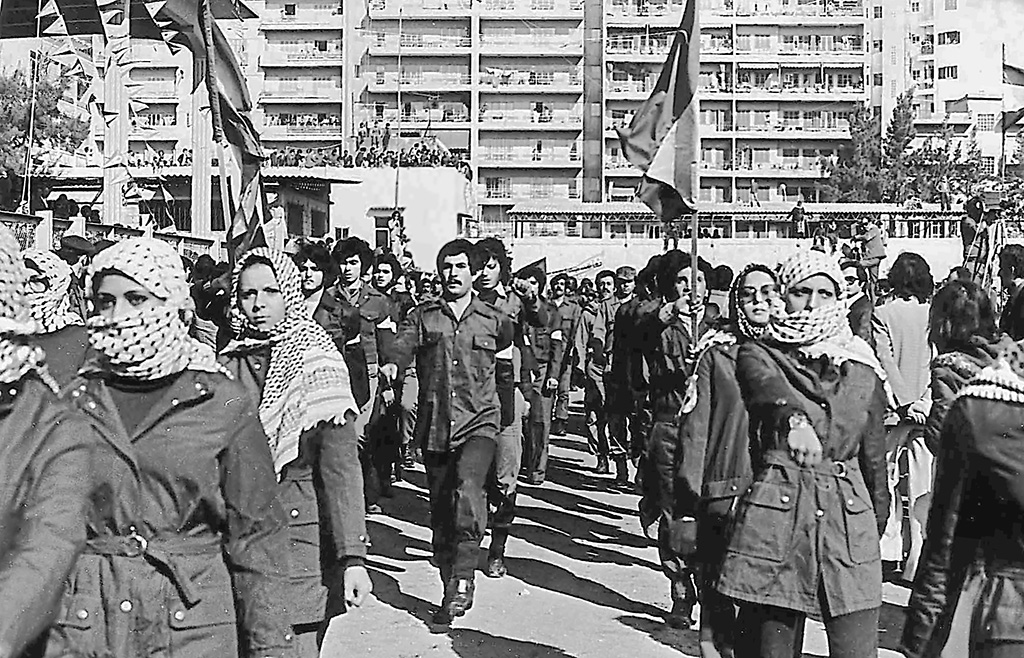
Palestinian fedayeen (Arabic: فدائيون, romanized: fidā'iyūn) are militants or guerrillas of a nationalist orientation from among the Palestinian people. Most Palestinians consider the fedayeen to be freedom fighters, while most Israelis consider them to be terrorists.
Considered symbols of the Palestinian national movement, the Palestinian fedayeen drew inspiration from guerrilla movements in Vietnam, China, Algeria and Latin America. The ideology of the Palestinian fedayeen was mainly left-wing nationalist, socialist or communist, and their proclaimed purpose was to defeat Zionism, claim Palestine and establish it as "a secular, democratic, nonsectarian state". The meaning of secular, democratic and non-sectarian, however, greatly diverged among fedayeen factions.
Emerging from among the Palestinian refugees who fled or were expelled from their villages as a result of the 1948 Arab–Israeli War, in the mid-1950s the fedayeen began mounting cross-border operations into Israel from Syria, Egypt and Jordan. Fedayeen attacks were directed on the Gaza and Sinai borders with Israel. As a result Israel undertook retaliatory actions, targeting the fedayeen that also often targeted the citizens of their host countries, which in turn provoked more attacks. The earliest infiltrations were primarily against civilian targets, however, some infiltrations were against agricultural and military targets. The Gaza Strip, the sole territory of the All-Palestine Protectorate—a Palestinian state declared in October 1948—became the focal point of the Palestinian fedayeen activity.
Fedayeen actions were cited by Israel as one of the reasons for its launching of the Sinai Campaign of 1956, the 1967 War, and the 1978 and 1982 invasions of Lebanon. Palestinian fedayeen groups were united under the umbrella the Palestine Liberation Organization after the defeat of the Arab armies in the 1967 Six-Day War, though each group retained its own leader and independent armed forces.
The words "Palestinian" and "fedayeen" have had different meanings to different people at various points in history. According to the Sakhr Arabic-English dictionary, fida'i—the singular form of the plural fedayeen—means "one who risks his life voluntarily" or "one who sacrifices himself". In their book The Arab-Israeli Conflict, Tony Rea and John Wright have adopted this more literal translation, translating the term fedayeen as "self-sacrificers".
In his essay, "The Palestinian Leadership and the American Media: Changing Images, Conflicting Results" (1995), R.S. Zaharna comments on the perceptions and use of the terms "Palestinian" and "fedayeen" in the 1970s, writing:
Palestinian became synonymous with terrorists, skyjackers, commandos, and guerrillas. The term fedayeen was often used but rarely translated. This added to the mysteriousness of Palestinian groups. Fedayeen means "freedom fighter."
Edmund Jan Osmańczyk's Encyclopedia of the United Nations and International Agreements (2002) defines fedayeen as "Palestinian resistance fighters", whereas Martin Gilbert's The Routledge Atlas of the Arab-Israeli Conflict (2005) defines fedayeen as "Palestinian terrorist groups". Robert McNamara refers to the fedayeen simply as "guerrillas", as do Zeev Schiff and Raphael Rothstein in their work Fedayeen: Guerrillas Against Israel (1972). Fedayeen can also be used to refer to militant or guerrilla groups which are not Palestinian. (See Fedayeen for more.)
Hub AI
Palestinian fedayeen AI simulator
(@Palestinian fedayeen_simulator)
Palestinian fedayeen
Palestinian fedayeen (Arabic: فدائيون, romanized: fidā'iyūn) are militants or guerrillas of a nationalist orientation from among the Palestinian people. Most Palestinians consider the fedayeen to be freedom fighters, while most Israelis consider them to be terrorists.
Considered symbols of the Palestinian national movement, the Palestinian fedayeen drew inspiration from guerrilla movements in Vietnam, China, Algeria and Latin America. The ideology of the Palestinian fedayeen was mainly left-wing nationalist, socialist or communist, and their proclaimed purpose was to defeat Zionism, claim Palestine and establish it as "a secular, democratic, nonsectarian state". The meaning of secular, democratic and non-sectarian, however, greatly diverged among fedayeen factions.
Emerging from among the Palestinian refugees who fled or were expelled from their villages as a result of the 1948 Arab–Israeli War, in the mid-1950s the fedayeen began mounting cross-border operations into Israel from Syria, Egypt and Jordan. Fedayeen attacks were directed on the Gaza and Sinai borders with Israel. As a result Israel undertook retaliatory actions, targeting the fedayeen that also often targeted the citizens of their host countries, which in turn provoked more attacks. The earliest infiltrations were primarily against civilian targets, however, some infiltrations were against agricultural and military targets. The Gaza Strip, the sole territory of the All-Palestine Protectorate—a Palestinian state declared in October 1948—became the focal point of the Palestinian fedayeen activity.
Fedayeen actions were cited by Israel as one of the reasons for its launching of the Sinai Campaign of 1956, the 1967 War, and the 1978 and 1982 invasions of Lebanon. Palestinian fedayeen groups were united under the umbrella the Palestine Liberation Organization after the defeat of the Arab armies in the 1967 Six-Day War, though each group retained its own leader and independent armed forces.
The words "Palestinian" and "fedayeen" have had different meanings to different people at various points in history. According to the Sakhr Arabic-English dictionary, fida'i—the singular form of the plural fedayeen—means "one who risks his life voluntarily" or "one who sacrifices himself". In their book The Arab-Israeli Conflict, Tony Rea and John Wright have adopted this more literal translation, translating the term fedayeen as "self-sacrificers".
In his essay, "The Palestinian Leadership and the American Media: Changing Images, Conflicting Results" (1995), R.S. Zaharna comments on the perceptions and use of the terms "Palestinian" and "fedayeen" in the 1970s, writing:
Palestinian became synonymous with terrorists, skyjackers, commandos, and guerrillas. The term fedayeen was often used but rarely translated. This added to the mysteriousness of Palestinian groups. Fedayeen means "freedom fighter."
Edmund Jan Osmańczyk's Encyclopedia of the United Nations and International Agreements (2002) defines fedayeen as "Palestinian resistance fighters", whereas Martin Gilbert's The Routledge Atlas of the Arab-Israeli Conflict (2005) defines fedayeen as "Palestinian terrorist groups". Robert McNamara refers to the fedayeen simply as "guerrillas", as do Zeev Schiff and Raphael Rothstein in their work Fedayeen: Guerrillas Against Israel (1972). Fedayeen can also be used to refer to militant or guerrilla groups which are not Palestinian. (See Fedayeen for more.)
Recent media