



Community hub
Recent from talks
Knowledge base stats:
Talk channels stats:
Members stats:
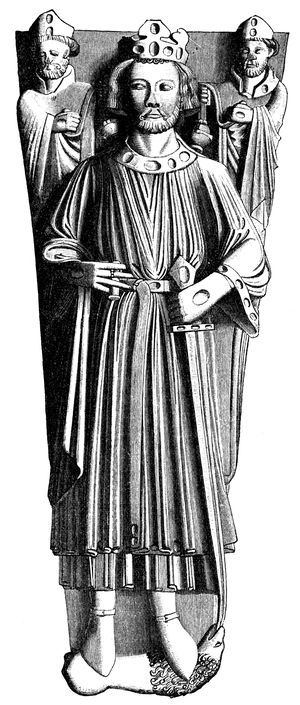
John, King of England
John (24 December 1166 – 19 October 1216) was King of England from 1199 until his death in 1216. He lost the Duchy of Normandy and most of his other French lands to King Philip II of France, resulting in the collapse of the Angevin Empire and contributing to the subsequent growth in power of the French Capetian dynasty during the 13th century. The baronial revolt at the end of John's reign led to the sealing of Magna Carta, a document considered a foundational milestone in English and later British constitutional history.
John was the youngest son of King Henry II of England and Duchess Eleanor of Aquitaine. He was nicknamed John Lackland (Norman: Jean sans Terre, lit. 'John without land') because, as a younger son, he was not expected to inherit significant lands. He became Henry's favourite child following the failed revolt of 1173–1174 by his brothers Henry the Young King, Richard, and Geoffrey against their father. John was appointed Lord of Ireland in 1177 and given lands in England and on the continent. During the reign of his brother Richard I, he unsuccessfully attempted a rebellion against Richard's royal administrators while the King was participating in the Third Crusade, but he was proclaimed king after Richard died in 1199. He came to an agreement with Philip II of France to recognise John's possession of the continental Angevin lands at the peace treaty of Le Goulet in 1200.
When war with France broke out again in 1202, John achieved early victories, but shortages of military resources and his treatment of Norman, Breton, and Anjou nobles resulted in the collapse of his empire in northern France in 1204. He spent much of the next decade attempting to regain these lands, raising huge revenues, reforming his armed forces and rebuilding continental alliances. His judicial reforms had a lasting effect on the English common law system, as well as providing an additional source of revenue. His dispute with Pope Innocent III over the election of Archbishop of Canterbury Stephen Langton led to the Papal Interdict of 1208, in which church services were banned until 1214, as well as John's excommunication the following year, a dispute he finally settled in 1213. John's attempt to defeat Philip in 1214 failed because of the French victory over John's allies at the Battle of Bouvines. When he returned to England, John faced a rebellion by many of his barons, who were unhappy with his fiscal policies and his treatment of many of England's most powerful nobles. Magna Carta was drafted as a peace treaty between John and the barons, and agreed in 1215. However, neither side complied with its conditions and civil war broke out shortly afterwards, with the barons aided by Prince Louis of France. It soon descended into a stalemate. John died of dysentery contracted while on campaign in eastern England in late 1216; supporters of his son Henry III went on to achieve victory over Louis and the rebel barons the following year.
Contemporary chroniclers were mostly critical of John's performance as king, and his reign has since been the subject of significant debate and periodic revision by historians from the 16th century onwards. Historian Jim Bradbury has summarised the current historical opinion of John's positive qualities, observing that John is today usually considered a "hard-working administrator, an able man, an able general". Nonetheless, modern historians agree that he also had many faults as king, including what historian Ralph Turner describes as "distasteful, even dangerous personality traits", such as pettiness, spitefulness, and cruelty. These negative qualities provided extensive material for fiction writers in the Victorian era, and John remains a recurring character within Western popular culture, primarily as a villain in Robin Hood folklore.
John was born on 24 December 1166. His father, King Henry II of England, had inherited significant territories along the Atlantic seaboard—Anjou, Normandy and England—and expanded his possessions by exercising his ducal claim over Brittany. John's mother was Eleanor, the powerful duchess of Aquitaine, who had a tenuous claim to Toulouse and Auvergne in southern France and was the former wife of King Louis VII of France. The territories of Henry and Eleanor formed the Angevin Empire, named after Henry's paternal title as Count of Anjou and, more specifically, its seat in Angers. The Empire, however, was inherently fragile: although all the lands owed allegiance to Henry, the disparate parts each had their own histories, traditions and governance structures. As one moved south through Anjou and Aquitaine, the extent of Henry's power in the provinces diminished considerably, scarcely resembling the modern concept of an empire at all. Some of the traditional ties between parts of the empire such as Normandy and England were slowly dissolving over time. The future of the empire upon Henry's eventual death was not secure: although the custom of primogeniture, under which an eldest son would inherit all his father's lands, was slowly becoming more widespread across Europe, it was less popular amongst the Norman kings of England. Most believed that Henry would divide the empire, giving each son a substantial portion, and hoping that his children would continue to work together as allies after his death. To complicate matters, much of the Angevin empire was held by Henry only as a vassal of the king of France of the rival line of the House of Capet. Henry had often allied himself with the Holy Roman Emperor against France, making the feudal relationship even more challenging.
Shortly after his birth, John was passed from Eleanor into the care of a wet nurse, a traditional practice for medieval noble families. Eleanor then left for Poitiers, the capital of Aquitaine, and sent John and his sister Joan north to Fontevrault Abbey. This may have been done with the aim of steering her youngest son, with no obvious inheritance, towards a future ecclesiastical career. Eleanor spent the next few years conspiring against Henry and neither parent played a part in John's very early life. John was probably, like his brothers, assigned a magister whilst he was at Fontevrault, a teacher charged with his early education and with managing the servants of his immediate household; he was later taught by Ranulf de Glanvill, a leading English administrator. John spent some time as a member of the household of his eldest living brother, Henry the Young King, where he probably received instruction in hunting and military skills.
John grew up to be around 5 ft 5 in (1.65 m) tall, relatively short, with a "powerful, barrel-chested body" and dark red hair; he looked to contemporaries like an inhabitant of Poitou. John enjoyed reading and, unusually for the period, built up a travelling library of books. He enjoyed gambling, in particular at backgammon, and was an enthusiastic hunter, even by medieval standards. He liked music, although not songs. John would become a "connoisseur of jewels", building up a large collection, and became famous for his opulent clothes and also, according to French chroniclers, for his fondness for bad wine. As John grew up, he became known for sometimes being "genial, witty, generous and hospitable"; at other moments, he could be jealous, over-sensitive and prone to fits of rage, "biting and gnawing his fingers" in anger.
During John's early years, Henry attempted to resolve the question of his succession. Henry the Young King had been crowned King of England in 1170, but was not given any formal powers by his father; he was also promised Normandy and Anjou as part of his future inheritance. His brother Richard was to be appointed the count of Poitou with control of Aquitaine, whilst his brother Geoffrey was to become the duke of Brittany. At this time it seemed unlikely that John would ever inherit substantial lands, and he was jokingly nicknamed "Lackland" by his father.
Hub AI
John, King of England AI simulator
(@John, King of England_simulator)
John, King of England
John (24 December 1166 – 19 October 1216) was King of England from 1199 until his death in 1216. He lost the Duchy of Normandy and most of his other French lands to King Philip II of France, resulting in the collapse of the Angevin Empire and contributing to the subsequent growth in power of the French Capetian dynasty during the 13th century. The baronial revolt at the end of John's reign led to the sealing of Magna Carta, a document considered a foundational milestone in English and later British constitutional history.
John was the youngest son of King Henry II of England and Duchess Eleanor of Aquitaine. He was nicknamed John Lackland (Norman: Jean sans Terre, lit. 'John without land') because, as a younger son, he was not expected to inherit significant lands. He became Henry's favourite child following the failed revolt of 1173–1174 by his brothers Henry the Young King, Richard, and Geoffrey against their father. John was appointed Lord of Ireland in 1177 and given lands in England and on the continent. During the reign of his brother Richard I, he unsuccessfully attempted a rebellion against Richard's royal administrators while the King was participating in the Third Crusade, but he was proclaimed king after Richard died in 1199. He came to an agreement with Philip II of France to recognise John's possession of the continental Angevin lands at the peace treaty of Le Goulet in 1200.
When war with France broke out again in 1202, John achieved early victories, but shortages of military resources and his treatment of Norman, Breton, and Anjou nobles resulted in the collapse of his empire in northern France in 1204. He spent much of the next decade attempting to regain these lands, raising huge revenues, reforming his armed forces and rebuilding continental alliances. His judicial reforms had a lasting effect on the English common law system, as well as providing an additional source of revenue. His dispute with Pope Innocent III over the election of Archbishop of Canterbury Stephen Langton led to the Papal Interdict of 1208, in which church services were banned until 1214, as well as John's excommunication the following year, a dispute he finally settled in 1213. John's attempt to defeat Philip in 1214 failed because of the French victory over John's allies at the Battle of Bouvines. When he returned to England, John faced a rebellion by many of his barons, who were unhappy with his fiscal policies and his treatment of many of England's most powerful nobles. Magna Carta was drafted as a peace treaty between John and the barons, and agreed in 1215. However, neither side complied with its conditions and civil war broke out shortly afterwards, with the barons aided by Prince Louis of France. It soon descended into a stalemate. John died of dysentery contracted while on campaign in eastern England in late 1216; supporters of his son Henry III went on to achieve victory over Louis and the rebel barons the following year.
Contemporary chroniclers were mostly critical of John's performance as king, and his reign has since been the subject of significant debate and periodic revision by historians from the 16th century onwards. Historian Jim Bradbury has summarised the current historical opinion of John's positive qualities, observing that John is today usually considered a "hard-working administrator, an able man, an able general". Nonetheless, modern historians agree that he also had many faults as king, including what historian Ralph Turner describes as "distasteful, even dangerous personality traits", such as pettiness, spitefulness, and cruelty. These negative qualities provided extensive material for fiction writers in the Victorian era, and John remains a recurring character within Western popular culture, primarily as a villain in Robin Hood folklore.
John was born on 24 December 1166. His father, King Henry II of England, had inherited significant territories along the Atlantic seaboard—Anjou, Normandy and England—and expanded his possessions by exercising his ducal claim over Brittany. John's mother was Eleanor, the powerful duchess of Aquitaine, who had a tenuous claim to Toulouse and Auvergne in southern France and was the former wife of King Louis VII of France. The territories of Henry and Eleanor formed the Angevin Empire, named after Henry's paternal title as Count of Anjou and, more specifically, its seat in Angers. The Empire, however, was inherently fragile: although all the lands owed allegiance to Henry, the disparate parts each had their own histories, traditions and governance structures. As one moved south through Anjou and Aquitaine, the extent of Henry's power in the provinces diminished considerably, scarcely resembling the modern concept of an empire at all. Some of the traditional ties between parts of the empire such as Normandy and England were slowly dissolving over time. The future of the empire upon Henry's eventual death was not secure: although the custom of primogeniture, under which an eldest son would inherit all his father's lands, was slowly becoming more widespread across Europe, it was less popular amongst the Norman kings of England. Most believed that Henry would divide the empire, giving each son a substantial portion, and hoping that his children would continue to work together as allies after his death. To complicate matters, much of the Angevin empire was held by Henry only as a vassal of the king of France of the rival line of the House of Capet. Henry had often allied himself with the Holy Roman Emperor against France, making the feudal relationship even more challenging.
Shortly after his birth, John was passed from Eleanor into the care of a wet nurse, a traditional practice for medieval noble families. Eleanor then left for Poitiers, the capital of Aquitaine, and sent John and his sister Joan north to Fontevrault Abbey. This may have been done with the aim of steering her youngest son, with no obvious inheritance, towards a future ecclesiastical career. Eleanor spent the next few years conspiring against Henry and neither parent played a part in John's very early life. John was probably, like his brothers, assigned a magister whilst he was at Fontevrault, a teacher charged with his early education and with managing the servants of his immediate household; he was later taught by Ranulf de Glanvill, a leading English administrator. John spent some time as a member of the household of his eldest living brother, Henry the Young King, where he probably received instruction in hunting and military skills.
John grew up to be around 5 ft 5 in (1.65 m) tall, relatively short, with a "powerful, barrel-chested body" and dark red hair; he looked to contemporaries like an inhabitant of Poitou. John enjoyed reading and, unusually for the period, built up a travelling library of books. He enjoyed gambling, in particular at backgammon, and was an enthusiastic hunter, even by medieval standards. He liked music, although not songs. John would become a "connoisseur of jewels", building up a large collection, and became famous for his opulent clothes and also, according to French chroniclers, for his fondness for bad wine. As John grew up, he became known for sometimes being "genial, witty, generous and hospitable"; at other moments, he could be jealous, over-sensitive and prone to fits of rage, "biting and gnawing his fingers" in anger.
During John's early years, Henry attempted to resolve the question of his succession. Henry the Young King had been crowned King of England in 1170, but was not given any formal powers by his father; he was also promised Normandy and Anjou as part of his future inheritance. His brother Richard was to be appointed the count of Poitou with control of Aquitaine, whilst his brother Geoffrey was to become the duke of Brittany. At this time it seemed unlikely that John would ever inherit substantial lands, and he was jokingly nicknamed "Lackland" by his father.