
Recent from talks
King Wen of Zhou
Knowledge base stats:
Talk channels stats:
Members stats:
King Wen of Zhou
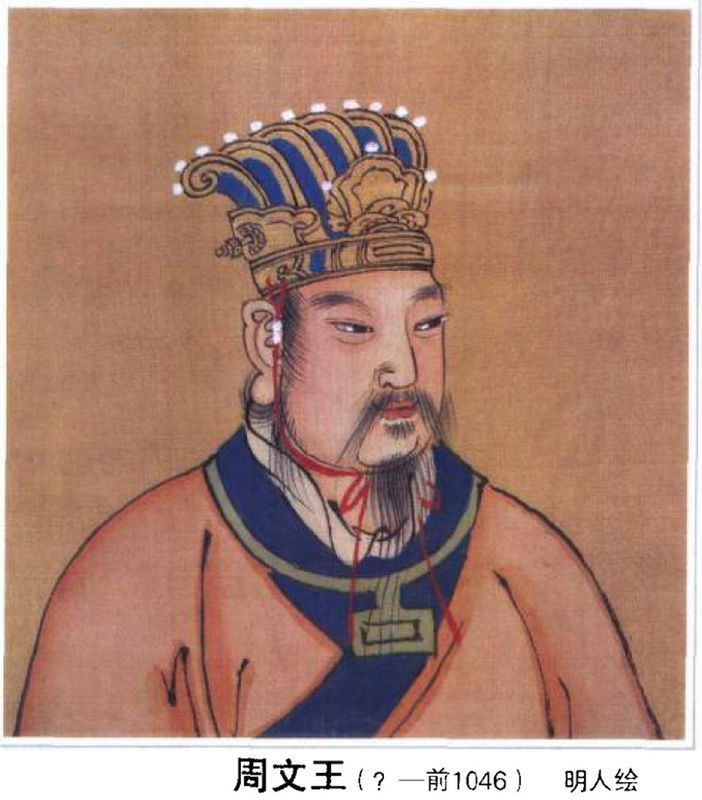
King Wen of Zhou (Chinese: 周文王, Zhōu Wén Wáng; 1152–1050 BC) was the posthumous title given to Ji Chang (Xiahou) (姬昌), the patriarch of the Zhou state during the final years of Shang dynasty in ancient China. Ji Chang himself died before the end of the Zhou–Shang war. His second son Ji Fa completed the conquest of Shang following the Battle of Muye and posthumously honored him as the founder of the Zhou dynasty. Many of the hymns of the Classic of Poetry are paeans of praise to King Wen. Some consider him the first epic hero of Chinese history.
Born Ji Chang (姬昌), Wen was the son of Tairen and Ji Li, the Elder of Zhou, a vassal clan of the Kingdom of Shang along the Wei River in present-day Shaanxi. Jili was betrayed and executed by the Shang king Wen Ding in the late 12th century BC, leaving the young Chang as the Elder of the Zhou lineage. The received text of Mencius literally calls Ji Chang "one of the western barbarians" (西夷之人, Xīyí zhī rén), although commentators gloss this as describing him as "close" to the Xirong and other non-Huaxia tribes.
According to Annals of Zhou in the Records of the Grand Historian, upon becoming the Elder of Zhou, Wen was said to continue his father and their ancestor Hou Ji's legacy by ruling with benevolence, respecting elders while treating the young with kindness, and allowed talented individuals to counsel him. Among these counsellors became important officials of Zhou, such as Yuxiong, San Yisheng, and Hong Yao (閎夭), and later Jiang Ziya. Over time, Wen gained respect and reverence of the other regional lords, whose quarrels were also mediated by Wen.
Wen also placed great importance in agriculture within his domain, with Mencius crediting the well-field system as one of Wen's policies.
King Wen is also credited with having stacked the eight trigrams in their various permutations to create the sixty-four hexagrams of the I Ching. He is also said to have written the judgments which are appended to each hexagram. The most commonly used sequence of the 64 hexagrams is attributed to him and is usually referred to as the King Wen sequence.
During this time, Wen married Taisi and fathered ten sons and one daughter by her, plus at least another eight sons with concubines.
At one point, King Zhou of Shang, fearing Wen's growing power, imprisoned him in Youli (present-day Tangyin in Henan) after he was slandered by the Marquis of Chong. His eldest son, Bo Yikao, went to King Zhou to plead for his freedom, but was executed in a rage by lingchi and made into meat cakes which were fed to his father in Youli. However, many officials (in particular San Yisheng and Hong Yao) respected Wen for his honorable governance and gave King Zhou so many gifts – including gold, horses, and women – that he released Wen, and also bestowed upon him his personal weapons and invested him with the special rank of Overlord of the West (Western Shang). Wen offered a piece of his land in Western Luo to King Zhou, who in turn allowed Wen to make one last request. He requested that the Burning Pillar punishment be abolished, and so it was.[dubious – discuss].
Subsequently, upon returning home Wen secretly began to plot to overthrow King Zhou. In his first year as Overlord of the West, he settled a land dispute between the states of Yu and Rui, earning greater recognition among the nobles. One anecdote claims that the rulers of Yu and Rui became ashamed of their dispute once they entered Zhou territory and saw its people sharing their farmlands and caring for the elderly. It is by this point that some nobles began calling him "king". The following year, Wen found Jiang Ziya fishing in the Pan River and hired him as a military counselor. He also repelled an invasion of the Quanrong barbarians and occupied a portion of their land. The following year, he campaigned against Mixu (密須, now Xinmi in Henan), a state whose chief had been harassing the smaller states of Ruan and Gong, thus annexing the three of them. The following year, he attacked Li, a puppet of Shang, and the next year he attacked E, a rebel state opposed to Shang, conquering both. One year later he attacked Chong, home of Hu, Marquis of Chong, his arch-enemy, and defeated it, gaining access to the Ford of Meng through which he could cross his army to attack Shang. By then he had obtained about two thirds of the whole kingdom either as direct possessions or sworn allies. That same year he moved his administrative capital city one hundred kilometers east from Mount Qi to Feng, placing the Shang under imminent threat. The following year, however, the Overlord of the West died before he could cross the Ford. Nonetheless, other sources suggest he died in battle during the Zhou campaign against the Shang. The Chinese long preserved a tradition that he had been buried in Cheng, a tribe and city annexed by the Zhou, located between the Jing and Wei Rivers in what is now Xianyang, Shaanxi.
Hub AI
King Wen of Zhou AI simulator
(@King Wen of Zhou_simulator)
King Wen of Zhou
King Wen of Zhou (Chinese: 周文王, Zhōu Wén Wáng; 1152–1050 BC) was the posthumous title given to Ji Chang (Xiahou) (姬昌), the patriarch of the Zhou state during the final years of Shang dynasty in ancient China. Ji Chang himself died before the end of the Zhou–Shang war. His second son Ji Fa completed the conquest of Shang following the Battle of Muye and posthumously honored him as the founder of the Zhou dynasty. Many of the hymns of the Classic of Poetry are paeans of praise to King Wen. Some consider him the first epic hero of Chinese history.
Born Ji Chang (姬昌), Wen was the son of Tairen and Ji Li, the Elder of Zhou, a vassal clan of the Kingdom of Shang along the Wei River in present-day Shaanxi. Jili was betrayed and executed by the Shang king Wen Ding in the late 12th century BC, leaving the young Chang as the Elder of the Zhou lineage. The received text of Mencius literally calls Ji Chang "one of the western barbarians" (西夷之人, Xīyí zhī rén), although commentators gloss this as describing him as "close" to the Xirong and other non-Huaxia tribes.
According to Annals of Zhou in the Records of the Grand Historian, upon becoming the Elder of Zhou, Wen was said to continue his father and their ancestor Hou Ji's legacy by ruling with benevolence, respecting elders while treating the young with kindness, and allowed talented individuals to counsel him. Among these counsellors became important officials of Zhou, such as Yuxiong, San Yisheng, and Hong Yao (閎夭), and later Jiang Ziya. Over time, Wen gained respect and reverence of the other regional lords, whose quarrels were also mediated by Wen.
Wen also placed great importance in agriculture within his domain, with Mencius crediting the well-field system as one of Wen's policies.
King Wen is also credited with having stacked the eight trigrams in their various permutations to create the sixty-four hexagrams of the I Ching. He is also said to have written the judgments which are appended to each hexagram. The most commonly used sequence of the 64 hexagrams is attributed to him and is usually referred to as the King Wen sequence.
During this time, Wen married Taisi and fathered ten sons and one daughter by her, plus at least another eight sons with concubines.
At one point, King Zhou of Shang, fearing Wen's growing power, imprisoned him in Youli (present-day Tangyin in Henan) after he was slandered by the Marquis of Chong. His eldest son, Bo Yikao, went to King Zhou to plead for his freedom, but was executed in a rage by lingchi and made into meat cakes which were fed to his father in Youli. However, many officials (in particular San Yisheng and Hong Yao) respected Wen for his honorable governance and gave King Zhou so many gifts – including gold, horses, and women – that he released Wen, and also bestowed upon him his personal weapons and invested him with the special rank of Overlord of the West (Western Shang). Wen offered a piece of his land in Western Luo to King Zhou, who in turn allowed Wen to make one last request. He requested that the Burning Pillar punishment be abolished, and so it was.[dubious – discuss].
Subsequently, upon returning home Wen secretly began to plot to overthrow King Zhou. In his first year as Overlord of the West, he settled a land dispute between the states of Yu and Rui, earning greater recognition among the nobles. One anecdote claims that the rulers of Yu and Rui became ashamed of their dispute once they entered Zhou territory and saw its people sharing their farmlands and caring for the elderly. It is by this point that some nobles began calling him "king". The following year, Wen found Jiang Ziya fishing in the Pan River and hired him as a military counselor. He also repelled an invasion of the Quanrong barbarians and occupied a portion of their land. The following year, he campaigned against Mixu (密須, now Xinmi in Henan), a state whose chief had been harassing the smaller states of Ruan and Gong, thus annexing the three of them. The following year, he attacked Li, a puppet of Shang, and the next year he attacked E, a rebel state opposed to Shang, conquering both. One year later he attacked Chong, home of Hu, Marquis of Chong, his arch-enemy, and defeated it, gaining access to the Ford of Meng through which he could cross his army to attack Shang. By then he had obtained about two thirds of the whole kingdom either as direct possessions or sworn allies. That same year he moved his administrative capital city one hundred kilometers east from Mount Qi to Feng, placing the Shang under imminent threat. The following year, however, the Overlord of the West died before he could cross the Ford. Nonetheless, other sources suggest he died in battle during the Zhou campaign against the Shang. The Chinese long preserved a tradition that he had been buried in Cheng, a tribe and city annexed by the Zhou, located between the Jing and Wei Rivers in what is now Xianyang, Shaanxi.
Recent media