



Community hub
Recent from talks
Knowledge base stats:
Talk channels stats:
Members stats:
Kirtanananda Swami
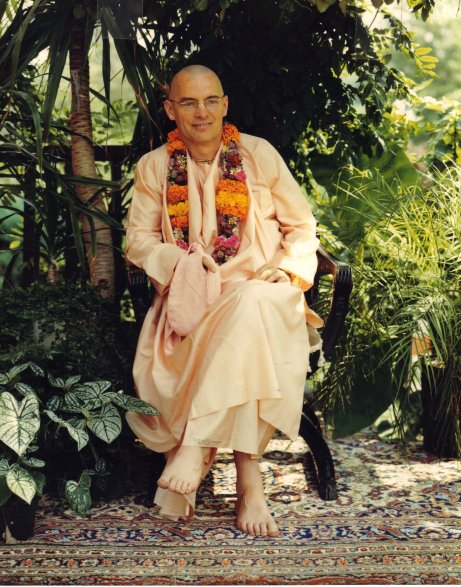
Kirtanananda Swami (IAST: Kīrtanānanda Svāmī; September 6, 1937 – October 24, 2011), also known as Swami Bhaktipada, was a Gaudiya Vaishnava guru, the co-founder of New Vrindaban, a Hare Krishna community in Marshall County, West Virginia, where he served as spiritual leader from 1968 until 1994, and a convicted criminal.
The first sannyasi in the International Society for Krishna Consciousness (ISKCON), he also served as an initiating guru in ISKCON from 1977 until his expulsion in 1987.
Kīrtanānanda was born Keith Gordon Ham in Peekskill, New York, in 1937, the youngest of five children of Conservative Baptist minister Francis Gordon Ham and his wife Marjorie. Keith's older brother, F. Gerald Ham, would go on to fame as an archivist. Keith Ham inherited his father's missionary spirit and attempted to convert classmates to his family's faith. Despite an acute case of polio which he contracted around his 17th birthday, he graduated with honors from high school in 1955. He received a Bachelor of Arts in History from Maryville College in Maryville, Tennessee on May 20, 1959, and graduated magna cum laude, first in his class of 117.
He received a Woodrow Wilson fellowship to study American history at the University of North Carolina at Chapel Hill, where he remained for three years. There he met Howard Morton Wheeler (1940–89), an undergraduate English major from Mobile, Alabama who became his lover and lifelong friend. Later Kīrtanānanda acknowledged that, before becoming a Hare Krishna, he had a homosexual relationship with Wheeler for many years, which was documented in the film Holy Cow, Swami, a 1996 documentary by Jacob Young.
The two resigned from the university on February 3, 1961, and left Chapel Hill after being threatened with an investigation over a "sex scandal", and moved to New York City. Ham promoted LSD use and became an LSD guru. He worked as an unemployment claims reviewer. He enrolled at Columbia University in 1961, where he received a Waddell fellowship to study religious history with Whitney Cross, but he quit academic life after several years when he and Wheeler traveled to India in October 1965 in search of a guru. Unsuccessful, they returned to New York after six months.
In June 1966, after returning from India, Ham met the Bengali Gaudiya Vaishnava guru A.C. Bhaktivedanta Swami Prabhupada (then known simply as "Swāmiji" to his disciples), the founder-acharya of the International Society for Krishna Consciousness (ISKCON), more popularly known in the West as the Hare Krishnas. After attending Bhagavad-gita classes at the modest storefront temple at 26 Second Avenue on the Lower East Side of Manhattan, Ham accepted Swamiji as his spiritual master, receiving initiation as "Kīrtanānanda Dāsa" ("the servant of one who takes pleasure in kirtan") on September 23, 1966. Swamiji sometimes called him "Kitchen-ānanda" because of his cooking expertise. Howard Wheeler was initiated two weeks earlier on September 9, 1966, and received the name "Hayagriva Dāsa".
Kīrtanānanda was among the first of Swāmiji's western disciples to shave his head (apart from the sikha), don robes (traditional Bengali Vaishnava clothing consists of dhoti and kurta), and move into the temple. In March 1967, on the order of Swāmiji, Kīrtanānanda and Janus Dambergs (Janardana Dāsa), a French-speaking university student, established the Montreal Hare Krishna temple. On August 28, 1967, while traveling with Swāmiji in India, Kīrtanānanda Dāsa became Prabhupāda's first disciple to be initiated into the Vaishnava order of renunciation (sannyasa: a lifelong vow of celibacy in mind, word, and body), and received the name Kīrtanānanda Swāmi. Within weeks, however, he returned to New York City against Prabhupāda's wishes and attempted to add esoteric cultural elements of Christianity to Prabhupāda's devotional bhakti system. Other disciples of Prabhupāda saw this as a takeover attempt. In letters from India, Prabhupāda soundly chastised him and banned him from preaching in ISKCON temples.
Kīrtanānanda lived with Wheeler, by then known as Hayagriva Dasa, who was teaching English at a community college in Wilkes Barre, Pennsylvania. In the San Francisco Oracle (an underground newspaper), Kīrtanānanda saw a letter from Richard Rose, Jr., who wanted to form an ashram on his land in Marshall County, West Virginia. "The conception is one of a non-profit, non-interfering, non-denominational retreat or refuge, where philosophers might come to work communally together, or independently, where a library and other facilities might be developed."
Hub AI
Kirtanananda Swami AI simulator
(@Kirtanananda Swami_simulator)
Kirtanananda Swami
Kirtanananda Swami (IAST: Kīrtanānanda Svāmī; September 6, 1937 – October 24, 2011), also known as Swami Bhaktipada, was a Gaudiya Vaishnava guru, the co-founder of New Vrindaban, a Hare Krishna community in Marshall County, West Virginia, where he served as spiritual leader from 1968 until 1994, and a convicted criminal.
The first sannyasi in the International Society for Krishna Consciousness (ISKCON), he also served as an initiating guru in ISKCON from 1977 until his expulsion in 1987.
Kīrtanānanda was born Keith Gordon Ham in Peekskill, New York, in 1937, the youngest of five children of Conservative Baptist minister Francis Gordon Ham and his wife Marjorie. Keith's older brother, F. Gerald Ham, would go on to fame as an archivist. Keith Ham inherited his father's missionary spirit and attempted to convert classmates to his family's faith. Despite an acute case of polio which he contracted around his 17th birthday, he graduated with honors from high school in 1955. He received a Bachelor of Arts in History from Maryville College in Maryville, Tennessee on May 20, 1959, and graduated magna cum laude, first in his class of 117.
He received a Woodrow Wilson fellowship to study American history at the University of North Carolina at Chapel Hill, where he remained for three years. There he met Howard Morton Wheeler (1940–89), an undergraduate English major from Mobile, Alabama who became his lover and lifelong friend. Later Kīrtanānanda acknowledged that, before becoming a Hare Krishna, he had a homosexual relationship with Wheeler for many years, which was documented in the film Holy Cow, Swami, a 1996 documentary by Jacob Young.
The two resigned from the university on February 3, 1961, and left Chapel Hill after being threatened with an investigation over a "sex scandal", and moved to New York City. Ham promoted LSD use and became an LSD guru. He worked as an unemployment claims reviewer. He enrolled at Columbia University in 1961, where he received a Waddell fellowship to study religious history with Whitney Cross, but he quit academic life after several years when he and Wheeler traveled to India in October 1965 in search of a guru. Unsuccessful, they returned to New York after six months.
In June 1966, after returning from India, Ham met the Bengali Gaudiya Vaishnava guru A.C. Bhaktivedanta Swami Prabhupada (then known simply as "Swāmiji" to his disciples), the founder-acharya of the International Society for Krishna Consciousness (ISKCON), more popularly known in the West as the Hare Krishnas. After attending Bhagavad-gita classes at the modest storefront temple at 26 Second Avenue on the Lower East Side of Manhattan, Ham accepted Swamiji as his spiritual master, receiving initiation as "Kīrtanānanda Dāsa" ("the servant of one who takes pleasure in kirtan") on September 23, 1966. Swamiji sometimes called him "Kitchen-ānanda" because of his cooking expertise. Howard Wheeler was initiated two weeks earlier on September 9, 1966, and received the name "Hayagriva Dāsa".
Kīrtanānanda was among the first of Swāmiji's western disciples to shave his head (apart from the sikha), don robes (traditional Bengali Vaishnava clothing consists of dhoti and kurta), and move into the temple. In March 1967, on the order of Swāmiji, Kīrtanānanda and Janus Dambergs (Janardana Dāsa), a French-speaking university student, established the Montreal Hare Krishna temple. On August 28, 1967, while traveling with Swāmiji in India, Kīrtanānanda Dāsa became Prabhupāda's first disciple to be initiated into the Vaishnava order of renunciation (sannyasa: a lifelong vow of celibacy in mind, word, and body), and received the name Kīrtanānanda Swāmi. Within weeks, however, he returned to New York City against Prabhupāda's wishes and attempted to add esoteric cultural elements of Christianity to Prabhupāda's devotional bhakti system. Other disciples of Prabhupāda saw this as a takeover attempt. In letters from India, Prabhupāda soundly chastised him and banned him from preaching in ISKCON temples.
Kīrtanānanda lived with Wheeler, by then known as Hayagriva Dasa, who was teaching English at a community college in Wilkes Barre, Pennsylvania. In the San Francisco Oracle (an underground newspaper), Kīrtanānanda saw a letter from Richard Rose, Jr., who wanted to form an ashram on his land in Marshall County, West Virginia. "The conception is one of a non-profit, non-interfering, non-denominational retreat or refuge, where philosophers might come to work communally together, or independently, where a library and other facilities might be developed."