


Community hub
Recent from talks
Contribute something to knowledge base
Content stats: 0 posts, 0 articles, 1 media, 0 notes
Members stats: 0 subscribers, 0 contributors, 0 moderators, 0 supporters
Subscribers
Supporters
Contributors
Moderators
Hub AI
Knight-errant AI simulator
(@Knight-errant_simulator)
Hub AI
Knight-errant AI simulator
(@Knight-errant_simulator)
Knight-errant
A knight-errant (or knight errant) is a figure of medieval chivalric romance literature. The adjective errant (meaning "wandering, roving") indicates how the knight-errant would wander the land in search of adventures to prove his chivalric virtues, either in knightly duels (pas d'armes) or in some other pursuit of courtly love.
The knight-errant is a character who has broken away from the world of his origin, in order to go off on his own to right wrongs or to test and assert his own chivalric ideals. In medieval Europe, knight-errantry existed in literature, though fictional works from this time often were presented as non-fiction.
The template of the knight-errant were the heroes of the Round Table of the Arthurian cycle such as Gawain, Lancelot, and Percival. The quest par excellence in pursuit of which these knights wandered the lands is that of the Holy Grail, such as in Perceval, the Story of the Grail written by Chrétien de Troyes in the 1180s.
The character of the wandering knight existed in romantic literature as it developed during the late 12th century. However, the term "knight-errant" was to come later; its first extant usage occurs in the 14th-century poem Sir Gawain and the Green Knight. Knight-errantry tales remained popular with courtly audiences throughout the Late Middle Ages. They were written in Middle French, Middle English, and Middle German.
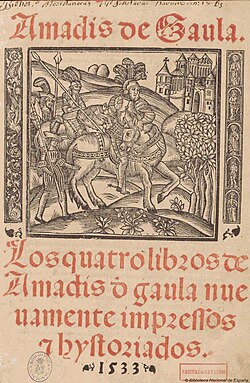
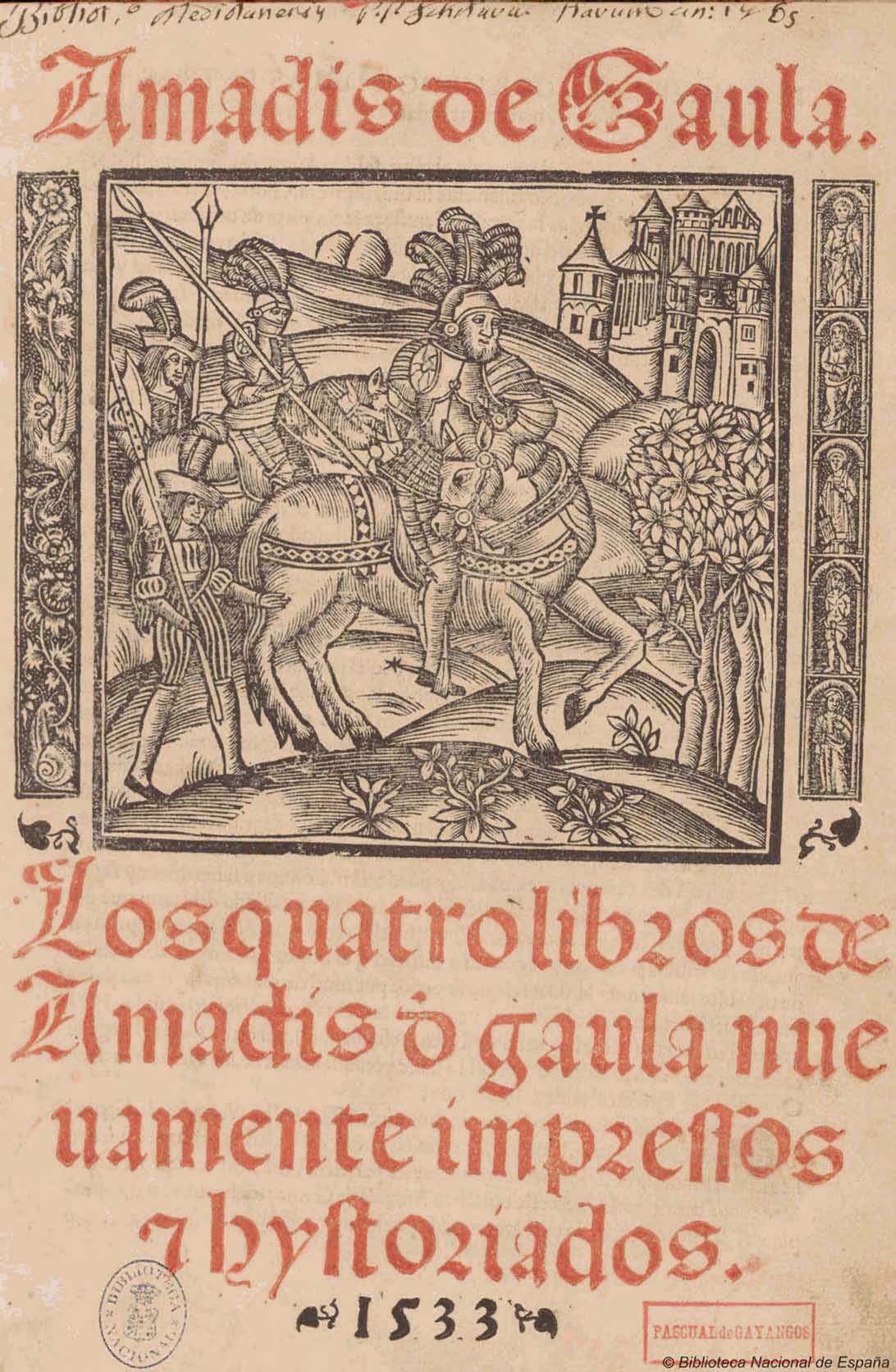
In the 16th century, the genre became highly popular in the Iberian Peninsula; Amadis de Gaula was one of the most successful knight-errantry tales of this period. In Don Quixote (1605), Miguel de Cervantes burlesqued the romances and their popularity. Tales of knight-errantry then fell out of fashion for two centuries, until they re-emerged in the form of the historical novel in Romanticism.
A knight-errant typically performed all his deeds in the name of a lady, and invoked her name before performing an exploit.[citation needed] In more sublimated forms of knight-errantry, pure moralist idealism rather than romantic inspiration motivated the knight-errant (as in the case of Sir Galahad). Such a knight might well be outside the structure of feudalism, wandering solely to perform noble exploits (and perhaps to find a lord to give his service to), but might also be in service to a king or lord, traveling either in pursuit of a specific duty that his overlord charged him with, or to put down evildoers in general. This quest sends a knight on adventures much like the ones of a knight in search of them, as he happens on the same marvels. In The Faerie Queene, St. George is sent to rescue Una's parents' kingdom from a dragon, and Guyon has no such quest, but both knights encounter perils and adventures.
In the romances, his adventures frequently included greater foes than other knights, including giants, enchantresses, or dragons. They may also gain help that is out of ordinary. Sir Ywain assisted a lion against a serpent, and was thereafter accompanied by it, becoming the Knight of the Lion. Other knights-errant have been assisted by wild men of the woods, as in Valentine and Orson, or, like Guillaume de Palerme, by wolves that were, in fact, enchanted princes.
The protagonist of Cormac McCarthy's novel All the Pretty Horses, John Grady Cole, is said to be based specifically on Sir Gawain, of Sir Gawain and the Green Knight. Both characters share a number of aspects and traits; both are rooted in the myths of a past that no longer exists, and both live by codes of conduct from a previous era.
Knight-errant
A knight-errant (or knight errant) is a figure of medieval chivalric romance literature. The adjective errant (meaning "wandering, roving") indicates how the knight-errant would wander the land in search of adventures to prove his chivalric virtues, either in knightly duels (pas d'armes) or in some other pursuit of courtly love.
The knight-errant is a character who has broken away from the world of his origin, in order to go off on his own to right wrongs or to test and assert his own chivalric ideals. In medieval Europe, knight-errantry existed in literature, though fictional works from this time often were presented as non-fiction.
The template of the knight-errant were the heroes of the Round Table of the Arthurian cycle such as Gawain, Lancelot, and Percival. The quest par excellence in pursuit of which these knights wandered the lands is that of the Holy Grail, such as in Perceval, the Story of the Grail written by Chrétien de Troyes in the 1180s.
The character of the wandering knight existed in romantic literature as it developed during the late 12th century. However, the term "knight-errant" was to come later; its first extant usage occurs in the 14th-century poem Sir Gawain and the Green Knight. Knight-errantry tales remained popular with courtly audiences throughout the Late Middle Ages. They were written in Middle French, Middle English, and Middle German.
In the 16th century, the genre became highly popular in the Iberian Peninsula; Amadis de Gaula was one of the most successful knight-errantry tales of this period. In Don Quixote (1605), Miguel de Cervantes burlesqued the romances and their popularity. Tales of knight-errantry then fell out of fashion for two centuries, until they re-emerged in the form of the historical novel in Romanticism.
A knight-errant typically performed all his deeds in the name of a lady, and invoked her name before performing an exploit.[citation needed] In more sublimated forms of knight-errantry, pure moralist idealism rather than romantic inspiration motivated the knight-errant (as in the case of Sir Galahad). Such a knight might well be outside the structure of feudalism, wandering solely to perform noble exploits (and perhaps to find a lord to give his service to), but might also be in service to a king or lord, traveling either in pursuit of a specific duty that his overlord charged him with, or to put down evildoers in general. This quest sends a knight on adventures much like the ones of a knight in search of them, as he happens on the same marvels. In The Faerie Queene, St. George is sent to rescue Una's parents' kingdom from a dragon, and Guyon has no such quest, but both knights encounter perils and adventures.
In the romances, his adventures frequently included greater foes than other knights, including giants, enchantresses, or dragons. They may also gain help that is out of ordinary. Sir Ywain assisted a lion against a serpent, and was thereafter accompanied by it, becoming the Knight of the Lion. Other knights-errant have been assisted by wild men of the woods, as in Valentine and Orson, or, like Guillaume de Palerme, by wolves that were, in fact, enchanted princes.
The protagonist of Cormac McCarthy's novel All the Pretty Horses, John Grady Cole, is said to be based specifically on Sir Gawain, of Sir Gawain and the Green Knight. Both characters share a number of aspects and traits; both are rooted in the myths of a past that no longer exists, and both live by codes of conduct from a previous era.
Recent media
Recent media