
Recent from talks
Koca Sinan Pasha
Knowledge base stats:
Talk channels stats:
Members stats:
Koca Sinan Pasha
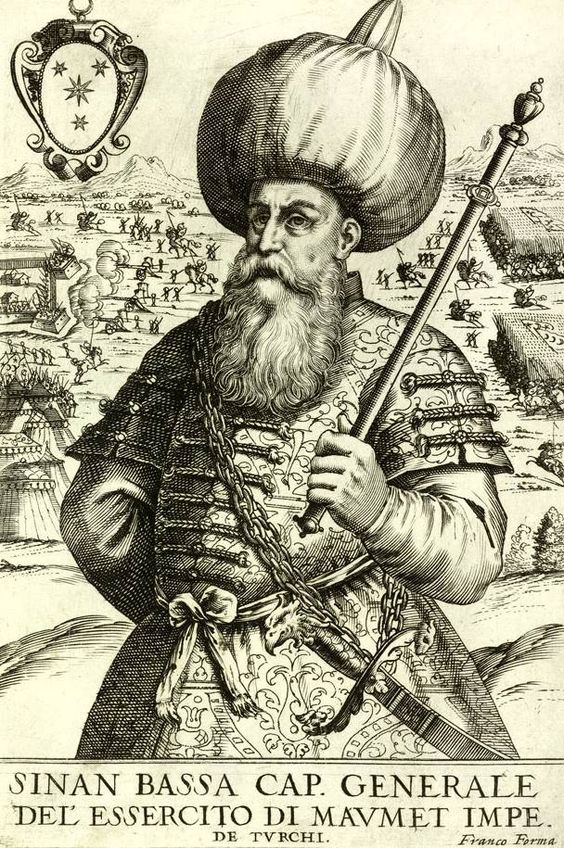
Koca Sinan Pasha (Turkish: Koca Sinan Paşa, "Sinan the Great", Albanian: Koxha Sinan Pasha; c. 1506 – 3 April 1596) was an Albanian-born Ottoman Grand Vizier, military figure, and statesman. From 1580 until his death he served five times as Grand Vizier.
Sinan Pasha, also known as Koca Sinan (Sinan the Great), was born in Topojan in Luma territory and was of Albanian origin. In a Ragusan document of 1571 listing members of the Ottoman Sultan's governing council, Sinan is described as coming from a Catholic family that converted to Islam. His father was named Ali Bey and Sinan Pasha had family ties with Catholic relatives such as the Giubizzas. Austrian orientalist Joseph von Hammer-Purgstall called him the "unbridled Albanian". Mustafa Ali of Gallipoli repeatedly criticized Sinan for promoting an Albanian clique in the administration.
Sinan Pasha was appointed governor of Ottoman Egypt in 1569, and was subsequently involved until 1571 in the conquest of Yemen, becoming known as Fātiḥ-i Yemen ("Conqueror of Yemen").
In 1580, Sinan commanded the army against the Safavids in the Ottoman–Safavid War (1578–1590), and was appointed grand vizier by Sultan Murad III. Sinan was, however, disgraced and exiled in the following year, owing to the defeat of his lieutenant Mehmed Pasha, at Gori during an attempt to provision the Ottoman garrison of Tbilisi.
Sinan subsequently became governor of Damascus and, in 1589, after the great revolt of the Janissaries, was appointed grand vizier for the second time. He was involved in the competition for the throne in Wallachia between Mihnea Turcitul and Petru Cercel, and ultimately sided with the former, overseeing Petru's execution in March 1590. Another revolt of Janissaries led to his dismissal in 1591, but in 1593 he was again recalled to become grand vizier for the third time, and in the same year he commanded the Ottoman army in the Long War against the Habsburgs. He was faced with massive casualties on the northern front, which was weakened by the death of Bosnian commander Telli Hasan Pasha during the Battle of Sisak. In 1593, he captured Veszprém and Palota after 3–4 days of siege and turned his attention to the Sisak, where Telli Hasan Pasha and Ahmed Pasha had died. He soon captured Sisak and came back to Belgrade through Novi Sad.
When the Habsburgs invaded Szécsény and Nógrád he demanded help from Istanbul. The agha of Janissaries, Sokolluzade Lala Mehmed Pasha, came to help in a short time. In 1593, Sinan Pasha successfully besieged Veszprém and Várpalota. In 1594, he captured Györ (Yanıkkale). In 1594 during the Uprising in Banat, Sinan ordered for the relics (remains) of Saint Sava to be brought from Mileševa to Belgrade, where he then had them set on fire in order to discourage the Serbs.
In spite of his victories he was again deposed in February 1595, shortly after the accession of Mehmed III, and banished to Malkara. In August, Sinan was in power again, called on to lead the expedition against Prince Michael the Brave of Wallachia. His defeat in the Battle of Călugăreni, the Battle of Giurgiu, and the series of unsuccessful confrontations with the Habsburgs (culminating in the devastating siege and fall of Ottoman-held Esztergom), brought him once more into disfavour, and he was deprived of the seal of office (19 November).
The death of his successor Lala Mehmed Pasha three days later caused Sinan to become grand vizier for the fifth time. He died suddenly in the spring of 1596, leaving behind a large fortune. Sinan Pasha is buried in Istanbul near the Grand Bazaar.
Hub AI
Koca Sinan Pasha AI simulator
(@Koca Sinan Pasha_simulator)
Koca Sinan Pasha
Koca Sinan Pasha (Turkish: Koca Sinan Paşa, "Sinan the Great", Albanian: Koxha Sinan Pasha; c. 1506 – 3 April 1596) was an Albanian-born Ottoman Grand Vizier, military figure, and statesman. From 1580 until his death he served five times as Grand Vizier.
Sinan Pasha, also known as Koca Sinan (Sinan the Great), was born in Topojan in Luma territory and was of Albanian origin. In a Ragusan document of 1571 listing members of the Ottoman Sultan's governing council, Sinan is described as coming from a Catholic family that converted to Islam. His father was named Ali Bey and Sinan Pasha had family ties with Catholic relatives such as the Giubizzas. Austrian orientalist Joseph von Hammer-Purgstall called him the "unbridled Albanian". Mustafa Ali of Gallipoli repeatedly criticized Sinan for promoting an Albanian clique in the administration.
Sinan Pasha was appointed governor of Ottoman Egypt in 1569, and was subsequently involved until 1571 in the conquest of Yemen, becoming known as Fātiḥ-i Yemen ("Conqueror of Yemen").
In 1580, Sinan commanded the army against the Safavids in the Ottoman–Safavid War (1578–1590), and was appointed grand vizier by Sultan Murad III. Sinan was, however, disgraced and exiled in the following year, owing to the defeat of his lieutenant Mehmed Pasha, at Gori during an attempt to provision the Ottoman garrison of Tbilisi.
Sinan subsequently became governor of Damascus and, in 1589, after the great revolt of the Janissaries, was appointed grand vizier for the second time. He was involved in the competition for the throne in Wallachia between Mihnea Turcitul and Petru Cercel, and ultimately sided with the former, overseeing Petru's execution in March 1590. Another revolt of Janissaries led to his dismissal in 1591, but in 1593 he was again recalled to become grand vizier for the third time, and in the same year he commanded the Ottoman army in the Long War against the Habsburgs. He was faced with massive casualties on the northern front, which was weakened by the death of Bosnian commander Telli Hasan Pasha during the Battle of Sisak. In 1593, he captured Veszprém and Palota after 3–4 days of siege and turned his attention to the Sisak, where Telli Hasan Pasha and Ahmed Pasha had died. He soon captured Sisak and came back to Belgrade through Novi Sad.
When the Habsburgs invaded Szécsény and Nógrád he demanded help from Istanbul. The agha of Janissaries, Sokolluzade Lala Mehmed Pasha, came to help in a short time. In 1593, Sinan Pasha successfully besieged Veszprém and Várpalota. In 1594, he captured Györ (Yanıkkale). In 1594 during the Uprising in Banat, Sinan ordered for the relics (remains) of Saint Sava to be brought from Mileševa to Belgrade, where he then had them set on fire in order to discourage the Serbs.
In spite of his victories he was again deposed in February 1595, shortly after the accession of Mehmed III, and banished to Malkara. In August, Sinan was in power again, called on to lead the expedition against Prince Michael the Brave of Wallachia. His defeat in the Battle of Călugăreni, the Battle of Giurgiu, and the series of unsuccessful confrontations with the Habsburgs (culminating in the devastating siege and fall of Ottoman-held Esztergom), brought him once more into disfavour, and he was deprived of the seal of office (19 November).
The death of his successor Lala Mehmed Pasha three days later caused Sinan to become grand vizier for the fifth time. He died suddenly in the spring of 1596, leaving behind a large fortune. Sinan Pasha is buried in Istanbul near the Grand Bazaar.
Recent media