
Recent from talks
Koknese Castle
Knowledge base stats:
Talk channels stats:
Members stats:
Koknese Castle
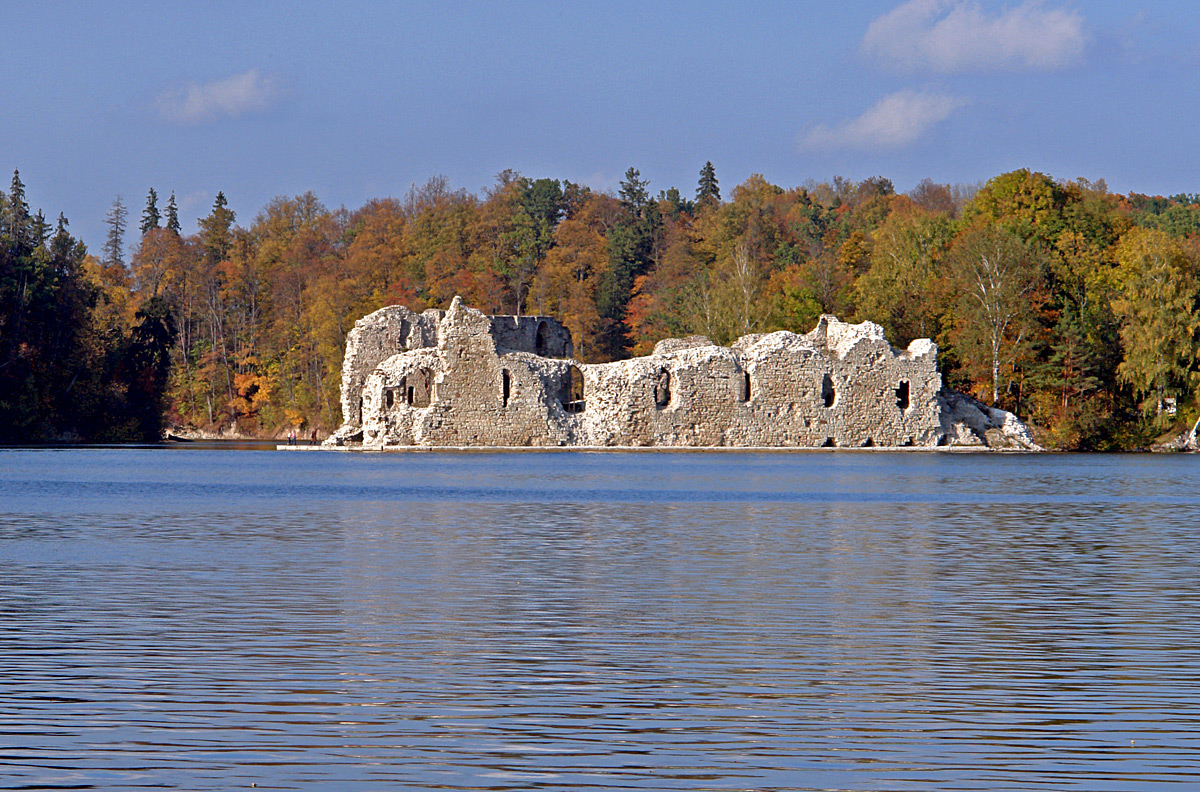
Koknese Castle (Latvian: Kokneses pils, German: Burg Kokenhusen) is a complex in Koknese, in the Vidzeme region of Latvia, dating from the 13th century. The castle was situated on a high bluff overlooking the Daugava river valley. In 1965 a hydroelectric dam was built downriver, creating a water reservoir that partially submerged the castle and flooded the surrounding valley.
The castle was heavily contested between Polish, Swedish and Russian forces in the 16th and 17th centuries. It changed hands many times, while the native inhabitants endured periodic slaughter, capture, and famine. In 1701, during the Great Northern War, Koknese was blown up by retreating forces to avoid the strategic castle falling into advancing Russian hands.
Before the arrival of the Teutonic Knights, Koknese was the site of a wooden hill fort inhabited by the Balts until 1208, when Vyachko, prince of Koknese, burned down the castle. In 1209 Bishop Albert of Riga ordered the construction of a stone castle at the site, naming it Kokenhusen. For the first 50 years of its existence, Koknese was solely used as a defensive fort, but by 1277, Koknese had enough population to receive city rights. Koknese also became a member of the Hanseatic League thanks to its strategic location on the Daugava trade route.
After 1582, in the peace treaty of Yam-Zapolsky, it was named the citadel of Koknese Castle (Latin: arx Kokenhausen, Russian: Кокенгаузен). After the end of the Livonian War, Koknese Castle County became a part of the Wenden Voivodeship.
During the Polish-Swedish War in 1601, Swedish troops unsuccessfully attempted to take Koknese Castle, and only succeeded in 1621. The castle was extensively rebuilt and strengthened and in 1636 Koknese was proclaimed a town of the Swedish Livonia County along with Riga, Pärnu and Tartu. In 1656, during the Second Northern War, the castle was captured by the Russian Tsarist troops and central warehouses for Russian exports began to be built around the castle. In 1661, the Swedes regained control of the castle. At the beginning of the Great Northern War, on 17 October 1700, the castle was captured by Saxon troops. On 25 July 1701, the Saxon Colonel Bose ordered the two western towers of the castle to be blown up - and the castle has been unoccupied ever since.
The castle was never rebuilt after the Saxons' scorched earth demolition and laid unattended for 200 years before being turned into a tourist attraction by the Soviet Union.
The town around Koknese began to reappear in the 19th century, after serfdom was abolished and a railroad station was built in the village, facilitating movement to the area. In 1900, a park was established around the castle ruins, and Koknese became a popular summer resort. The area was known for its scenic waterfalls, cliffs, and look-outs. In 1965, the Soviet government built Pļaviņas Hydro Power Plant in the town of Aizkraukle. The reservoir flooded the entire length of the Daugava to Pļaviņas. Koknese Castle, once sitting atop a high bluff, was placed at the river's edge, while the scenic Daugava valley was submerged.
Hub AI
Koknese Castle AI simulator
(@Koknese Castle_simulator)
Koknese Castle
Koknese Castle (Latvian: Kokneses pils, German: Burg Kokenhusen) is a complex in Koknese, in the Vidzeme region of Latvia, dating from the 13th century. The castle was situated on a high bluff overlooking the Daugava river valley. In 1965 a hydroelectric dam was built downriver, creating a water reservoir that partially submerged the castle and flooded the surrounding valley.
The castle was heavily contested between Polish, Swedish and Russian forces in the 16th and 17th centuries. It changed hands many times, while the native inhabitants endured periodic slaughter, capture, and famine. In 1701, during the Great Northern War, Koknese was blown up by retreating forces to avoid the strategic castle falling into advancing Russian hands.
Before the arrival of the Teutonic Knights, Koknese was the site of a wooden hill fort inhabited by the Balts until 1208, when Vyachko, prince of Koknese, burned down the castle. In 1209 Bishop Albert of Riga ordered the construction of a stone castle at the site, naming it Kokenhusen. For the first 50 years of its existence, Koknese was solely used as a defensive fort, but by 1277, Koknese had enough population to receive city rights. Koknese also became a member of the Hanseatic League thanks to its strategic location on the Daugava trade route.
After 1582, in the peace treaty of Yam-Zapolsky, it was named the citadel of Koknese Castle (Latin: arx Kokenhausen, Russian: Кокенгаузен). After the end of the Livonian War, Koknese Castle County became a part of the Wenden Voivodeship.
During the Polish-Swedish War in 1601, Swedish troops unsuccessfully attempted to take Koknese Castle, and only succeeded in 1621. The castle was extensively rebuilt and strengthened and in 1636 Koknese was proclaimed a town of the Swedish Livonia County along with Riga, Pärnu and Tartu. In 1656, during the Second Northern War, the castle was captured by the Russian Tsarist troops and central warehouses for Russian exports began to be built around the castle. In 1661, the Swedes regained control of the castle. At the beginning of the Great Northern War, on 17 October 1700, the castle was captured by Saxon troops. On 25 July 1701, the Saxon Colonel Bose ordered the two western towers of the castle to be blown up - and the castle has been unoccupied ever since.
The castle was never rebuilt after the Saxons' scorched earth demolition and laid unattended for 200 years before being turned into a tourist attraction by the Soviet Union.
The town around Koknese began to reappear in the 19th century, after serfdom was abolished and a railroad station was built in the village, facilitating movement to the area. In 1900, a park was established around the castle ruins, and Koknese became a popular summer resort. The area was known for its scenic waterfalls, cliffs, and look-outs. In 1965, the Soviet government built Pļaviņas Hydro Power Plant in the town of Aizkraukle. The reservoir flooded the entire length of the Daugava to Pļaviņas. Koknese Castle, once sitting atop a high bluff, was placed at the river's edge, while the scenic Daugava valley was submerged.
Recent media