
Recent from talks
Komitas
Knowledge base stats:
Talk channels stats:
Members stats:
Komitas
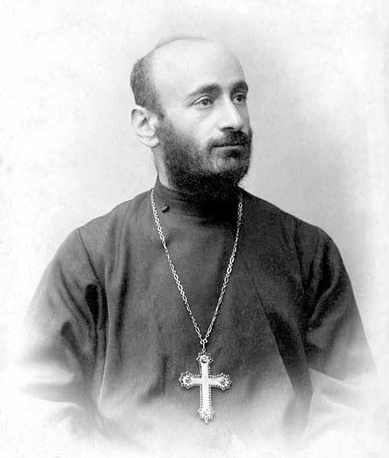
Soghomon Soghomonian, ordained and commonly known as Komitas (Armenian: Կոմիտաս; 8 October [O.S. 26 September] 1869 – 22 October 1935), was an Ottoman-Armenian priest, musicologist, composer, arranger, singer, and choirmaster, who is considered the founder of the Armenian national school of music. He is recognized as one of the pioneers of ethnomusicology.
Orphaned at a young age, Komitas was taken to Etchmiadzin, Armenia's religious center, where he received education at the Gevorgian Seminary. Following his ordination as vardapet (celibate priest) in 1895, he studied music at the Frederick William University in Berlin. He thereafter "used his Western training to build a national tradition". He collected and transcribed over 3,000 pieces of Armenian folk music, more than half of which were subsequently lost and only around 1,200 are now extant. Besides Armenian folk songs, he also showed interest in other cultures and in 1903 published the first-ever collection of Kurdish folk songs titled Kurdish melodies. His choir presented Armenian music in many European cities, earning the praise of Claude Debussy, among others. Komitas settled in Constantinople in 1910 to escape mistreatment by ultra-conservative clergymen at Etchmiadzin and to introduce Armenian folk music to wider audiences. He was widely embraced by Armenian communities, while Arshag Chobanian called him the "savior of Armenian music".
During the Armenian genocide—along with hundreds of other Armenian intellectuals—Komitas was arrested and deported to a prison camp in April 1915 by the Ottoman government. He was soon released under unclear circumstances and, having witnessed indiscriminate cruelty and relentless massacres of other Armenians by the Ottoman Turks, Komitas experienced a mental breakdown and developed a severe case of post-traumatic stress disorder (PTSD). The widespread hostile environment in Constantinople and reports of mass-scale Armenian death marches and massacres that reached him further worsened his fragile mental state. He was first placed in a Turkish military-operated hospital until 1919 and then transferred to psychiatric hospitals in Paris, where he spent the last years of his life in agony. Komitas is widely seen as a martyr of the genocide and has been depicted as one of the main symbols of the Armenian Genocide in art. Collection of Works of the Composer Komitas Vardapet is included to UNESCO Memory of the World Register.
Komitas was born Soghomon Soghomonian in Kütahya, Hüdavendigâr (Bursa) Vilayet, Ottoman Empire on 26 September (8 October in New Style) 1869 to Armenian parents Kevork and Takuhi. According to his autobiographical sketches, his parents' ancestors moved to western Anatolia from the Tsghna village in Nakhichevan's Goghtn province at the turn of the century. His family only spoke Turkish due to restrictions by the Ottoman government. Soghomon was their only child. He was baptized three days after his birth. His mother was originally from Bursa and was sixteen at the time of his birth. People who knew her described her as melancholic, while his father was a cheerful person; but both were interested in music. She died in March 1870, just six months after giving birth to him. Her death left deep scars on him, whose earliest poems were devoted to her. Thereafter, according to different sources, either his father's sister-in-law or his paternal grandmother, Mariam, looked after him.
In 1880, four years after he finished primary school in Kütahya, Soghomon was sent by his father to Bursa to continue his education. He possibly stayed with his maternal grandparents who lived in the city. He was sent back to Kütahya four months later, following the death of his father who had become an alcoholic. Although Soghomon was adopted by his paternal uncle Harutyun, his "familiar and social structure had collapsed." A childhood friend described him as "virtually homeless." He was completely deprived of paternal care and was "placed in circumstances that made him vulnerable to the mental illness he suffered later in life".
His life took a radical turn in the fall of 1881. In September, the twelve-year-old Soghomon was taken to Etchmiadzin by Kevork Vartabed Tertsagyan, the local Armenian bishop, who was asked by the Holy See of Etchmiadzin to find an orphan boy with good singing voice to be enrolled in the prestigious Gevorgian Seminary. On 1 October 1881, Komitas was introduced to Catholicos Gevorg IV, who was disappointed with his lack of knowledge of Armenian, but was so impressed with his singing talent that he often asked Komitas to sing for visitors. After an unfortunate childhood, Komitas found "emotional and intellectual stability" in the seminary.
Between 1881 and 1910, Komitas was mainly based in Etchmiadzin, although he did spend a significant time in Europe. During his first year at the seminary, Komitas learned the Armenian music notation (khaz) system based on ancient neumes developed earlier in the 19th century by Hampartsoum Limondjian and his students. He gradually discovered a great passion for music and started writing down songs sung by Armenian villagers near Etchmiadzin, who affectionately called him "Notaji Vardapet", meaning "the note-taking priest".
In the early 1890s, Komitas made his first attempts to write music for the poems of Khachatur Abovian, Hovhannes Hovhannisyan, Avetik Isahakyan (his younger classmate) and others. In 1891, the Ararat magazine (the Holy See's official newspaper) published his "National Anthem" (Ազգային Օրհներգ, lyrics by seminary student A. Tashjian) for polyphonic choirs. He finished the seminary in 1893, became a music teacher and was appointed the choirmaster of the Etchmiadzin Cathedral, Armenia's mother church.
Hub AI
Komitas AI simulator
(@Komitas_simulator)
Komitas
Soghomon Soghomonian, ordained and commonly known as Komitas (Armenian: Կոմիտաս; 8 October [O.S. 26 September] 1869 – 22 October 1935), was an Ottoman-Armenian priest, musicologist, composer, arranger, singer, and choirmaster, who is considered the founder of the Armenian national school of music. He is recognized as one of the pioneers of ethnomusicology.
Orphaned at a young age, Komitas was taken to Etchmiadzin, Armenia's religious center, where he received education at the Gevorgian Seminary. Following his ordination as vardapet (celibate priest) in 1895, he studied music at the Frederick William University in Berlin. He thereafter "used his Western training to build a national tradition". He collected and transcribed over 3,000 pieces of Armenian folk music, more than half of which were subsequently lost and only around 1,200 are now extant. Besides Armenian folk songs, he also showed interest in other cultures and in 1903 published the first-ever collection of Kurdish folk songs titled Kurdish melodies. His choir presented Armenian music in many European cities, earning the praise of Claude Debussy, among others. Komitas settled in Constantinople in 1910 to escape mistreatment by ultra-conservative clergymen at Etchmiadzin and to introduce Armenian folk music to wider audiences. He was widely embraced by Armenian communities, while Arshag Chobanian called him the "savior of Armenian music".
During the Armenian genocide—along with hundreds of other Armenian intellectuals—Komitas was arrested and deported to a prison camp in April 1915 by the Ottoman government. He was soon released under unclear circumstances and, having witnessed indiscriminate cruelty and relentless massacres of other Armenians by the Ottoman Turks, Komitas experienced a mental breakdown and developed a severe case of post-traumatic stress disorder (PTSD). The widespread hostile environment in Constantinople and reports of mass-scale Armenian death marches and massacres that reached him further worsened his fragile mental state. He was first placed in a Turkish military-operated hospital until 1919 and then transferred to psychiatric hospitals in Paris, where he spent the last years of his life in agony. Komitas is widely seen as a martyr of the genocide and has been depicted as one of the main symbols of the Armenian Genocide in art. Collection of Works of the Composer Komitas Vardapet is included to UNESCO Memory of the World Register.
Komitas was born Soghomon Soghomonian in Kütahya, Hüdavendigâr (Bursa) Vilayet, Ottoman Empire on 26 September (8 October in New Style) 1869 to Armenian parents Kevork and Takuhi. According to his autobiographical sketches, his parents' ancestors moved to western Anatolia from the Tsghna village in Nakhichevan's Goghtn province at the turn of the century. His family only spoke Turkish due to restrictions by the Ottoman government. Soghomon was their only child. He was baptized three days after his birth. His mother was originally from Bursa and was sixteen at the time of his birth. People who knew her described her as melancholic, while his father was a cheerful person; but both were interested in music. She died in March 1870, just six months after giving birth to him. Her death left deep scars on him, whose earliest poems were devoted to her. Thereafter, according to different sources, either his father's sister-in-law or his paternal grandmother, Mariam, looked after him.
In 1880, four years after he finished primary school in Kütahya, Soghomon was sent by his father to Bursa to continue his education. He possibly stayed with his maternal grandparents who lived in the city. He was sent back to Kütahya four months later, following the death of his father who had become an alcoholic. Although Soghomon was adopted by his paternal uncle Harutyun, his "familiar and social structure had collapsed." A childhood friend described him as "virtually homeless." He was completely deprived of paternal care and was "placed in circumstances that made him vulnerable to the mental illness he suffered later in life".
His life took a radical turn in the fall of 1881. In September, the twelve-year-old Soghomon was taken to Etchmiadzin by Kevork Vartabed Tertsagyan, the local Armenian bishop, who was asked by the Holy See of Etchmiadzin to find an orphan boy with good singing voice to be enrolled in the prestigious Gevorgian Seminary. On 1 October 1881, Komitas was introduced to Catholicos Gevorg IV, who was disappointed with his lack of knowledge of Armenian, but was so impressed with his singing talent that he often asked Komitas to sing for visitors. After an unfortunate childhood, Komitas found "emotional and intellectual stability" in the seminary.
Between 1881 and 1910, Komitas was mainly based in Etchmiadzin, although he did spend a significant time in Europe. During his first year at the seminary, Komitas learned the Armenian music notation (khaz) system based on ancient neumes developed earlier in the 19th century by Hampartsoum Limondjian and his students. He gradually discovered a great passion for music and started writing down songs sung by Armenian villagers near Etchmiadzin, who affectionately called him "Notaji Vardapet", meaning "the note-taking priest".
In the early 1890s, Komitas made his first attempts to write music for the poems of Khachatur Abovian, Hovhannes Hovhannisyan, Avetik Isahakyan (his younger classmate) and others. In 1891, the Ararat magazine (the Holy See's official newspaper) published his "National Anthem" (Ազգային Օրհներգ, lyrics by seminary student A. Tashjian) for polyphonic choirs. He finished the seminary in 1893, became a music teacher and was appointed the choirmaster of the Etchmiadzin Cathedral, Armenia's mother church.
Recent media