



Community hub
Recent from talks
Knowledge base stats:
Talk channels stats:
Members stats:
Kundalini
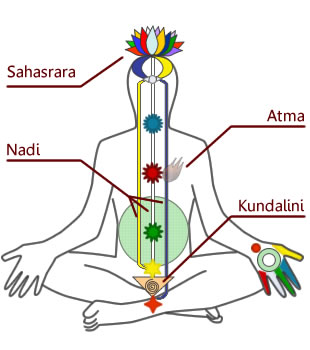
In Hinduism, Kundalini (Sanskrit: कुण्डलिनी, romanized: kuṇḍalinī, lit. 'coiled snake', ⓘ) is a form of divine feminine energy (or Shakti) believed to be located at the base of the spine, in the Muladhara. It is an important concept in Śhaiva Tantra, where it is believed to be a force or power associated with the divine feminine or the formless aspect of the Goddess. This energy in the subtle body, when cultivated and awakened through tantric practice, is believed to lead to spiritual liberation. Kuṇḍalinī is associated with the goddess Parvati or Adi Parashakti, the supreme being in Shaktism, and with the goddesses Bhairavi and Kubjika. The term, along with practices associated with it, was adopted into Hatha Yoga in the 9th century. It has since then been adopted into other forms of Hinduism as well as modern spirituality and New Age thought.
Kuṇḍalinī awakenings are said to occur by a variety of methods. Many systems of yoga focus on awakening kuṇḍalinī through: meditation, pranayama, the practice of asana, and chanting of mantras. Kundalini yoga is influenced by Shaktism and Tantra schools of Hinduism. It derives its name from its focus upon the awakening of kundalini energy through regular practice of mantra, Tantra, yantra, asanas or meditation.
The concept of Kuṇḍalinī is mentioned in the Upanishads (9th – 7th centuries BCE). The Sanskrit adjective kuṇḍalin means "circular, annular". It is mentioned as a noun for "snake" (in the sense of "coiled") in the 12th-century Rajatarangini chronicle (I.2). Kuṇḍa (a noun meaning "bowl, water-pot" is found as the name of a Nāga (serpent deity) in Mahabharata 1.4828). The 8th-century Tantrasadbhava Tantra uses the term kundalī, glossed by David Gordon White as "she who is ring-shaped".
The use of kuṇḍalī as a name for Goddess Durga (a form of Shakti) appears often in Tantrism and Shaktism from as early as the 11th century in the Śaradatilaka. It was adopted as a technical term in Hatha yoga during the 15th century, and became widely used in the Yoga Upanishads by the 16th century. Eknath Easwaran has paraphrased the term as "the coiled power", a force which ordinarily rests at the base of the spine, described as being "coiled there like a serpent".
Kuṇḍalinī arose as a central concept in Shaiva Tantra, especially among the Śākta sects like the Kaula. In these Tantric traditions, Kuṇḍalinī is "the innate intelligence of embodied Consciousness". The first possible mention of the term is in the Tantrasadbhāva-tantra (eighth century), but other earlier tantras mention the visualization of Shakti in the central channel and the upward movement of prana or vital force (which is often associated with Kuṇḍalinī in later works). According to David Gordon White, this feminine spiritual force is also termed bhogavati, which has a double meaning of "enjoyment" and "coiled" and signifies her strong connection to bliss and pleasure, both mundane physical pleasure and the bliss of spiritual liberation (moksha), which is the enjoyment of Shiva's creative activity and ultimate union with the Goddess.
In the influential Shakta tradition called Kaula, Kuṇḍalinī is seen as a "latent innate spiritual power" associated with the Goddess Kubjika (lit. "the crooked one"), who is the supreme Goddess (Paradevi). She is also pure bliss and power (Shakti), the source of all mantras, and resides in the six chakras along the central channel. In Shaiva Tantra, various practices like Pranayama, Bandhas, Mantra recitation, and tantric ritual were used to awaken this spiritual power and create a state of bliss and spiritual liberation.
According to Abhinavagupta, the great tantric scholar and master of the Kaula and Trika lineages, there are two main forms of Kuṇḍalinī, an upward moving Kuṇḍalinī (urdhva) associated with expansion, and a downward moving Kuṇḍalinī (adha) associated with contraction. According to the scholar of comparative religion Gavin Flood, Abhinavagupta links Kuṇḍalinī with "the power that brings into manifestation the body, breath, and experiences of pleasure and pain", with "the power of sexuality as the source of reproduction" and with:
the force of the syllable ha in the mantra and the concept of aham, the supreme subjectivity as the source of all, with a as the initial movement of consciousness and m its final withdrawal. Thus we have an elaborate series of associations, all conveying the central conception of the cosmos as a manifestation of consciousness, of pure subjectivity, with Kuṇḍalinī understood as the force inseparable from consciousness, who animates creation and who, in her particularised form in the body, causes liberation through her upward, illusion-shattering movement.
Hub AI
Kundalini AI simulator
(@Kundalini_simulator)
Kundalini
In Hinduism, Kundalini (Sanskrit: कुण्डलिनी, romanized: kuṇḍalinī, lit. 'coiled snake', ⓘ) is a form of divine feminine energy (or Shakti) believed to be located at the base of the spine, in the Muladhara. It is an important concept in Śhaiva Tantra, where it is believed to be a force or power associated with the divine feminine or the formless aspect of the Goddess. This energy in the subtle body, when cultivated and awakened through tantric practice, is believed to lead to spiritual liberation. Kuṇḍalinī is associated with the goddess Parvati or Adi Parashakti, the supreme being in Shaktism, and with the goddesses Bhairavi and Kubjika. The term, along with practices associated with it, was adopted into Hatha Yoga in the 9th century. It has since then been adopted into other forms of Hinduism as well as modern spirituality and New Age thought.
Kuṇḍalinī awakenings are said to occur by a variety of methods. Many systems of yoga focus on awakening kuṇḍalinī through: meditation, pranayama, the practice of asana, and chanting of mantras. Kundalini yoga is influenced by Shaktism and Tantra schools of Hinduism. It derives its name from its focus upon the awakening of kundalini energy through regular practice of mantra, Tantra, yantra, asanas or meditation.
The concept of Kuṇḍalinī is mentioned in the Upanishads (9th – 7th centuries BCE). The Sanskrit adjective kuṇḍalin means "circular, annular". It is mentioned as a noun for "snake" (in the sense of "coiled") in the 12th-century Rajatarangini chronicle (I.2). Kuṇḍa (a noun meaning "bowl, water-pot" is found as the name of a Nāga (serpent deity) in Mahabharata 1.4828). The 8th-century Tantrasadbhava Tantra uses the term kundalī, glossed by David Gordon White as "she who is ring-shaped".
The use of kuṇḍalī as a name for Goddess Durga (a form of Shakti) appears often in Tantrism and Shaktism from as early as the 11th century in the Śaradatilaka. It was adopted as a technical term in Hatha yoga during the 15th century, and became widely used in the Yoga Upanishads by the 16th century. Eknath Easwaran has paraphrased the term as "the coiled power", a force which ordinarily rests at the base of the spine, described as being "coiled there like a serpent".
Kuṇḍalinī arose as a central concept in Shaiva Tantra, especially among the Śākta sects like the Kaula. In these Tantric traditions, Kuṇḍalinī is "the innate intelligence of embodied Consciousness". The first possible mention of the term is in the Tantrasadbhāva-tantra (eighth century), but other earlier tantras mention the visualization of Shakti in the central channel and the upward movement of prana or vital force (which is often associated with Kuṇḍalinī in later works). According to David Gordon White, this feminine spiritual force is also termed bhogavati, which has a double meaning of "enjoyment" and "coiled" and signifies her strong connection to bliss and pleasure, both mundane physical pleasure and the bliss of spiritual liberation (moksha), which is the enjoyment of Shiva's creative activity and ultimate union with the Goddess.
In the influential Shakta tradition called Kaula, Kuṇḍalinī is seen as a "latent innate spiritual power" associated with the Goddess Kubjika (lit. "the crooked one"), who is the supreme Goddess (Paradevi). She is also pure bliss and power (Shakti), the source of all mantras, and resides in the six chakras along the central channel. In Shaiva Tantra, various practices like Pranayama, Bandhas, Mantra recitation, and tantric ritual were used to awaken this spiritual power and create a state of bliss and spiritual liberation.
According to Abhinavagupta, the great tantric scholar and master of the Kaula and Trika lineages, there are two main forms of Kuṇḍalinī, an upward moving Kuṇḍalinī (urdhva) associated with expansion, and a downward moving Kuṇḍalinī (adha) associated with contraction. According to the scholar of comparative religion Gavin Flood, Abhinavagupta links Kuṇḍalinī with "the power that brings into manifestation the body, breath, and experiences of pleasure and pain", with "the power of sexuality as the source of reproduction" and with:
the force of the syllable ha in the mantra and the concept of aham, the supreme subjectivity as the source of all, with a as the initial movement of consciousness and m its final withdrawal. Thus we have an elaborate series of associations, all conveying the central conception of the cosmos as a manifestation of consciousness, of pure subjectivity, with Kuṇḍalinī understood as the force inseparable from consciousness, who animates creation and who, in her particularised form in the body, causes liberation through her upward, illusion-shattering movement.