Hubbry Logo
AsanaAsanaMain
Open search
Asana
Community hub
Asana
logo
8 pages, 0 posts
0 subscribers
Be the first to start a discussion here.
Contribute something
Asana
Asana
from Wikipedia

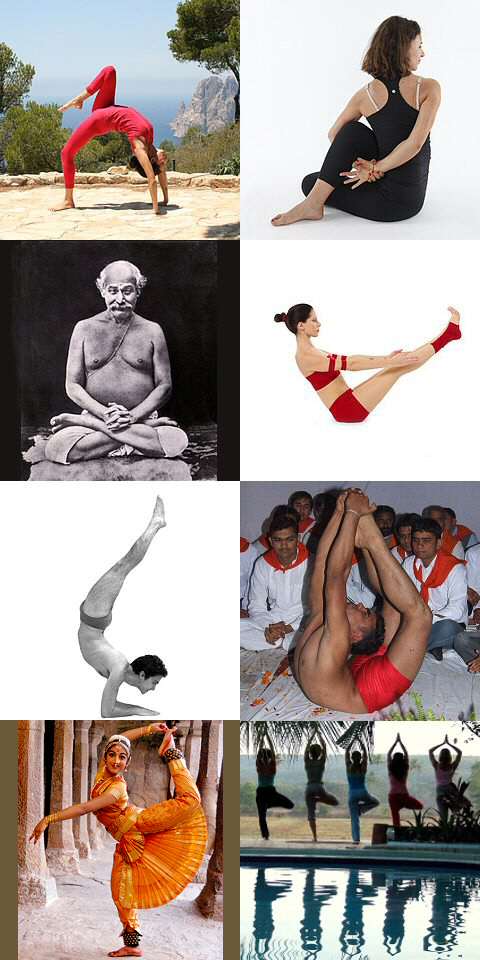
Asanas in varied contexts. Left to right, top to bottom: Eka Pada Chakrasana; Ardha Matsyendrasana; Padmasana; Navasana; Pincha Mayurasana; Dhanurasana; Natarajasana; Vrkshasana

An āsana (Sanskrit: आसन) is a body posture, originally and still a general term for a sitting meditation pose,[1] and later extended in hatha yoga and modern yoga as exercise, to any type of position, adding reclining, standing, inverted, twisting, and balancing poses. The Yoga Sutras of Patanjali define "asana" as "[a position that] is steady and comfortable".[2] Patanjali mentions the ability to sit for extended periods as one of the eight limbs of his system.[2] Asanas are also called yoga poses or yoga postures in English.

The 10th or 11th century Goraksha Sataka and the 15th century Hatha Yoga Pradipika identify 84 asanas; the 17th century Hatha Ratnavali provides a different list of 84 asanas, describing some of them. In the 20th century, Indian nationalism favoured physical culture in response to colonialism. In that environment, pioneers such as Yogendra, Kuvalayananda, and Krishnamacharya taught a new system of asanas (incorporating systems of exercise as well as traditional hatha yoga). Among Krishnamacharya's pupils were influential Indian yoga teachers including Pattabhi Jois, founder of Ashtanga (vinyasa) yoga, and B.K.S. Iyengar, founder of Iyengar yoga. Together they described hundreds more asanas, revived the popularity of yoga, and brought it to the Western world. Many more asanas have been devised since Iyengar's 1966 Light on Yoga which described some 200 asanas. Hundreds more were illustrated by Dharma Mittra.

Asanas were claimed to provide both spiritual and physical benefits in medieval hatha yoga texts. More recently, studies have provided evidence that they improve flexibility, strength, and balance; to reduce stress and conditions related to it; and specifically to alleviate some diseases such as asthma[3][4] and diabetes.[5]

Asanas have appeared in culture for many centuries. Religious Indian art depicts figures of the Buddha, Jain tirthankaras, and Shiva in lotus position and other meditation seats, and in the "royal ease" position, lalitasana. With the popularity of yoga as exercise, asanas feature commonly in novels and films, and sometimes also in advertising.

History

[edit]

Ancient times

[edit]
Mould of Pashupati seal from the Indus Valley Civilization, c. 2500 BC, its central figure in a pose resembling Mulabandhasana.[a]

The central figure in the Pashupati seal from the Indus Valley Civilization of c. 2500 BC was identified by Sir John Marshall in 1931 as a prototype of the god Shiva, recognised by being three-faced; in a yoga position as the Mahayogin, the god of yoga; having four animals as Pashupati, the Lord of Beasts; with deer beneath the throne, as in medieval depictions of Shiva; having a three-part headdress recalling Shiva's trident; and possibly being ithyphallic, again like Shiva.[6] If correct, this would be the oldest record of an asana. However, with no proof anywhere of an Indus Valley origin for Shiva, with multiple competing interpretations of the Pashupati seal and no obvious way of deciding between these, there is no reliable evidence that it is actually a yoga pose that is depicted in the seal.[7][8][9][10][11]

Asanas originated in India. In his Yoga Sutras, Patanjali (c. 2nd to 4th century CE) describes asana practice as the third of the eight limbs (Sanskrit: अष्टाङ्ग, aṣṭāṅga, from अष्ट् aṣṭ, eight, and अङ्ग aṅga, limb) of classical, or raja yoga.[12] The word asana, in use in English since the 19th century, is from Sanskrit: आसन āsana "sitting down" (from आस् ās "to sit down"), a sitting posture, a meditation seat.[13][14]

A page from Patanjali's Yoga Sutras and Bhasya commentary (c. 2nd to 4th century CE), which placed asana as one of the eight limbs of classical yoga

The eight limbs are, in order, the yamas (codes of social conduct), niyamas (self-observances), asanas (postures), pranayama (breath work), pratyahara (sense withdrawal or non-attachment), dharana (concentration), dhyana (meditation), and samadhi (realization of the true Self or Atman, and unity with Brahman, ultimate reality).[15] Asanas, along with the breathing exercises of pranayama, are the physical movements of hatha yoga and of modern yoga.[16][17] Patanjali describes asanas as a "steady and comfortable posture",[18] referring to the seated postures used for pranayama and for meditation, where meditation is the path to samadhi, transpersonal self-realization.[19][20]

The Yoga Sutras do not mention a single asana by name, merely specifying the characteristics of a good asana:[21]

स्थिरसुखमासनम् ॥४६॥
sthira sukham āsanam
Asana means a steady and comfortable posture. Yoga Sutras 2:46

The Sutras are embedded in the Bhasya commentary, which scholars suggest may also be by Patanjali;[22] it names 12 seated meditation asanas including Padmasana, Virasana, Bhadrasana, and Svastikasana.[23]

Medieval texts

[edit]
The two seated asanas mentioned in the Goraksha Sataka, Padmasana and Siddhasana, are used for meditation and for pranayama.

The 10th–11th century Vimanarcanakalpa is the first manuscript to describe a non-seated asana, in the form of Mayurasana (peacock) – a balancing pose. Such poses appear, according to the scholar James Mallinson, to have been created outside Shaivism, the home of the Nath yoga tradition, and to have been associated with asceticism; they were later adopted by the Nath yogins.[24][25]

The Goraksha Sataka (10–11th century), or Goraksha Paddhathi, an early hatha yogic text, describes the origin of the 84 classic asanas said to have been revealed by the Hindu deity Lord Shiva.[26] Observing that there are as many postures as there are beings and asserting that there are 84 lakh[b] or 8,400,000[27] species in all, the text states that Lord Shiva fashioned an asana for each lakh, thus giving 84 in all, although it mentions and describes only two in detail: Siddhasana and Padmasana.[26] The number 84 is symbolic rather than literal, indicating completeness and sacredness.[c][28]

Relief statue in Achyutaraya temple, Hampi, Karnataka showing an unidentified[d] hand-balancing asana,[29] 16th century

The Hatha Yoga Pradipika (15th century) specifies that of these 84, the first four are important, namely the seated poses Siddhasana, Padmasana, Bhadrasana and Simhasana.[30]

The pillars of the 16th century Achyutaraya temple at Hampi are decorated with numerous relief statues of yogins in asanas including Siddhasana balanced on a stick, Chakrasana, Yogapattasana which requires the use of a strap, and a hand-standing inverted pose with a stick, as well as several unidentified poses.[31]

By the 17th century, asanas became an important component of Hatha yoga practice, and more non-seated poses appear.[32] The Hatha Ratnavali by Srinivasa (17th century)[33][34] is one of the few texts to attempt an actual listing of 84 asanas,[e] although 4 out of its list cannot be translated from the Sanskrit, and at least 11[f] are merely mentioned without any description, their appearance known from other texts.[34]

The Gheranda Samhita (late 17th century) again asserts that Shiva taught 84 lakh of asanas, out of which 84 are preeminent, and "32 are useful in the world of mortals."[g][35] The yoga teacher and scholar Mark Singleton notes from study of the primary texts that "asana was rarely, if ever, the primary feature of the significant yoga traditions in India."[36] The scholar Norman Sjoman comments that a continuous tradition running all the way back to the medieval yoga texts cannot be traced, either in the practice of asanas or in a history of scholarship.[37]

Modern pioneers

[edit]
Postures in Niels Bukh's 1924 Primary Gymnastics[38] resembling Parighasana, Parsvottanasana, and Navasana, supporting the suggestion that Krishnamacharya derived some of his asanas from the gymnastics culture of his time[39]

From the 1850s onwards, a culture of physical exercise developed in India to counter the colonial stereotype of supposed "degeneracy" of Indians compared to the British,[40][41] a belief reinforced by then-current ideas of Lamarckism and eugenics.[42][43] This culture was taken up from the 1880s to the early 20th century by Indian nationalists such as Tiruka, who taught exercises and unarmed combat techniques under the guise of yoga.[44][45] Meanwhile, proponents of Indian physical culture like K. V. Iyer consciously combined "hata yoga" [sic] with bodybuilding in his Bangalore gymnasium.[46][47]

Singleton notes that poses close to Parighasana, Parsvottanasana, Navasana and others were described in Niels Bukh's 1924 Danish text Grundgymnastik eller primitiv gymnastik[38] (known in English as Primary Gymnastics).[36] These in turn were derived from a 19th-century Scandinavian tradition of gymnastics dating back to Pehr Ling, and "found their way to India" by the early 20th century.[36][48]

Yoga asanas were brought to America in 1919 by Yogendra, sometimes called "the Father of the Modern Yoga Renaissance", his system influenced by the physical culture of Max Müller.[49]

In 1924, Swami Kuvalayananda founded the Kaivalyadhama Health and Yoga Research Center in Maharashtra.[50] He combined asanas with Indian systems of exercise and modern European gymnastics, having according to the scholar Joseph Alter a "profound" effect on the evolution of yoga.[51]

In 1925, Paramahansa Yogananda, having moved from India to America, set up the Self-Realization Fellowship in Los Angeles, and taught yoga, including asanas, breathing, chanting and meditation, to tens of thousands of Americans, as described in his 1946 Autobiography of a Yogi.[52][53]

Tirumalai Krishnamacharya (1888–1989) studied under Kuvalayananda in the 1930s, creating "a marriage of hatha yoga, wrestling exercises, and modern Western gymnastic movement, and unlike anything seen before in the yoga tradition."[36] Sjoman argues that Krishnamacharya drew on the Vyayama Dipika[54] gymnastic exercise manual to create the Mysore Palace system of yoga.[55] Singleton argues that Krishnamacharya was familiar with the gymnastics culture of his time, which was influenced by Scandinavian gymnastics; his experimentation with asanas and innovative use of gymnastic jumping between poses may well explain, Singleton suggests, the resemblances between modern standing asanas and Scandinavian gymnastics.[36] Krishnamacharya, known as the father of modern yoga, had among his pupils people who became influential yoga teachers themselves: the Russian Eugenie V. Peterson, known as Indra Devi; Pattabhi Jois, who founded Ashtanga (vinyasa) yoga in 1948; B.K.S. Iyengar, his brother-in-law, who founded Iyengar Yoga; T.K.V. Desikachar, his son, who continued his Viniyoga tradition; Srivatsa Ramaswami; and A. G. Mohan, co-founder of Svastha Yoga & Ayurveda.[56][57] Together they revived the popularity of yoga and brought it to the Western world.[58][59]

In 1960, Vishnudevananda Saraswati, in the Sivananda yoga school, published a compilation of sixty-six basic postures and 136 variations of those postures in The Complete Illustrated Book of Yoga.[60]

In 1966, Iyengar published Light on Yoga: Yoga Dipika, illustrated with some 600 photographs of Iyengar demonstrating around 200 asanas; it systematised the physical practice of asanas. It became a bestseller, selling three million copies, and was translated into some 17 languages.[61]

In 1984, Dharma Mittra compiled a list of about 1,300 asanas and their variations, derived from ancient and modern sources, illustrating them with photographs of himself in each posture; the Dharma Yoga website suggests that he created some 300 of these.[62][63][64]

Origins of the asanas

[edit]
Headstand (Kapala Asana) from 1830 manuscript of Joga Pradipika

The asanas have been created at different times, a few being ancient, some being medieval, and a growing number recent.[65][66][67] Some that appear traditional, such as Virabhadrasana I (Warrior Pose I), are relatively recent: that pose was probably devised by Krishnamacharya around 1940, and it was popularised by his pupil, Iyengar.[68] A pose that is certainly younger than that is Parivritta Parsvakonasana (Revolved Side Angle Pose): it was not in the first edition of Pattabhi Jois's Yoga Mala in 1962.[69] Viparita Virabhadrasana (Reversed Warrior Pose) is still more recent, and may have been created after 2000.[69] Several poses that are now commonly practised, such as Dog Pose and standing asanas including Trikonasana (triangle pose), first appeared in the 20th century,[70] as did the sequence of asanas, Surya Namaskar (Salute to the Sun). A different sun salutation, the Aditya Hridayam, is certainly ancient, as it is described in the "Yuddha Kaanda" Canto 107 of the Ramayana.[71] Surya Namaskar in its modern form was created by the Raja of Aundh, Bhawanrao Shriniwasrao Pant Pratinidhi;[72][73][74] K. Pattabhi Jois defined the variant forms Surya Namaskar A and B for Ashtanga Yoga, possibly derived from Krishnamacharya.[75] Surya Namaskar can be seen as "a modern, physical culture-oriented rendition" of the simple ancient practice of prostrating oneself to the sun.[76]

In 1966, Iyengar's classic Light on Yoga was able to describe some 200 asanas,[77] consisting of about 50 main poses with their variations.[78] Sjoman observes that whereas many traditional asanas are named for objects (like Vrikshasana, tree pose), legendary figures (like Matsyendrasana, the sage Matsyendra's pose), or animals (like Kurmasana, tortoise pose), "an overwhelming eighty-three"[78] of Iyengar's asanas have names that simply describe the body's position (like Utthita Parsvakonasana, "Extended Side Angle Pose"); these are, he suggests, the ones "that have been developed later".[78] A name following this pattern is Shatkonasana, "Six Triangles Pose", described in 2015.[79] Mittra illustrated 908 poses and variations in his 1984 Master Yoga Chart, and many more have been created since then.[77][79] The number of asanas has thus grown increasingly rapidly with time, as summarised in the table.

Sjoman notes that the names of asanas have been used "promiscuous[ly]", in a tradition of "amalgamation and borrowing" over the centuries, making their history difficult to trace.[80] The presence of matching names is not proof of continuity, since the same name may mean a different pose, and a pose may have been known by multiple names at different times.[80] The estimates here are therefore based on actual descriptions of the asanas.

Estimates of the number of asanas
No. of asanas Sanskrit Transliteration English Author Date Evidence supplied
2 गोरक्ष शतक Goraksha Shataka Goraksha's Century Gorakshanatha 10th-11th century Describes Siddhasana, Padmasana;[81][82] 84 claimed[c]
4 शिव संहिता Shiva Samhita Shiva's Compendium - 15th century 4 seated asanas described, 84 claimed; 11 mudras[83]
15 हठ योग प्रदीपिका Hatha Yoga Pradipika A Small Light on Hatha Yoga Svami Svatmarama 15th century 15 asanas described,[83] 4 (Siddhasana, Padmasana, Bhadrasana and Simhasana) named as important[30]
32 घेरंड संहिता Gheranda Samhita Gheranda's Collection Gheranda 17th century Descriptions of 32 seated, backbend, twist, balancing and inverted asanas, 25 mudras[35][83]
52 हठ रत्नावली Hatha Ratnavali A Treatise On Hatha Yoga Srinivasa 17th century 52 asanas described, out of 84 named[h][33][34]
84 जोग प्रदीपिका Joga Pradipika A Small Light on Yoga Ramanandi Jayatarama 1830 84 asanas and 24 mudras in rare illustrated edition of 18th century text[84]
37 योग सोपान Yoga Sopana Stairway to Yoga Yogi Ghamande 1905 Describes and illustrates 37 asanas, 6 mudras, 5 bandhas[84]
c. 200 योग दीपिका Yoga Dipika Light on Yoga B. K. S. Iyengar 1966 Descriptions and photographs of each asana[85]
908 Master Yoga Chart Dharma Mittra 1984 Photographs of each asana[86]

The graph shows the rapid growth in number of asanas in the 20th century.

GS=Goraksha Sataka; ShS=Shiva Samhita; HYP=Hatha Yoga Pradipika; HR=Hatha Ratnavali; GhS=Gheranda Samhita; JP=Joga Pradipika; YS=Yoga Sopana; LoY=Light on Yoga; DM=Dharma Mittra

Purposes

[edit]

Spiritual

[edit]
The lion pose, Simhasana, is named for an avatar of Vishnu in the form of the man-lion Narasimha. India, 12th Century

The asanas of hatha yoga originally had a spiritual purpose within Hinduism, the attainment of samadhi, a state of meditative consciousness.[87] The scholar of religion Andrea Jain notes that medieval Hatha Yoga was shared among yoga traditions, from Shaivite Naths to Vaishnavas, Jains and Sufis; in her view, its aims too varied, including spiritual goals involving the "tantric manipulation of the subtle body", and at a more physical level, destroying poisons.[88] Singleton describes Hatha Yoga's purpose as "the transmutation of the human body into a vessel immune from mortal decay", citing the Gheranda Samhita's metaphor of an earthenware pot that requires the fire of yoga to make it serviceable.[89] Mallinson and Singleton note that the purposes of asana practice were, until around the fourteenth century, firstly to form a stable platform for pranayama, mantra repetition (japa), and meditation, practices that in turn had spiritual goals; and secondly to stop the accumulation of karma and instead acquire ascetic power, tapas, something that conferred "supernatural abilities". Hatha Yoga added the ability to cure diseases to this list.[90] Not all Hindu scriptures agreed that asanas were beneficial. The 10th century Garuda Purana stated that "the techniques of posture do not promote yoga. Though called essentials, they all retard one's progress," while early yogis often practised extreme austerities (tapas) to overcome what they saw as the obstacle of the body in the way of liberation.[91]

The yoga scholar and practitioner Theos Bernard, in his 1944 Hatha Yoga: The Report of a Personal Experience, stated that he was "prescribed ... a group of asanas[i] calculated to bring a rich supply of blood to the brain and to various parts of the spinal cord .. [and] a series of reconditioning asanas to stretch, bend, and twist the spinal cord" followed when he was strong enough by the meditation asanas.[93] Bernard named the purpose of Hatha Yoga as "to gain control of the breath" to enable pranayama to work, something that in his view required thorough use of the six purifications.[94]

Asanas work in different ways from conventional physical exercises, according to Satyananda Saraswati "placing the physical body in positions that cultivate awareness, relaxation and concentration".[95] Leslie Kaminoff writes in Yoga Anatomy that from one point of view, "all of asana practice can be viewed as a methodical way of freeing up the spine, limbs, and breathing so that the yogi can spend extended periods of time in a seated position."[96]

Iyengar observed that the practice of asanas "brings steadiness, health, and lightness of limb. A steady and pleasant posture produces mental equilibrium and prevents fickleness of mind." He adds that they bring agility, balance, endurance, and "great vitality", developing the body to a "fine physique which is strong and elastic without being muscle-bound". But, Iyengar states, their real importance is the way they train the mind, "conquer[ing]" the body and making it "a fit vehicle for the spirit".[97]

Names of asanas illustrating spiritual evolution,
according to B. K. S. Iyengar[98]
Asana Level
Vishnu's Couch,
Salute to the Sun
Gods
Virabhadra,
Matsyendra
Heroes,
sages
Dog Mammals
Pigeon Birds
Cobra Reptiles
Fish,
Frog
Aquatic
animals
Locust Invertebrates
Tree Plants
Mountain Inanimate

Iyengar saw it as significant that asanas are named after plants, insects, fish and amphibians, reptiles, birds, and quadrupeds; as well as "legendary heroes", sages, and avatars of Hindu gods, in his view "illustrating spiritual evolution".[98] For instance, the lion pose, Simhasana, recalls the myth of Narasimha, half man, half lion, and an avatar of Vishnu, as told in the Bhagavata Purana.[99] The message is, Iyengar explains, that while performing asanas, the yogi takes the form of different creatures, from the lowest to the highest, not despising any "for he knows that throughout the whole gamut of creation ... there breathes the same Universal Spirit." Through mastery of the asanas, Iyengar states, dualities like gain and loss, or fame and shame disappear.[98]

Sjoman argues that the concept of stretching in yoga can be looked at through one of Patanjali's Yoga Sutras, 2.47, which says that [asanas are achieved] by loosening (śaithilya) the effort (prayatna) and meditating on the endless (ananta). Sjoman points out that this physical loosening is to do with the mind's letting go of restrictions, allowing the natural state of "unhindered perfect balance" to emerge; he notes that one can only relax through effort, "as only a muscle that is worked is able to relax (that is, there is a distinction between dormancy and relaxation)."[100] Thus asanas had a spiritual purpose, serving to explore the conscious and unconscious mind.[101]

Heinz Grill considers the soul in our human existence to be a central link between the manifest body and the unmanifest spirit. Therefore it should not be the sense-attached, bodily-involved consciousness that motivates yoga practice, but spiritual thoughts. According to Grill, this path from above to below is essential, because “the soul lives in the receptivity of giving and not in the receptivity of earthly taking.”[102]

Exercise

[edit]

Since the mid-20th century, asanas have been used, especially in the Western world, as physical exercise.[103] In this context, their "overtly Hindu" purpose is masked but its "ecstatic ... transcendent ... possibly subversive" elements remain.[104] That context has led to a division of opinion among Christians, some asserting that it is acceptable as long as they are aware of yoga's origins, others stating that hatha yoga's purpose is inherently Hindu, making Christian yoga an evident contradiction[105][106] or indeed "diametrically opposed to Christianity".[107] A similar debate has taken place in a Muslim context; under Crown Prince Mohammed bin Salman, yoga, formerly banned as a Hindu practice, has been legalised in Saudi Arabia,[108] while mainly-Hindu Bali has held a yoga competition in defiance of a ruling by Indonesia's Muslim Ulema Council.[109]

In a secular context, the journalists Nell Frizzell and Reni Eddo-Lodge have debated (in The Guardian) whether Western yoga classes represent "cultural appropriation". In Frizzell's view, yoga has become a new entity, a long way from the Yoga Sutras of Patanjali, and while some practitioners are culturally insensitive, others treat it with more respect. Eddo-Lodge agrees that Western yoga is far from Patanjali, but argues that the changes cannot be undone, whether people use it "as a holier-than-thou tool, as a tactic to balance out excessive drug use, or practised similarly to its origins with the spirituality that comes with it".[110]

From a Hindu perspective, the practice of asanas in the Western world as physical exercise is sometimes seen as yoga that has lost its way. In 2012, the Hindu American Foundation ran a "Take Back Yoga" campaign to emphasise yoga's roots in Hinduism.[111]

For women

[edit]
"Seal" posture from Mary Bagot Stack's Building the Body Beautiful, 1931. It closely resembles Salabhasana, locust pose; she had learnt some asanas in India in 1912.[112]

In the West, yoga is practiced mainly by women. For example, in Britain in the 1970s, women formed between 70 and 90 percent of most yoga classes, as well as most of the yoga teachers. It has been suggested that yoga was seen as a support for women in the face of male-dominated medicine, offering an alternative approach for chronic medical conditions, as well as to beauty and ageing, and it offered a way of meeting other women.[113] Singleton notes that women in yoga are in the tradition of Mollie Bagot Stack's 1930 League of Health and Beauty, influenced by Stack's visit to India in 1912 when she learnt some asanas, and in turn of Genevieve Stebbins's Harmonic Gymnastics.[112]

Effects

[edit]

Asanas have, or are claimed to have, multiple effects on the body, both beneficial and harmful. These include the conscious usage of groups of muscles,[114] effects on health,[115] and possible injury especially in the presence of known contraindications.[116]

Muscle usage

[edit]

A 2014 study indicated that different asanas activated particular groups of muscles, varying with the skill of the practitioners, from beginner to instructor. The eleven asanas in the Surya Namaskar sequences A and B (of Ashtanga Vinyasa Yoga) were performed by beginners, advanced practitioners and instructors. The activation of 14 groups of muscles was measured with electrodes on the skin over the muscles. Among the findings, beginners used pectoral muscles more than instructors, whereas instructors used deltoid muscles more than other practitioners, as well as the vastus medialis (which stabilises the knee). The yoga instructor Grace Bullock writes that such patterns of activation suggest that asana practice increases awareness of the body and the patterns in which muscles are engaged, making exercise more beneficial and safer.[114][117]

Claimed benefits

[edit]

Medieval hatha yoga texts make a variety of claims for the benefits brought by the asanas, both spiritual and physical. The Hatha Yoga Pradipika (HYP) states that asanas in general, described as the first auxiliary of hatha yoga, give "steadiness, good health, and lightness of limb." (HYP 1.17)[118] Specific asanas, it claims, bring additional benefits; for example, Matsyendrasana awakens Kundalini and makes the semen steady; (HYP 1.27) Paschimottanasana "stokes up the digestive fire, slims the belly and gives good health"; (HYP 1.29) Shavasana "takes away fatigue and relaxes the mind"; (HYP 1.32) Siddhasana "bursts open the door to liberation"; (HYP 1.35) while Padmasana "destroys all diseases" (HYP 1.47) and if done together with retention of the breath in pranayama confers liberation. (HYP 1.44–49)[119] These claims lie within a tradition across all forms of yoga that practitioners can gain supernatural powers, but with ambivalence about their usefulness, since they may obstruct progress towards liberation.[120] Hemachandra's Yogashastra (1.8–9) lists the magical powers, which include healing, the destruction of poisons, the ability to become as small as an atom or to go wherever one wishes, invisibility, and shape-shifting.[121]

The Indian Minister for Women and Child Development, Maneka Gandhi, joining a programme of yoga for pregnant women in 2018

The asanas have been popularised in the Western world by claims about their health benefits, attained not by medieval hatha yoga magic but by the physical and psychological effects of exercise and stretching on the body.[122] The history of such claims was reviewed by William J. Broad in his 2012 book The Science of Yoga. Broad argues that while the health claims for yoga began as Hindu nationalist posturing, it turns out that there is ironically[115] "a wealth of real benefits".[115]

Physically, the practice of asanas has been claimed to improve flexibility, strength, and balance; to alleviate stress and anxiety, and to reduce the symptoms of lower back pain.[3][4] Claims have been made about beneficial effects on specific conditions such as asthma,[3][4] chronic obstructive pulmonary disease,[3][4] and diabetes.[5] There is evidence that practice of asanas improves birth outcomes[4] and physical health and quality of life measures in the elderly,[4] and reduces sleep disturbances[3] and hypertension.[123][124] Iyengar yoga is effective at least in the short term for both neck pain and low back pain.[125]

Contra-indications

[edit]

The National Institutes of Health notes that yoga is generally safe "when performed properly", though people with some health conditions, older people, and pregnant woman may need to seek advice. For example, people with glaucoma are advised not to practise inverted postures.[126] The Yoga Journal provides separate lists of asanas that it states are "inadvisable" and should be avoided or modified for each of the following medical conditions: asthma; back injury; carpal tunnel syndrome; diarrhoea; headache; heart problems; high blood pressure; insomnia; knee injury; low blood pressure; menstruation; neck injury; pregnancy; and shoulder injury.[116]

The practice of asanas has sometimes been advised against during pregnancy, but that advice has been contested by a 2015 study which found no ill-effects from any of 26 asanas investigated. The study examined the effects of the set of asanas on 25 healthy women who were between 35 and 37 weeks pregnant. The authors noted that apart from their experimental findings, they had been unable to find any scientific evidence that supported the previously published concerns, and that on the contrary there was evidence including from systematic review that yoga was suitable for pregnant women, with a variety of possible benefits.[127][128]

Common practices

[edit]
The Yoga Sutras 2:46 state that asanas, here Natarajasana, should be "steady and comfortable".

In the Yoga Sutras, the only rule Patanjali suggests for practicing asana is that it be "steady and comfortable".[2] The body is held poised with the practitioner experiencing no discomfort. When control of the body is mastered, practitioners are believed to free themselves from dualities such as heat and cold, hunger and satiety, or joy and grief.[129] This is the first step toward relieving suffering by letting go of attachment.[130]

Traditional and modern guidance

[edit]

Different schools of yoga, such as Iyengar and The Yoga Institute, agree that asanas are best practised with a rested body on an empty stomach, after having a bath.[131][132] From the point of view of sports medicine, asanas function as active stretches, helping to protect muscles from injury; these need to be performed equally on both sides, the stronger side first if used for physical rehabilitation.[133]

Surya Namaskar

[edit]
Adho Mukha Svanasana, downward-facing dog pose, is performed at least once and often twice in Surya Namaskar, the Salute to the Sun.[134]

Surya Namaskar, the Salute to the Sun, commonly practiced in most forms of modern yoga, links up to twelve asanas in a dynamically expressed yoga series. A full round consists of two sets of the series, the second set moving the opposing leg first. The asanas include Adho Mukha Svanasana (downward dog), the others differing from tradition to tradition with for instance a choice of Urdhva Mukha Svanasana (upward dog) or Bhujangasana (cobra) for one pose in the sequence.[135] Schools, too, differ in their approaches to the sequence; for example, in Iyengar Yoga, variations such as inserting Maricyasana I and Pascimottanasana are suggested.[136]

Styles

[edit]

In the Western world, asanas are taught in differing styles by the various schools of yoga. Some poses like Trikonasana are common to many of them, but not always performed in the same way. Some independently documented approaches are described below.[137][138]

Utthitha Trikonasana, an important pose in Iyengar Yoga, using a prop, a yoga brick. The pose requires the practitioner to work different parts of the body in different directions.

Iyengar Yoga "emphasises precision and alignment",[139] and prioritises correct movement over quantity, i.e. moving a little in the right direction is preferred to moving more but in a wrong direction. Postures are held for a relatively long period compared to other schools of yoga; this allows the muscles to relax and lengthen, and encourages awareness in the pose. Props including belts, blocks and blankets are freely used to assist students in correct working in the asanas.[139][138] Beginners are introduced early on to standing poses, executed with careful attention to detail. For example, in Trikonasana, the feet are often jumped apart to a wide stance, the forward foot is turned out, and the centre of the forward heel is exactly aligned with the centre of the arch of the other foot.[137]

Sivananda Yoga practices the asanas, hatha yoga, as part of raja yoga, with the goal of enabling practitioners ""to sit in meditation for a long time".[137] There is little emphasis on the detail of individual poses; teachers rely on the basic instructions given in the books by Sivananda and Swami Vishnu-devananda.[137] In Trikonasana, the top arm may be stretched forward parallel to the floor rather than straight up.[137] Sivananda Yoga identifies a group of 12 asanas as basic.[140] These are not necessarily the easiest poses, nor those that every class would include.[141] Trikonasana is the last of the 12, whereas in other schools it is one of the first and used to loosen the hips in preparation for other poses.[137]

Eka Pada Bakasana (One-legged Crane), an asana in Ashtanga Vinyasa Yoga's Advanced series

In Ashtanga Vinyasa Yoga, poses are executed differently from Iyengar Yoga. "Vinyasa" means flowing, and the poses are executed relatively rapidly, flowing continuously from one asana to the next using defined transitional movements.[137][138] The asanas are grouped into six series, one Primary, one Intermediate, and four Advanced. Practice begins and ends with the chanting of mantras, followed by multiple cycles of the Sun Salutation, which "forms the foundation of Ashtanga Yoga practice", and then one of the series.[142][143] Ashtanga Vinyasa practice emphasises aspects of yoga other than asanas, including drishti (focus points), bandhas (energy locks), and pranayama.[137]

Kripalu Yoga uses teachers from other asana traditions, focussing on mindfulness rather than using effort in the poses. Teachers may say "allow your arms to float up" rather than "bring up your arms".[137] The goal is to use the asanas "as a path of transformation."[137] The approach is in three stages: firstly instruction in body alignment and awareness of the breath during the pose; secondly, holding the pose long enough to observe "unconscious patterns of tension in the body-mind";[137] and thirdly, through "deep concentration and total surrender", allowing oneself "to be moved by prana".[137] In Trikonasana, the teacher may direct pupils' attention to pressing down with the outer edge of the back foot, lifting the arch of the foot, and then experimenting with "micro-movements", exploring where energy moves and how it feels.[137]

In Bikram Yoga, as developed by Bikram Choudhury, there is a fixed sequence of 26 poses,[138] in which Trikonasana is ninth, its task to focus on opening the hips. The Bikram version of Trikonasana is a different pose (Parsvakonasana) from that in Iyengar Yoga.[137] The position of the feet is seen as critically important, along with proper breathing and the distribution of weight: about 30% on the back foot, 70% on the front foot.[137]

Apart from the brands, many independent teachers, for example in Britain, offer an unbranded "hatha yoga".[112]

Types

[edit]

Asanas can be classified in different ways, which may overlap: for example, by the position of the head and feet (standing, sitting, reclining, inverted), by whether balancing is required, or by the effect on the spine (forward bend, backbend, twist), giving a set of asana types agreed by most authors.[144][145][146] Mittra uses his own categories such as "Floor & Supine Poses".[62] Darren Rhodes and others add "Core strength",[147][148][149] while Yogapedia and Yoga Journal also add "Hip-opening" to that set.[150][151] The table shows an example of each of these types of asana, with the title and approximate date of the earliest document describing (not only naming) that asana.

Types of asana, with dates and examples
Type Described Date Example English Image
Standing TK 20th C. Parsvakonasana Side angle
Sitting
Meditation
GS 1:10–12 10th–11th C. Siddhasana Accomplished
Reclining HYP 1:34 15th C. Shavasana Corpse
Inverted HY 11th C. Sirsasana Yoga
headstand
Balancing VS 13th C. Kukkutasana Cockerel
Forward bend HYP 1:30 15th C. Paschimottanasana Seated Forward Bend
Backbend HYP 1:27 15th C. Dhanurasana Bow
Twisting HYP 1.28–29 15th C. Ardha
Matsyendrasana
Half Lord of
the Fishes
Hip-opening HYP 1:20 15th C. Gomukhasana Cow Face
Core strength ST 19th C. Navasana Boat

In culture

[edit]

In religious art

[edit]
Jambhala, the Buddhist god of riches, seated in Lalitasana. Nepal, 1643

Religious Indian art makes use of a variety of seated asanas for figures of Buddha, Shiva, and other gods and religious figures. Most are meditation seats, especially the lotus position, Padmasana, but Lalitasana and its "royal ease" variant are not.[152][153] Jain tirthankaras are often shown seated in the meditation asanas Siddhasana and Padmasana.[154][155]

In literature

[edit]

The actress Mariel Hemingway's 2002 autobiography Finding My Balance: A Memoir with Yoga describes how she used yoga to recover balance in her life after a dysfunctional upbringing: among other things, her grandfather, the novelist Ernest Hemingway, killed himself shortly before she was born, and her sister Margaux killed herself with a drug overdose. Each chapter is titled after an asana, the first being "Mountain Pose, or Tadasana", the posture of standing in balance. Other chapters are titled after poses including Trikonasana, Virabhadrasana, Janusirsasana, Ustrasana, Sarvangasana, and finally Garudasana, in each case with some life lesson related to the pose. For example, Garudasana, "a balancing posture with the arms and legs intricately intertwined ... requires some flexibility, a lot of trust, and most of all, balance"; the chapter recounts how she, her husband and her daughters all came close to drowning in canoes off Kauai, Hawaii.[156][157]

Among yoga novels is the author and yoga teacher Edward Vilga's 2014 Downward Dog, named for Adho Mukha Svanasana, which paints a humorously unflattering picture of a man of the world who decides to become a private yoga teacher in New York society.[158][159] Ian Fleming's 1964 novel You Only Live Twice has the action hero James Bond visiting Japan, where he "assiduously practised sitting in the lotus position."[160] The critic Lisa M. Dresner notes that Bond is mirroring Fleming's own struggles with the pose.[161]

Notes

[edit]

References

[edit]

Sources

[edit]
[edit]
Revisions and contributorsEdit on WikipediaRead on Wikipedia
from Grokipedia
Asana (: आसन, romanized: āsana; lit. 'seat') is a body posture, originally any steady pose for prolonged , and later extended in and as exercise to a wide range of positions including standing, reclining, twisting, and balancing forms. In the (c. 400 CE), the third of the Eight Limbs of , asana is defined as a and comfortable seated posture (sthira sukham asanam) to prepare the body and mind for , freeing it from distractions. Classical texts like the 15th-century Hatha Yoga Pradipika enumerate 15 asanas, while later traditions claim 84 or more, with modern practices incorporating hundreds for physical, mental, and spiritual benefits. Asana practice emphasizes alignment, breath coordination, and mindfulness, forming a core component of yoga philosophy and contemporary wellness.

History

Early depictions and texts

The earliest evidence of asanas, or yogic postures, appears in artifacts from the Indus Valley Civilization, dating back to approximately 2600 BCE. Among these, the , excavated from , depicts a cross-legged figure surrounded by animals, interpreted by scholars as seated in Mulabandhasana, an advanced posture involving the contraction of the root lock (mula bandha) with heels pressed near the . This seal, often associated with a proto-Shiva figure, suggests early practices of seated and physical stability, predating written records of . In the (c. 1500–500 BCE), textual references to emerge, though the term "asana" primarily denotes a seat or abode rather than elaborate physical forms. The alludes to yogic by rishis (seers) in stable, contemplative positions, emphasizing inner focus and breath regulation as pathways to divine insight, as seen in hymns describing ascetics in serene, upright stances during rituals. These early mentions imply simple seated postures conducive to mental clarity, without detailed physical instructions. The early (c. 800–200 BCE) build on these foundations, explicitly linking seated postures to (breath control). For instance, the Maitrayaniya (Maitri) outlines a six-fold system that includes practiced in a steady, erect sitting posture to facilitate energy regulation and concentration, recommending positions that promote spinal alignment and tranquility. Such descriptions highlight asanas as preparatory for higher meditative states, focusing on comfort and immobility rather than complexity. By the medieval period, asanas evolved into more systematized forms documented in Hatha yoga texts. The , composed in the 15th century by Svatmarama, marks a significant milestone by listing 15 principal asanas with practical instructions, drawing from earlier tantric traditions while emphasizing their role in physical purification and retention. These include variations like Swastikasana (auspicious pose) for basic stability and more challenging ones like Kukkutasana (rooster pose) involving arm insertions for strength. Among the core early asanas, Padmasana (lotus pose) and (adept's pose) stand out for their prominence across texts, from the onward. Padmasana, with legs crossed and feet placed on opposite thighs, is praised in the for fostering meditative absorption by opening the hips and calming the mind. , involving heel pressure on the , is similarly lauded as foundational for channeling energy upward, appearing in the same text as essential for and dhyana. These postures represent the transition from rudimentary seating to deliberate physical techniques in yoga practice.

Hatha yoga development

Hatha yoga emerged in the medieval period around the within tantric traditions, particularly those influenced by Kaula and Vajrayāna , where physical techniques began to be systematized for spiritual purification and energy control. Early texts like the Amṛtasiddhi marked this shift, introducing hatha methods as a means to retain vital energies during tantric rituals, evolving from restraint practices to broader somatic disciplines by the . These developments built upon precursors in earlier depictions of found in ancient and texts, adapting them into more structured physical forms. The Nath yogis, a Shaiva tantric , played a pivotal role in advancing hatha yoga's postural practices during this era, with figures like Matsyendranath (c. ) credited as foundational influencers in creating dynamic and challenging asanas to prepare the body for higher yogic states. Matsyendranath, revered as the originator of the Nath , integrated tantric elements into , emphasizing postures that enhanced physical stability and pranic control, which his disciple Gorakshanath further codified. This tradition promoted asanas not merely as exercises but as essential preliminaries to , mudras, and , aiming to awaken energy and achieve siddhis like . Key medieval texts formalized these asanas within hatha frameworks. The , composed between the 15th and 17th centuries, references 84 asanas as vital for steadying the body in preparation for advanced practices, though it details only four—Siddhasana, Padmasana, , and Bhadrasana—highlighting their role in facilitating breath retention and inner focus. Similarly, the from the 17th century outlines 32 asanas, including animal-inspired ones like (peacock pose), which builds arm strength and balance to purify the nadis and ready the practitioner for . These texts underscore asanas' preparatory function in the sevenfold path of , distinguishing them from purely meditative poses by incorporating therapeutic and vigorous elements.

Modern revival and spread

The modern revival of asanas began in the late 19th century with , who played a pivotal role in reintroducing to and the West through his 1896 book Raja Yoga, which interpreted Patanjali's Yoga Sutras and emphasized asana as a foundational posture for steadying the body to facilitate . Vivekananda's lectures and writings, delivered during his 1893 visit to the World Parliament of Religions in , framed as a scientific and universal discipline, sparking renewed interest in physical practices amid colonial-era efforts to reclaim Indian heritage. In the early 20th century, (1888–1989), often called the father of , further revitalized traditions by integrating ancient texts with dynamic sequencing and breathwork, teaching at the from 1933 onward under the patronage of the . His influential students, including , , and , disseminated these methods globally; Iyengar developed with props for alignment, Jois founded Ashtanga Vinyasa, and Devi became the first prominent female yoga teacher in the West, authoring Forever Young, Forever Healthy in 1953. Krishnamacharya's public demonstrations in the 1930s at Mysore University and palaces showcased vigorous asana flows, promoting as accessible and attracting diverse audiences. The marked yoga's widespread adoption in the West, fueled by countercultural movements and celebrity endorsements, such as the Beatles' 1968 visit to Maharishi Mahesh Yogi's ashram in , which popularized alongside asanas and inspired the opening of yoga studios in cities like and . This era shifted yoga from esoteric spirituality toward inclusive wellness, with figures like establishing centers in () and Devi teaching in Hollywood. In the , asanas have boomed as a fitness phenomenon, integrating into trends through apps like Asana Rebel and Daily Yoga, which offer guided sessions to millions, and events such as International Yoga Day, declared by the in 2014 and first observed on June 21, 2015, drawing over 35,000 participants in alone. This dissemination has emphasized physical benefits over spiritual roots, transforming asanas into a $107 billion industry as of 2023, with projections reaching up to $215 billion by late 2025 amid digital growth and wellness trends, though it has sparked debates on commercialization diluting traditional .

Etymology and philosophy

Linguistic origins

The term "asana" originates from the Sanskrit root ās, meaning "to sit" or "to be," combined with the suffix -ana, literally translating to "sitting" or "a seat." This etymological foundation reflects its initial connotation as a stable position for , with early references appearing in Vedic literature, such as the cognate asandi in the Atharva-Veda (c. 1200–900 BCE), denoting a physical seat or stool. By the time of the , around 800–200 BCE, asana specifically indicated a meditation seat, emphasizing its role in contemplative practices. In Patanjali's Yoga Sutras, composed between the 2nd century BCE and 4th century CE, asana is formally defined as the third limb of the eightfold path (ashtanga yoga), with sutra 2.46 stating "sthira sukham āsanam," which prescribes a posture that is steady and stable (sthira) while also being comfortable and easeful (sukha). Here, sthira implies firmness and endurance to maintain the pose without strain, whereas sukha denotes a sense of relaxation and pleasure, ensuring the posture supports prolonged meditation without distraction. This definition underscores asana's primary purpose as a static, supportive position rather than a physically demanding exercise. The meaning of asana evolved in subsequent yoga texts, transitioning from predominantly static seated forms—such as padmāsana (lotus pose) or siddhāsana (accomplished pose)—to incorporate dynamic and varied postures aimed at physical purification and vitality. In medieval traditions, emerging around the CE, texts like the (mid-15th century) expanded the repertoire to 16 principal asanas, while the (17th century) enumerated 32, blending static holds with more active movements to prepare the body for and higher meditative states. This development marked a shift toward asana as a holistic tool for embodying stability and ease in both stillness and motion.

Role in yoga philosophy

In classical yoga philosophy, as articulated in Patanjali's Yoga Sutras, asana constitutes the third limb of the eightfold path (Ashtanga Yoga), serving primarily as a means to stabilize the body for subsequent practices such as (breath control) and (meditation). 2.46 defines asana as "sthira sukham asanam," a steady and comfortable posture that balances firmness and ease to minimize physical distractions. This stability is achieved through relaxed effort and meditation on the infinite ( 2.47), culminating in immunity to dualities like and (Sutra 2.48), thereby creating an unmoving foundation essential for the inward focus of higher limbs. Within philosophy, as detailed in the , asanas assume a more integral role in purifying and balancing the subtle energy channels, particularly the ida and nadis, to facilitate the awakening of energy. Practices like cleanse the 72,000 nadis, harmonizing lunar (ida) and solar () currents to allow to enter the central sushumna nadi, a prerequisite for kundalini's ascent. This process integrates bandhas (energy locks), such as mula bandha in Padmasana, which draws apana upward to unite with prana at the , stimulating kundalini's uncoiling and progression toward . The text posits that consistent asana practice over years, combined with contemplation, directly contributes to this energetic awakening, bridging physical steadiness with spiritual liberation. Many asanas carry symbolic meanings that reflect deeper philosophical principles, often drawing from nature or divine archetypes to embody yogic ideals. For instance, symbolizes the cosmic tree as a link between the individual soul and the divine, representing rooted stability amid change and the meditative focus needed to transcend egoic disturbances, as illustrated in myths of Sita's endurance. Similarly, evokes the archetype of , Shiva's fierce , embodying the spiritual warrior's triumph over internal ignorance and pride through transformative rage turned to compassion. These symbols underscore asana's function in cultivating qualities like grounding, resilience, and focused awareness within the yogic path. Philosophical debates highlight asana's evolving primacy, from a preparatory minor element in Raja Yoga—where emphasis lies on meditation and mind control, with asana merely enabling stillness for —to its central position in as a foundational tool for pranic purification and activation. In Raja Yoga texts like the Yoga Sutras, asana supports but does not dominate the inner quest for , whereas Hatha traditions elevate it as the gateway to higher non-dual states, reflecting a shift toward embodied practices in medieval yoga synthesis. This tension persists in modern interpretations, balancing asana's physicality with its subtle philosophical underpinnings.

Purposes

Spiritual and meditative aims

In classical yoga philosophy, asanas serve as a foundational practice to prepare the body for by cultivating steadiness and ease, thereby reducing mental disturbances associated with the gunas of (restlessness) and tamas (inertia). Patanjali's Yoga Sutras define asana as "sthira sukham asanam," emphasizing a posture that is firm yet comfortable, achieved through relaxation of effort and on the infinite, which transcends dualities of sense experience and enables prolonged focus on inner awareness. This preparation calms the mind, allowing practitioners to transcend physical distractions and progress toward , the state of meditative absorption central to spiritual enlightenment. In Tantric traditions, integrate with mudras and mantras to facilitate the flow of (vital energy) through the nadis (subtle channels), purifying the body and awakening energy for higher meditative states. Texts like the describe asanas such as and Padmasana as essential for restraining the senses, cleansing the 72,000 nadis, and directing energy upward, often combined with bandhas (locks) to stabilize and support contemplative practices. Similarly, the outlines 32 asanas as part of a holistic purification process, where postures align the to enhance energy circulation, preparing the practitioner for dhyana () and union with the divine. Advanced asanas in the are linked to the attainment of , or spiritual powers, arising from mastery that deepens meditative immersion and inner discipline. For instance, achieving asana —perfect stability in posture—enables the to remain immobile for extended periods, fostering and access to subtle perceptions, as detailed in texts like the Yogarajopanishad, where such accomplishments mark progress toward . These powers, including heightened or control over vital forces, emerge not as ends but as byproducts of disciplined practice leading to liberation. Historically, monastic routines in pre-modern incorporated asanas to sustain long sessions, with seated postures like Padmasana forming the core of daily sadhana in ascetic communities. Drawing from hatha traditions, these practices ensured physical endurance without strain, allowing monks to engage in uninterrupted contemplation, as evidenced in the Shiva Samhita's guidance on postures for yogic ascetics pursuing enlightenment through sustained inner focus.

Physical health and fitness

Asanas contribute to enhanced flexibility by systematically stretching muscles and connective tissues, allowing for greater in joints over time. Research indicates that regular practice of asanas leads to significant improvements in overall body flexibility, as measured by tests like the sit-and-reach protocol, with practitioners showing up to 20-30% gains after 8-12 weeks of consistent sessions. Strength gains are also notable, particularly in core and stabilizing muscles, through isometric holds in poses such as Plank (Chaturanga Dandasana) and Boat (Navasana), which build endurance and muscular power without external weights. Balance is further developed via challenging poses like (Vrikshasana) or inversions such as (Sirsasana), where weight-bearing on hands or forearms strengthens and neuromuscular control, reducing fall risk in daily activities. Dynamic sequences, such as those in Vinyasa or Ashtanga styles, provide cardiovascular and respiratory benefits by elevating and oxygen consumption. Studies indicate that these flowing asana practices can improve and cardiorespiratory endurance over periods such as 12 weeks, with enhancements in lung capacity through synchronized breathing, leading to better endurance and reduced resting . For instance, Vinyasa sequences involving continuous movement between poses like Sun Salutations (Surya Namaskar) stimulate circulation, aiding in efficient oxygen delivery to tissues. These effects support overall , with empirical validation from physiological studies confirming lowered and improved autonomic function. Asanas have been integrated into contemporary fitness routines, appearing in gym classes and sports training to boost mobility and prevent injuries among athletes. In collegiate and , yoga sessions focusing on hip openers and spinal twists are incorporated 2-3 times weekly to enhance joint mobility, for example, one study found approximately 30% in functional movement screen scores after 12 weeks of practice. For example, gymnasts and runners use targeted asanas like Pigeon (Eka Pada Rajakapotasana) to address tightness from repetitive training, complementing strength workouts. This adoption underscores asanas' role as a low-impact adjunct to high-intensity regimens, promoting recovery and performance. Traditional Hatha texts attribute physical purification to asanas through mechanisms like compressions and twists, which are said to stimulate internal organs and eliminate impurities. In the , asanas such as (a spinal twist) are described as destroyers of diseases, promoting health and lightness by cleansing the subtle channels (nadis) and kindling digestive fire to remove toxins. Poses involving abdominal compressions, like (Peacock), are claimed to neutralize poisons, cure abdominal disorders, and aid in expelling excess from the body, aligning with the text's emphasis on asanas for steady posture and vitality.

Therapeutic applications

Asanas have been adapted in modern therapeutic contexts to address concerns, particularly menstrual discomfort and -related challenges. For menstrual relief, poses like Supta Baddha Konasana (Reclining Bound Angle Pose) promote pelvic opening and reduce cramping by gently stretching the inner thighs and lower abdomen, with studies showing significant improvements in premenstrual symptoms among practitioners. Similarly, interventions incorporating such asanas have demonstrated enhanced and reduced severity in women. During , supported squats, such as with props, strengthen the lower body, alleviate fatigue, and facilitate pelvic mobility to ease labor preparation, contributing to overall reductions in discomfort. Systematic reviews confirm that prenatal , including these adaptations, improves maternal outcomes like reduced anxiety and better birth experiences. A 2024 found that interventions have a moderate effect in reducing perceived stress across various populations. Therapeutic styles of yoga emphasize targeted asana modifications for injury recovery and . In , props such as blocks, straps, and bolsters enable precise alignment in poses, allowing individuals with injuries to maintain therapeutic benefits without strain, as seen in applications for rehabilitation. This approach supports safe engagement in asanas that would otherwise be inaccessible, promoting healing in conditions like musculoskeletal issues. Restorative yoga, involving prolonged holds in supported poses like forward folds over bolsters, activates the to lower levels and mitigate stress, with indicating its role in enhancing relaxation and emotional resilience. Specific asanas target common conditions beyond general fitness. Forward bends, such as (Seated Forward Bend), relieve chronic by elongating the spine and hamstrings, with research supporting protocols including these poses for pain reduction and functional improvement. For anxiety reduction, gentle inversions like (Legs-Up-the-Wall Pose) calm the by improving circulation and fostering , helping to decrease symptoms in contexts. These applications highlight asanas' versatility in addressing targeted needs. Traditional yoga texts prior to the offered limited focus on gender-specific asanas, often emphasizing universal practices without adaptations for women's physiological cycles or reproductive health. Modern developments, influenced by teachers like who introduced segregated and modified sessions for women, have expanded these into dedicated therapeutic frameworks, integrating props and sequences tailored to menstrual, prenatal, and stress-related concerns. This evolution reflects a broader shift toward inclusive, condition-based applications in contemporary .

Practice

Instruction and alignment

Instruction in asana emphasizes safe execution through precise alignment and integrated breathwork to foster stability, awareness, and injury prevention. Core principles include maintaining a neutral spine, as exemplified in (Mountain Pose), where practitioners are cued to stack the ears, shoulders, hips, and ankles in a vertical line while engaging the core to avoid overarching or slumping. This alignment distributes weight evenly across the feet and promotes balanced posture throughout the body. Breath synchronization, particularly via , involves gentle throat constriction to produce an audible oceanic sound, which regulates the pace of movement, enhances focus, and links inhalation with expansion and exhalation with grounding in poses. Teachers play a pivotal role in guiding asana practice, bridging traditional and contemporary approaches. In the guru-parampara , knowledge is transmitted directly from to shishya through an unbroken lineage, emphasizing personal mentorship, ethical conduct, and holistic transmission of 's physical and philosophical elements. By contrast, modern certification programs, such as those from , standardize training with minimum requirements for asana instruction, including anatomy, techniques, and teaching methodology, enabling registered yoga teachers (RYTs) to deliver structured, accessible classes globally. Common errors, such as hyperextension in backbends like Urdhva Dhanurasana (Upward Bow Pose), often arise from limited thoracic mobility, leading to excessive curvature, lower back strain, and uneven spinal distribution. These can be addressed through targeted cues, like drawing the front ribs in and down to engage the abdominals, or by incorporating props such as blocks and bolsters to support the spine and promote a smoother arc across all vertebrae. Progression in asana practice builds gradually from beginner modifications, such as using props for support in foundational poses, to advanced holds that demand greater strength, flexibility, and , ensuring without rushing into complex variations. Consistency in , combined with mindful exploration of new challenges, facilitates this transition while prioritizing functional alignment to target intended muscle groups and joints effectively.

Sequencing and flows

Surya Namaskar, also known as , serves as a foundational sequence in practice, consisting of 12 interconnected poses that form a complete cycle of movement to honor the sun. This dynamic series typically begins with Pranamasana (Prayer Pose) and progresses through standing forward bends, lunges, planks, and downward-facing dog, culminating in a return to the starting position, with each pose linked fluidly to promote full-body engagement. Performed in repetition, often 5 to 12 rounds, it warms the body and establishes rhythmic breathing patterns essential for longer sessions. In traditions like Ashtanga yoga, variations such as Namaskar A and B build on this core structure to add intensity and diversity. Namaskar A follows the classic 12-pose format with nine vinyasa counts, emphasizing simplicity and breath synchronization, while Namaskar B introduces additional poses like (Chair Pose) and I (Warrior I), extending to 17 vinyasa counts for greater challenge and muscle activation. These variations, practiced at the start of Ashtanga sessions, prepare practitioners for the primary series by enhancing endurance and flexibility. Vinyasa principles underpin the linking of asanas, where breath-to-movement transitions create a continuous flow, often described as "breath-synchronized movement." In this approach, inhalations typically accompany expansions or upward movements, while exhalations align with folds or grounding actions, fostering a meditative that builds internal () through and sustained effort. This heat generation not only lubricates joints but also elevates , mimicking cardiovascular exercise while maintaining yogic focus. Beyond foundational sequences, thematic flows organize asanas around specific intentions, such as hip openers to release stored tension in the pelvic region or backbends to balance energy by opening the chest and stimulating flow. For instance, a hip-opening sequence might progress from gentle lunges to deeper poses like Pigeon Pose, targeting the and surrounding muscles for improved mobility and emotional release. Similarly, backbend-focused flows, incorporating bridges and wheel poses, aim to counteract forward-hunching postures, promoting spinal extension and heart-centered energy alignment. Yoga classes incorporating these sequences typically last 20 to 90 minutes, with pacing structured to include a warm-up phase of gentle movements, a central building section of dynamic flows, and a cool-down of restorative poses to integrate benefits. In a standard 60-minute vinyasa session, the warm-up occupies 10-15 minutes to awaken the body, the peak flow spans 30-40 minutes for intensity, and the cool-down concludes with 5-10 minutes of stretching and savasana. This progression ensures safe progression from activation to relaxation, preventing injury and enhancing recovery.

Adaptations for accessibility

In Iyengar yoga, props such as blocks, straps, chairs, blankets, and bolsters are integral for adapting asanas to accommodate diverse physical abilities, promoting precise alignment and reducing strain for practitioners with limitations like or limited flexibility. For example, in Utthita Parsvakonasana (extended side angle pose), a provides support for those with shorter limbs, while straps in Urdhva Hastasana (upward ) enable secure hand positioning. These supports make poses accessible across ages, body types, and conditions, minimizing injury risk and enhancing therapeutic benefits. Chair yoga further extends accessibility for seniors and individuals with mobility issues by modifying asanas for seated performance on a sturdy , eliminating the need for floor transitions while targeting flexibility and balance. Common adaptations include seated mountain pose for posture alignment and cat-cow stretches for spinal mobility, which improve strength, reduce stress, and enhance emotional without exacerbating limitations. Inclusive practices tailor asanas for people with disabilities, such as wheelchair users, through seated variations like the Sitting Mountain Series or Seated Sun Salutations, often using props like blocks and straps for stability and safety. These modifications break poses into manageable components, addressing challenges like spasticity via initial assessments and physician input, fostering breathwork and meditation for overall renewal. In global teaching, cultural sensitivities are prioritized by employing , offering alternative poses, and honoring yoga's South Asian roots to create respectful, diverse environments free from appropriation. Since the , modern innovations like online tutorials and mobile apps have democratized adaptive home practice, providing guided sessions with real-time posture feedback through wearable sensors and AI-driven tools on platforms such as Alo Moves and smart yoga mats. These technologies enable independent, personalized routines for remote users, including those with disabilities, by scoring alignments and suggesting modifications. Traditional yoga texts often presume able-bodied practitioners, overlooking inclusivity for diverse needs, but 2020s research on adaptive yoga has expanded this framework, showing benefits such as reduced stress and anxiety through practices like Sudarshan Kriya Yoga, and trends toward improved pain management and self-perception in adolescents with juvenile idiopathic arthritis via group interventions. Studies confirm these adaptations enhance and efficacy, integrating props and digital aids to bridge historical gaps.

Classification

By body position

Asanas are commonly classified by body position to organize practice sequences and target specific physical aspects, with traditional yogic texts identifying 84 classic postures as foundational for holistic development. In contemporary yoga, this has expanded to over 200 poses, incorporating variations for diverse practitioners. This anatomical categorization emphasizes orientation relative to gravity and the ground, facilitating balanced engagement of muscles and joints. Standing poses form a core group, promoting balance and lower-body strength while establishing foundational alignment; representative examples include the Warrior series (Virabhadrasana I, II, and III) for dynamic stability and (Vrikshasana) for focused equilibrium. Seated and forward-bending asanas target and flexibility, often folding the torso toward the legs to elongate the ; (Seated Forward Bend) exemplifies this by stretching the spine and calves in a grounded position. Inversions and backbends address circulation and spinal mobility through reversed or arched orientations; inversions like invert the body to enhance upper-body blood flow, while backbends such as Urdhva Dhanurasana (Wheel Pose) open the front torso and strengthen the back extensors. Prone and supine positions support core engagement and restorative recovery, with face-down poses like Bhujangasana (Cobra Pose) activating the back muscles and face-up ones like Savasana (Corpse Pose) facilitating deep relaxation.

By tradition or style

In classical Hatha yoga, asanas emphasize static holds to cultivate physical stability and pranic energy, drawing from foundational texts such as the (15th century), which describes 15 primary postures including Swastikasana (auspicious pose) and (accomplished pose) for seated , alongside later expansions in B.K.S. Iyengar's Light on Yoga (1966) that systematizes over 200 asanas with props for precise alignment. These practices prioritize endurance in positions like forward bends and inversions to balance the body's energies, differing from more fluid approaches by focusing on sustained breath retention and internal focus. Ashtanga and Vinyasa styles introduce dynamic sequencing of asanas linked to breath (vinyasa krama), as exemplified in the Primary Series of Ashtanga yoga, known as Yoga Chikitsa (yoga therapy), developed by in the mid-20th century from earlier traditions. This series comprises approximately 50 asanas across sun salutations, standing postures (e.g., or triangle pose), seated forward bends (e.g., ), and finishing inversions, performed in a vigorous flow to build heat and detoxification. Vinyasa adaptations extend this fluidity, allowing creative transitions while maintaining core postural alignments across body positions like balances and twists. Bikram yoga, created by in the 1970s, standardizes a fixed sequence of 26 asanas and two breathing exercises performed in a heated room (105°F/40.6°C with 40% humidity) to enhance flexibility and circulation, including standing poses like Ardha-Chandrasana (half moon pose) and seated ones like Janushirasana (head-to-knee pose). This style, influenced by lineage teachings, repeats the same postures in every 90-minute class to systematically target all body systems, though it has faced legal challenges regarding the of its sequence since the . The style has been marred by controversies, including lawsuits against founder for and , leading to significant judgments against him in the late . Contemporary hybrids like aerial yoga, emerging in the late 1990s and gaining popularity post-2000, incorporate silk hammocks as props to modify traditional asanas for decompression and inversion, building on B.K.S. Iyengar's prop innovations while adding aerial dynamics such as suspended forward folds and hip openers. Similarly, , formalized in the mid-2000s by practitioners like Jason Nemer and Jenny Sauer-Klei, blends partner-based with yoga asanas, featuring "flying" poses (e.g., base-supported inversions) and therapeutic elements to foster trust and core strength. These post-2000 developments expand asana practice beyond solo floor work, integrating elements from circus arts and partner therapy for communal and accessible variations.

Effects and research

Physiological impacts

Asana practice engages specific muscle groups, as demonstrated by (EMG) studies measuring levels during various postures. For instance, in (Chair Pose), the femoris exhibits high as the primary muscle during descending, holding, and ascending phases, contributing to isometric contraction for flexion and balance. Similarly, and medius muscles show activity in poses like Virabhadrasana II (Warrior II), where EMG data reveal low to moderate levels of approximately 8-13% of maximum voluntary contraction (MVC), supporting stabilization and lower limb strength. These findings highlight asana's targeted of lower body musculature, contributing to improved muscle endurance and tone without excessive joint stress. Cardiovascular benefits of asana include reductions in , supported by multiple meta-analyses of randomized controlled trials. A 2025 found that interventions lowered systolic blood pressure (SBP) by an average of 7.95 mmHg and diastolic (DBP) by 4.93 mmHg in individuals with pre or hypertension, effects comparable to light . Updated analyses from 2025 confirm these outcomes, with showing consistent SBP reductions of 5-10 mmHg across diverse populations, attributed to enhanced parasympathetic tone and vascular relaxation during sustained holds and breathing-integrated poses. also decreases modestly, by about 4-5 beats per minute, fostering overall cardiovascular efficiency. Hormonal responses to asana involve modulation of stress and metabolic markers, particularly through integrated yoga practices. Meta-analyses indicate that asana-inclusive reduces evening levels, as measured in and serum samples from stressed adults, promoting adrenal balance and recovery. Integrated yoga protocols enhance insulin sensitivity, with studies showing improved HOMA-IR indices after regular practice in patients, likely via increased glucose uptake in . These effects support metabolic health without pharmacological intervention. Recent research from 2020-2025 explores asana's role in markers, focusing on maintenance. Longitudinal studies report that regular asana practitioners exhibit preserved leukocyte length, with some interventions showing short-term increases correlating with reduced and . These cellular-level benefits suggest asana may attenuate age-related decline, though larger cohorts are needed to establish causality.

Psychological and therapeutic effects

The practice of asanas in has been associated with significant reductions in stress and anxiety levels, primarily through the activation of the and enhanced during poses. Systematic reviews of multimodal biosignal studies indicate that asana-based practices, such as sequences, promote relaxation by increasing and alpha brain wave activity, leading to decreased physiological arousal and anxiety symptoms. Functional MRI research further demonstrates that these interventions calm reactivity to stressors, facilitating better emotional regulation and reduced fear responses in participants engaging in mindful posture holding. In managing depression, asana-inclusive interventions have shown efficacy in randomized controlled trials, with meta-analyses reporting moderate reductions in symptom severity compared to passive controls. A of 20 RCTs involving 1,333 participants found a standardized mean difference of -0.43 in depression scores for groups, alongside higher remission rates ( of 3.20), particularly with protocols emphasizing poses and . These effects are attributed to improved mood regulation and balance, with interventions typically spanning 8-12 weeks yielding clinically meaningful improvements without adverse events. Asanas, especially those involving balance like or warrior variations, contribute to cognitive benefits by enhancing focus and supporting . studies reveal that regular practice increases gray matter volume in brain regions such as the hippocampus and , which are crucial for and executive function, with meta-analytic effect sizes of g=0.29 for improvements in older adults. This neuroplastic is linked to reduced reactivity during pose sequences, promoting sustained mental clarity and resource efficiency in cognitive tasks. Therapeutic protocols incorporating asanas, such as (TSY), have emerged since the 2010s as evidence-based adjuncts for (PTSD). Developed by researchers including , TSY features 10-week programs of gentle, choice-based asanas focused on body awareness and empowerment, avoiding triggers through invitational language and modifications. Qualitative and RCT analyses of participants with chronic trauma report significant PTSD symptom reductions, including themes of increased and centeredness, with comparable efficacy to in alleviating hyperarousal and intrusive thoughts.

Contraindications and risks

Asana , while generally safe for most individuals, carries potential risks of , particularly to the musculoskeletal . Studies indicate an average injury rate of 0.60 injuries per 1,000 hours of practice, with higher rates in styles like at 1.50 per 1,000 hours. Approximately 4.6% of practitioners report injuries within a 12-month period, predominantly musculoskeletal in nature, though most are minor and self-resolving. Common injuries include wrist strain, often occurring in weight-bearing poses such as Downward-Facing Dog (Adho Mukha Svanasana), due to excessive pressure on the wrists and improper alignment. Neck injuries are frequent in inversion poses like (Sirsasana), where hyperextension or compression can lead to issues, with case reports documenting 3 instances of occlusion resulting in neurological complications. Incidence of such inversion-related adverse events is low but notable in unsupervised practice, affecting about 29.4% of acute musculoskeletal injuries. Certain medical conditions contraindicate specific asanas. Individuals with high blood pressure should avoid inversions, as these poses increase and exacerbate risks. Pregnant practitioners require modifications, such as avoiding full inversions like or Shoulder Stand (Sarvangasana) to prevent abdominal compression and circulatory strain, particularly after the first trimester. Risk factors are amplified by overexertion, especially in competitive or advanced settings. Reports from the highlight rare but serious cases of linked to headstands, including vertebral artery dissections from prolonged neck extension, with at least 3 documented instances in . Self-guided practice without supervision increases chronic risks, such as or persistent back and . Safety guidelines emphasize pre-practice screening for contraindications and adherence to updated teacher training standards. Organizations like require certified instructors to uphold an Ethical Commitment that prioritizes student safety, including trauma-informed teaching and modifications for vulnerabilities, with 2025 curriculum updates mandating coverage of in Registered Yoga School programs.

Cultural representations

In religious iconography

In Hindu religious iconography, asanas are prominently featured in depictions of deities symbolizing spiritual states. , the ascetic yogi god, is frequently portrayed seated in Padmasana, the lotus posture, embodying deep and yogic ; this posture underscores his role as the lord of , often shown with multiple arms holding objects while his serene expression conveys enlightenment. Similarly, appears in the reclining pose (Ananta Shayana) on the cosmic serpent Ananta Shesha amid the ocean of milk, representing eternal rest and the cyclical preservation of the universe; from his navel emerges a lotus bearing , illustrating the birth of creation from divine repose. Temple carvings from the 8th century illustrate yogic figures in , the hero posture, where practitioners kneel with legs folded back, symbolizing steadfastness and heroic meditation; these rock-cut reliefs integrate asanas into Shaivite narratives, blending devotion with physical discipline. Across Buddhist and Jain traditions, asanas hold symbolic significance in art, emphasizing liberation and non-violence. In Buddhist iconography, monks and the historical Shakyamuni are depicted in Padmasana during illustrations, such as those accompanying teachings on mind and reality, where the crossed-leg posture signifies focused contemplation and transcendence of worldly attachments. Jain tirthankaras, enlightened ford-makers like , are invariably shown in symmetrical Padmasana on thrones, evoking karmic purification and meditative ; this posture, practiced for at least 48 minutes daily in Jain rituals, underscores the soul's ascent to omniscience. Depictions of asanas in Indian religious art evolved from predominantly static meditative forms in early temple sculptures to more dynamic representations in medieval miniatures, reflecting the integration of practices; for instance, 18th-century illustrations portray yogis in varied, flowing postures alongside traditional seated ones, highlighting physical vitality as a path to spiritual awakening.

In modern media and literature

In modern literature, B.K.S. Iyengar's Light on Yoga (1966) has served as a foundational text, providing detailed illustrations and instructions for over 200 asanas that influenced the standardization and global dissemination of postural yoga practices. This work, often called the "bible of yoga," emphasized precision in alignment and props, shaping contemporary instructional books and teacher training curricula. Elizabeth Gilbert's novel Eat Pray Love (2006), a memoir of personal transformation, further popularized asanas through its vivid depiction of the author's immersion in an Indian ashram, where she learned hatha yoga poses as part of spiritual healing; the book's massive sales and subsequent 2010 film adaptation spurred a surge in yoga retreats and beginner interest in poses like downward-facing dog. In film and advertising, asanas have been portrayed as symbols of wellness and empowerment, often detached from their traditional contexts. The 2016 comedy-horror film , directed by , features teenage protagonists nicknamed for their yoga enthusiasm, incorporating poses into a fantastical that highlights yoga's integration into youth pop . Similarly, Nike's yoga campaigns in the 2010s, such as the 2015 "Yoga" advertisement, showcased dynamic asana sequences to promote athletic wear, framing yoga as an accessible fitness trend for diverse audiences and contributing to its in mainstream media. The 2010 film adaptation of includes scenes of practicing asanas in , reinforcing yoga's romanticized image in Hollywood. Social media platforms like have amplified asanas' visibility since the mid-2010s, with influencers posting visually striking poses that blend and scenery, turning yoga into a performative form. Trends such as cliffside handstands and aerial inversions gained traction around , driven by accounts like @yoga_girl (), which amassed millions of followers by showcasing asana flows against exotic backdrops, influencing global participation in "Instayoga." This digital proliferation, enabled by yoga's modern global spread, has made asanas ubiquitous in , with hashtags like #yogapose exceeding billions of views. Critiques of asanas' portrayal in modern media and often center on cultural appropriation, particularly in the , where Western adaptations strip poses of their Indian philosophical roots for commercial or aesthetic purposes. Scholarly analyses highlight how 's transformation into elite wellness products—such as high-priced classes featuring asanas—excludes marginalized communities and perpetuates colonial dynamics, with yoga practitioners being 91% white, 87% women, and 71% degree-educated (as of a 2016 survey published in 2020). Discussions in outlets like Yoga Journal emphasize the need for nuanced appreciation over commodification, noting how -driven trends, including poses, can overlook yoga's holistic intent while fueling debates on equity.

References

Add your contribution
Related Hubs
Contribute something
User Avatar
No comments yet.