
Recent from talks
Kutrigurs
Knowledge base stats:
Talk channels stats:
Members stats:
Kutrigurs
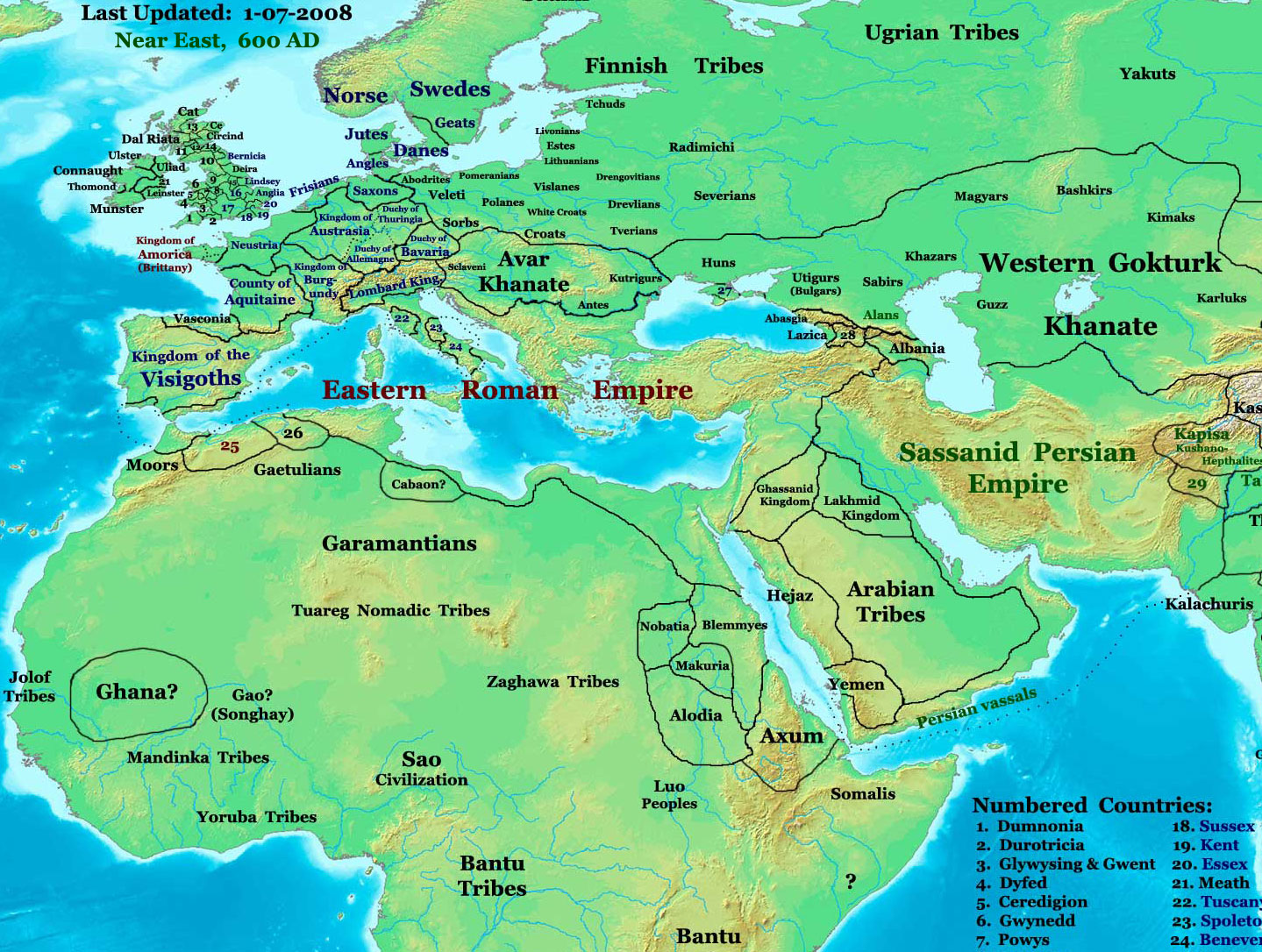
The Kutrigurs were a Turkic nomadic equestrian tribe who flourished on the Pontic–Caspian steppe in the 6th century AD. To their east were the similar Utigurs and both possibly were closely related to the Bulgars. They warred with the Byzantine Empire and the Utigurs. Towards the end of the 6th century they were absorbed by the Pannonian Avars under pressure from the Türks.
The name Kutrigur, also recorded as Kwrtrgr, Κουτρίγουροι, Κουτούργουροι, Κοτρίγουροι, Κοτρίγοροι, Κουτρίγοροι, Κοτράγηροι, Κουτράγουροι, Κοτριαγήροι, has been suggested as a metathecized form of Turkic *Toqur-Oğur, with *quturoğur meaning "nine Oğur (tribes)". David Marshall Lang derived it from Turkic kötrügür (conspicuous, eminent, renowned). Few scholars support theories deriving the Kutrigurs from the Guti/Quti and the Utigurs from the Udi/Uti, of ancient Southwest Asia and the Caucasus respectively, posited by Osman Karatay. Similarly few find Duč'i which is a term for the Bulgars (some read Kuchi) as a root of Kutrigur, posited by Josef Markwart.
Grousset thought that the Kutrigurs were remnants of the Huns, Procopius recounts:
in the old days many Huns, called then Cimmerians, inhabited the lands I mentioned already. They all had a single king. Once one of their kings had two sons: one called Utigur and another called Kutrigur. After their father's death they shared the power and gave their names to the subjected peoples, so that even nowadays some of them are called Utigurs and the others - Kutrigurs.
They occupied the Tanaitic-Maeotic (Don-Azov) steppe zone, the Kutrigurs in the Western part and the Utrigurs towards the East. This story was also confirmed by the words of the Utigur ruler Sandilch:
It is neither fair nor decent to exterminate our tribesmen (the Kutrigurs), who not only speak a language, identical to ours, who are our neighbours and have the same dressing and manners of life, but who are also our relatives, even though subjected to other lords".
Agathias Scholasticus, Greek poet and the principal historian of part of the reign of the Roman emperor Justinian I. recalls the origin of their name as follows:
"In ancient times the Huns inhabited the region east of lake Maeotis to the north of the river Don, as did the rest of the barbarian peoples established in Asia on the near side of Mount Imaeus. All these peoples were referred to by the general name of Scythians or Huns, whereas individual tribes had their own particular names, rooted in ancestral tradition, such as Cotrigurs, Utigurs, Ultizurs, Bourougounds and so on and so forth."
Hub AI
Kutrigurs AI simulator
(@Kutrigurs_simulator)
Kutrigurs
The Kutrigurs were a Turkic nomadic equestrian tribe who flourished on the Pontic–Caspian steppe in the 6th century AD. To their east were the similar Utigurs and both possibly were closely related to the Bulgars. They warred with the Byzantine Empire and the Utigurs. Towards the end of the 6th century they were absorbed by the Pannonian Avars under pressure from the Türks.
The name Kutrigur, also recorded as Kwrtrgr, Κουτρίγουροι, Κουτούργουροι, Κοτρίγουροι, Κοτρίγοροι, Κουτρίγοροι, Κοτράγηροι, Κουτράγουροι, Κοτριαγήροι, has been suggested as a metathecized form of Turkic *Toqur-Oğur, with *quturoğur meaning "nine Oğur (tribes)". David Marshall Lang derived it from Turkic kötrügür (conspicuous, eminent, renowned). Few scholars support theories deriving the Kutrigurs from the Guti/Quti and the Utigurs from the Udi/Uti, of ancient Southwest Asia and the Caucasus respectively, posited by Osman Karatay. Similarly few find Duč'i which is a term for the Bulgars (some read Kuchi) as a root of Kutrigur, posited by Josef Markwart.
Grousset thought that the Kutrigurs were remnants of the Huns, Procopius recounts:
in the old days many Huns, called then Cimmerians, inhabited the lands I mentioned already. They all had a single king. Once one of their kings had two sons: one called Utigur and another called Kutrigur. After their father's death they shared the power and gave their names to the subjected peoples, so that even nowadays some of them are called Utigurs and the others - Kutrigurs.
They occupied the Tanaitic-Maeotic (Don-Azov) steppe zone, the Kutrigurs in the Western part and the Utrigurs towards the East. This story was also confirmed by the words of the Utigur ruler Sandilch:
It is neither fair nor decent to exterminate our tribesmen (the Kutrigurs), who not only speak a language, identical to ours, who are our neighbours and have the same dressing and manners of life, but who are also our relatives, even though subjected to other lords".
Agathias Scholasticus, Greek poet and the principal historian of part of the reign of the Roman emperor Justinian I. recalls the origin of their name as follows:
"In ancient times the Huns inhabited the region east of lake Maeotis to the north of the river Don, as did the rest of the barbarian peoples established in Asia on the near side of Mount Imaeus. All these peoples were referred to by the general name of Scythians or Huns, whereas individual tribes had their own particular names, rooted in ancestral tradition, such as Cotrigurs, Utigurs, Ultizurs, Bourougounds and so on and so forth."
Recent media