
Recent from talks
LL Cool J
Knowledge base stats:
Talk channels stats:
Members stats:
LL Cool J
James Todd Smith (born January 14, 1968), known professionally as LL Cool J (short for Ladies Love Cool James), is an American rapper. He is one of the earliest rappers to achieve commercial success, alongside fellow new school hip hop acts Beastie Boys and Run-DMC.
Signed to Def Jam Recordings in 1984, LL Cool J's breakthrough came with his single "I Need a Beat" and his landmark debut album, Radio (1985). He achieved further commercial and critical success with the albums Bigger and Deffer (1987), Walking with a Panther (1989), Mama Said Knock You Out (1990), Mr. Smith (1995), and Phenomenon (1997). His twelfth album, Exit 13 (2008), was his last in his long-tenured deal with Def Jam. He later re-signed with the label and released his fourteenth album, The FORCE (2024).
LL Cool J has appeared in numerous films, including Toys, Halloween H20, In Too Deep, Any Given Sunday, Deep Blue Sea, S.W.A.T., Mindhunters, Last Holiday, and Edison. He played NCIS Special Agent Sam Hanna in the CBS crime drama television series NCIS: Los Angeles and NCIS: Hawaiʻi. LL Cool J was also the host of Lip Sync Battle on Paramount Network.
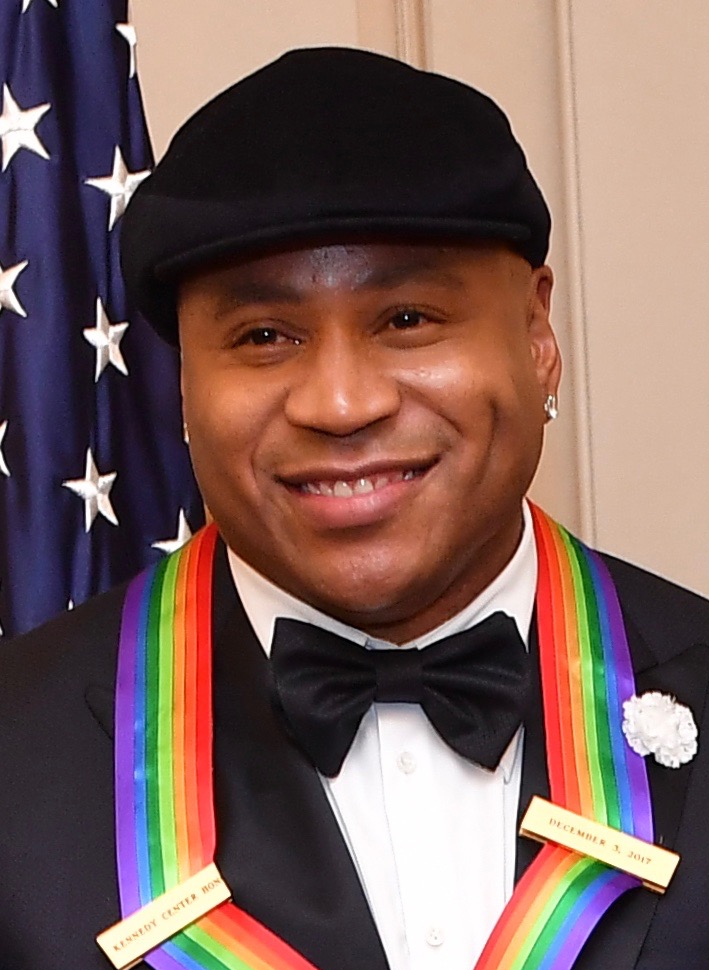
A two-time Grammy Award winner, LL Cool J is known for hip hop songs such as "Going Back to Cali", "I'm Bad", "The Boomin' System", "Rock the Bells", and "Mama Said Knock You Out", as well as R&B hits such as "I Need Love", "Doin' It", "Loungin", "Around the Way Girl" and "Hey Lover". In 2010, VH1 placed him on their "100 Greatest Artists Of All Time" list. In 2017, LL Cool J became the first rapper to receive the Kennedy Center Honors. In 2021, he was inducted into the Rock and Roll Hall of Fame in the Musical Excellence category.
James Todd Smith was born on January 14, 1968, in Bay Shore, on Long Island, New York to Ondrea Griffith (born January 19, 1946) and James Louis Smith Jr., also known as James Nunya. His grandfather, who adopted Smith's mother, is of Barbadian descent. His 1997 memoir says his father abused his mother. According to the Chicago Tribune, "[As] a kid growing up middle class and Catholic in Queens, life for Smith was heart-breaking. His father shot his mother and grandfather, nearly killing them both. When 4-year-old Smith found them, blood was everywhere." In 1972, Smith and his mother moved into his grandparents' home in St. Albans, Queens, where he was raised. He suffered physical and mental abuse from his mother's ex-boyfriend Roscoe.
Smith began rapping at the age of 10, influenced by the hip-hop group The Treacherous Three. In 1984, sixteen-year-old Smith was creating demo tapes in his grandparents' home. His grandfather, a jazz saxophonist, bought him $2,000 worth of equipment, including two turntables, an audio mixer and an amplifier. During this time, Smith reconciled with his father who "made amends for a lot of things" by offering him guidance at the start of his music career. His mother was also supportive of his musical endeavors, using her tax refund to buy him a Korg drum machine. Smith has stated that by the time he received musical equipment from his relatives, he "was already a rapper. In this neighborhood, the kids grow up in rap. It's like speaking Spanish if you grow up in an all-Spanish house." This was at the same time that NYU student Rick Rubin and promoter-manager Russell Simmons founded the then-independent Def Jam label. By using the mixer he had received from his grandfather, Smith produced and mixed his own demos and sent them to various record companies throughout New York City, including Def Jam.
In the VH1 documentary Planet Rock: The Story of Hip Hop and the Crack Generation, Smith revealed that he initially called himself J-Ski, but did not want to associate his stage name with the cocaine culture (The rappers who use "Ski" or "Blow" as part of their stage name, e.g., Kurtis Blow and Joeski Love, were associated with the rise of the cocaine culture.) Under his new stage name LL Cool J (an abbreviation for Ladies Love Cool James), coined by his friend and fellow rapper Mikey D, Smith was signed by Def Jam, which led to the release of his first official record, the 12-inch single "I Need a Beat" (1984). The single was a hard-hitting, streetwise b-boy song with spare beats and ballistic rhymes. Smith later discussed his search for a label, stating "I sent my demo to many different companies, but it was Def Jam where I found my home." That same year, Smith made his professional debut concert performance at Manhattan Center High School. In a later interview, LL Cool J recalled the experience, stating "They pushed the lunch room tables together and me and my DJ, Cut Creator, started playing. ... As soon as it was over there were girls screaming and asking for autographs. Right then and there I said 'This is what I want to do'." LL's debut single sold over 100,000 copies and helped establish both Def Jam as a label and Smith as a rapper. The commercial success of "I Need a Beat", along with the Beastie Boys' single "Rock Hard" (1984), helped lead Def Jam to a distribution deal with Columbia Records the following year.
Radio was released to critical acclaim, both for production innovation and LL's powerful rap. Released November 18, 1985, on Def Jam Recordings in the United States, Radio earned a significant amount of commercial success and sales for a hip hop record at the time. Shortly after its release, the album sold over 500,000 copies in its first five months, eventually selling over 1 million copies by 1988, according to the Recording Industry Association of America. Radio peaked at number 6 on the Top R&B/Hip-Hop Albums chart and at number 46 on the Billboard 200 albums chart. It entered the Top R&B/Hip-Hop Albums chart on December 28, 1985, and remained there for 47 weeks, while also entering the Pop Albums chart on January 11, 1986, remaining on that chart for thirty-eight weeks. By 1989, the album had earned platinum status from the Recording Industry Association of America (RIAA), with sales exceeding one million copies; it had previously earned a gold certification in the United States on April 14, 1986. "I Can't Live Without My Radio" and "Rock the Bells" were singles that helped the album go platinum. It eventually reached 1,500,000 copies sold in the U.S.
Hub AI
LL Cool J AI simulator
(@LL Cool J_simulator)
LL Cool J
James Todd Smith (born January 14, 1968), known professionally as LL Cool J (short for Ladies Love Cool James), is an American rapper. He is one of the earliest rappers to achieve commercial success, alongside fellow new school hip hop acts Beastie Boys and Run-DMC.
Signed to Def Jam Recordings in 1984, LL Cool J's breakthrough came with his single "I Need a Beat" and his landmark debut album, Radio (1985). He achieved further commercial and critical success with the albums Bigger and Deffer (1987), Walking with a Panther (1989), Mama Said Knock You Out (1990), Mr. Smith (1995), and Phenomenon (1997). His twelfth album, Exit 13 (2008), was his last in his long-tenured deal with Def Jam. He later re-signed with the label and released his fourteenth album, The FORCE (2024).
LL Cool J has appeared in numerous films, including Toys, Halloween H20, In Too Deep, Any Given Sunday, Deep Blue Sea, S.W.A.T., Mindhunters, Last Holiday, and Edison. He played NCIS Special Agent Sam Hanna in the CBS crime drama television series NCIS: Los Angeles and NCIS: Hawaiʻi. LL Cool J was also the host of Lip Sync Battle on Paramount Network.
A two-time Grammy Award winner, LL Cool J is known for hip hop songs such as "Going Back to Cali", "I'm Bad", "The Boomin' System", "Rock the Bells", and "Mama Said Knock You Out", as well as R&B hits such as "I Need Love", "Doin' It", "Loungin", "Around the Way Girl" and "Hey Lover". In 2010, VH1 placed him on their "100 Greatest Artists Of All Time" list. In 2017, LL Cool J became the first rapper to receive the Kennedy Center Honors. In 2021, he was inducted into the Rock and Roll Hall of Fame in the Musical Excellence category.
James Todd Smith was born on January 14, 1968, in Bay Shore, on Long Island, New York to Ondrea Griffith (born January 19, 1946) and James Louis Smith Jr., also known as James Nunya. His grandfather, who adopted Smith's mother, is of Barbadian descent. His 1997 memoir says his father abused his mother. According to the Chicago Tribune, "[As] a kid growing up middle class and Catholic in Queens, life for Smith was heart-breaking. His father shot his mother and grandfather, nearly killing them both. When 4-year-old Smith found them, blood was everywhere." In 1972, Smith and his mother moved into his grandparents' home in St. Albans, Queens, where he was raised. He suffered physical and mental abuse from his mother's ex-boyfriend Roscoe.
Smith began rapping at the age of 10, influenced by the hip-hop group The Treacherous Three. In 1984, sixteen-year-old Smith was creating demo tapes in his grandparents' home. His grandfather, a jazz saxophonist, bought him $2,000 worth of equipment, including two turntables, an audio mixer and an amplifier. During this time, Smith reconciled with his father who "made amends for a lot of things" by offering him guidance at the start of his music career. His mother was also supportive of his musical endeavors, using her tax refund to buy him a Korg drum machine. Smith has stated that by the time he received musical equipment from his relatives, he "was already a rapper. In this neighborhood, the kids grow up in rap. It's like speaking Spanish if you grow up in an all-Spanish house." This was at the same time that NYU student Rick Rubin and promoter-manager Russell Simmons founded the then-independent Def Jam label. By using the mixer he had received from his grandfather, Smith produced and mixed his own demos and sent them to various record companies throughout New York City, including Def Jam.
In the VH1 documentary Planet Rock: The Story of Hip Hop and the Crack Generation, Smith revealed that he initially called himself J-Ski, but did not want to associate his stage name with the cocaine culture (The rappers who use "Ski" or "Blow" as part of their stage name, e.g., Kurtis Blow and Joeski Love, were associated with the rise of the cocaine culture.) Under his new stage name LL Cool J (an abbreviation for Ladies Love Cool James), coined by his friend and fellow rapper Mikey D, Smith was signed by Def Jam, which led to the release of his first official record, the 12-inch single "I Need a Beat" (1984). The single was a hard-hitting, streetwise b-boy song with spare beats and ballistic rhymes. Smith later discussed his search for a label, stating "I sent my demo to many different companies, but it was Def Jam where I found my home." That same year, Smith made his professional debut concert performance at Manhattan Center High School. In a later interview, LL Cool J recalled the experience, stating "They pushed the lunch room tables together and me and my DJ, Cut Creator, started playing. ... As soon as it was over there were girls screaming and asking for autographs. Right then and there I said 'This is what I want to do'." LL's debut single sold over 100,000 copies and helped establish both Def Jam as a label and Smith as a rapper. The commercial success of "I Need a Beat", along with the Beastie Boys' single "Rock Hard" (1984), helped lead Def Jam to a distribution deal with Columbia Records the following year.
Radio was released to critical acclaim, both for production innovation and LL's powerful rap. Released November 18, 1985, on Def Jam Recordings in the United States, Radio earned a significant amount of commercial success and sales for a hip hop record at the time. Shortly after its release, the album sold over 500,000 copies in its first five months, eventually selling over 1 million copies by 1988, according to the Recording Industry Association of America. Radio peaked at number 6 on the Top R&B/Hip-Hop Albums chart and at number 46 on the Billboard 200 albums chart. It entered the Top R&B/Hip-Hop Albums chart on December 28, 1985, and remained there for 47 weeks, while also entering the Pop Albums chart on January 11, 1986, remaining on that chart for thirty-eight weeks. By 1989, the album had earned platinum status from the Recording Industry Association of America (RIAA), with sales exceeding one million copies; it had previously earned a gold certification in the United States on April 14, 1986. "I Can't Live Without My Radio" and "Rock the Bells" were singles that helped the album go platinum. It eventually reached 1,500,000 copies sold in the U.S.
Recent media