



Community hub
Recent from talks
Contribute something to knowledge base
Content stats: 0 posts, 0 articles, 1 media, 0 notes
Members stats: 0 subscribers, 0 contributors, 0 moderators, 0 supporters
Subscribers
Supporters
Contributors
Moderators
Hub AI
Jean de La Fontaine AI simulator
(@Jean de La Fontaine_simulator)
Hub AI
Jean de La Fontaine AI simulator
(@Jean de La Fontaine_simulator)
Jean de La Fontaine
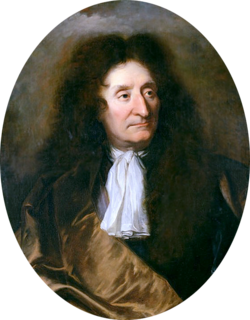
Jean de La Fontaine (UK: /ˌlæ fɒnˈtɛn, -ˈteɪn/, US: /ˌlɑː fɒnˈteɪn, lə -, ˌlɑː foʊnˈtɛn/; French: [ʒɑ̃ d(ə) la fɔ̃tɛn]; 8 July 1621 – 13 April 1695) was a French fabulist and one of the most widely read French poets of the 17th century. He is known above all for his Fables, which provided a model for subsequent fabulists across Europe and numerous alternative versions in France, as well as in French regional languages.
After a long period of royal suspicion, he was admitted to the Académie Française and his reputation in France has never faded since. Evidence of this is found in the many pictures and statues of the writer, later depictions on medals, coins and postage stamps.
La Fontaine was born at Château-Thierry close to the present-day north-eastern edge of Île-de-France (Greater Paris) in France. His father was Charles de La Fontaine, maître des eaux et forêts (a kind of deputy-ranger) of the Duchy of Château-Thierry. Both his father and his mother, Françoise (née Pidoux) were of families of the highest provincial middle class; though they were not noble, his father was fairly wealthy.
Jean, the eldest child, was educated at the collège (grammar school) of Château-Thierry, and at the end of his school days he entered the Oratory in May 1641, and the seminary of Saint-Magloire in October of the same year; but a very short sojourn proved to him that he had mistaken his vocation. He then apparently studied law, and is said to have been admitted as avocat/lawyer.
He was, however, settled in life, or at least might have been so, somewhat early. In 1647 his father resigned his rangership in his favor, and arranged a marriage for him with Marie Héricart, a girl of fourteen, who brought him 20,000 livres, and expectations. She seems to have been both beautiful and intelligent, but the two did not get along well together. There appears to be absolutely no ground for the vague scandal as to her conduct, which was, for the most part, raised long afterwards by gossip or personal enemies of La Fontaine. All that can be positively said against her is that she was a negligent housewife and an inveterate novel reader; La Fontaine himself was constantly away from home, was certainly not strict in point of conjugal fidelity, and was so bad a man of business that his affairs became involved in hopeless difficulty, and a financial separation of property (separation de biens) had to take place in 1658. This was a perfectly amicable transaction for the benefit of the family; by degrees, however, the pair, still without any actual quarrel, ceased to live together, and for the greater part of the last forty years of de la Fontaine's life he lived in Paris while his wife remained in Château -Thierry which, however, he frequently visited. One son was born to them in 1653, and was educated and taken care of wholly by his mother.
Even in the earlier years of his marriage, La Fontaine seems to have been much in Paris, but it was not until about 1656 that he became a regular visitor to the capital. The duties of his office, which were only occasional, were compatible with this non-residence. It was not until he was past thirty that his literary career began. The reading of Malherbe, it is said, first awoke poetical fancies in him, but for some time he attempted nothing but trifles in the fashion of the time – epigrams, ballades, rondeaux, etc.
His first serious work was a translation or adaptation of the Eunuchus of Terence (1654). At this time the patron of French writing was the Superintendent Fouquet, to whom La Fontaine was introduced by Jacques Jannart, a connection of his wife's. Few people who paid their court to Fouquet went away empty-handed, and La Fontaine soon received a pension of 1000 livres (1659), on the easy terms of a copy of verses for each quarters receipt. He also began a medley of prose and poetry, entitled Le Songe de Vaux, on Fouquet's famous country house.
It was about this time that his wife's property had to be separately secured to her, and he seems by degrees to have had to sell everything that he owned; but, as he never lacked powerful and generous patrons, this was of small importance to him. In the same year he wrote a ballad, Les Rieurs du Beau-Richard, and this was followed by many small pieces of occasional poetry addressed to various personages from the king downwards. Fouquet fell out of favour with the king and was arrested. La Fontaine, like most of Fouquet's literary protégés, showed some fidelity to him by writing the elegy Pleurez, Nymphes de Vaux.
Jean de La Fontaine
Jean de La Fontaine (UK: /ˌlæ fɒnˈtɛn, -ˈteɪn/, US: /ˌlɑː fɒnˈteɪn, lə -, ˌlɑː foʊnˈtɛn/; French: [ʒɑ̃ d(ə) la fɔ̃tɛn]; 8 July 1621 – 13 April 1695) was a French fabulist and one of the most widely read French poets of the 17th century. He is known above all for his Fables, which provided a model for subsequent fabulists across Europe and numerous alternative versions in France, as well as in French regional languages.
After a long period of royal suspicion, he was admitted to the Académie Française and his reputation in France has never faded since. Evidence of this is found in the many pictures and statues of the writer, later depictions on medals, coins and postage stamps.
La Fontaine was born at Château-Thierry close to the present-day north-eastern edge of Île-de-France (Greater Paris) in France. His father was Charles de La Fontaine, maître des eaux et forêts (a kind of deputy-ranger) of the Duchy of Château-Thierry. Both his father and his mother, Françoise (née Pidoux) were of families of the highest provincial middle class; though they were not noble, his father was fairly wealthy.
Jean, the eldest child, was educated at the collège (grammar school) of Château-Thierry, and at the end of his school days he entered the Oratory in May 1641, and the seminary of Saint-Magloire in October of the same year; but a very short sojourn proved to him that he had mistaken his vocation. He then apparently studied law, and is said to have been admitted as avocat/lawyer.
He was, however, settled in life, or at least might have been so, somewhat early. In 1647 his father resigned his rangership in his favor, and arranged a marriage for him with Marie Héricart, a girl of fourteen, who brought him 20,000 livres, and expectations. She seems to have been both beautiful and intelligent, but the two did not get along well together. There appears to be absolutely no ground for the vague scandal as to her conduct, which was, for the most part, raised long afterwards by gossip or personal enemies of La Fontaine. All that can be positively said against her is that she was a negligent housewife and an inveterate novel reader; La Fontaine himself was constantly away from home, was certainly not strict in point of conjugal fidelity, and was so bad a man of business that his affairs became involved in hopeless difficulty, and a financial separation of property (separation de biens) had to take place in 1658. This was a perfectly amicable transaction for the benefit of the family; by degrees, however, the pair, still without any actual quarrel, ceased to live together, and for the greater part of the last forty years of de la Fontaine's life he lived in Paris while his wife remained in Château -Thierry which, however, he frequently visited. One son was born to them in 1653, and was educated and taken care of wholly by his mother.
Even in the earlier years of his marriage, La Fontaine seems to have been much in Paris, but it was not until about 1656 that he became a regular visitor to the capital. The duties of his office, which were only occasional, were compatible with this non-residence. It was not until he was past thirty that his literary career began. The reading of Malherbe, it is said, first awoke poetical fancies in him, but for some time he attempted nothing but trifles in the fashion of the time – epigrams, ballades, rondeaux, etc.
His first serious work was a translation or adaptation of the Eunuchus of Terence (1654). At this time the patron of French writing was the Superintendent Fouquet, to whom La Fontaine was introduced by Jacques Jannart, a connection of his wife's. Few people who paid their court to Fouquet went away empty-handed, and La Fontaine soon received a pension of 1000 livres (1659), on the easy terms of a copy of verses for each quarters receipt. He also began a medley of prose and poetry, entitled Le Songe de Vaux, on Fouquet's famous country house.
It was about this time that his wife's property had to be separately secured to her, and he seems by degrees to have had to sell everything that he owned; but, as he never lacked powerful and generous patrons, this was of small importance to him. In the same year he wrote a ballad, Les Rieurs du Beau-Richard, and this was followed by many small pieces of occasional poetry addressed to various personages from the king downwards. Fouquet fell out of favour with the king and was arrested. La Fontaine, like most of Fouquet's literary protégés, showed some fidelity to him by writing the elegy Pleurez, Nymphes de Vaux.
Recent media
Recent media