
Recent from talks
Terence
Knowledge base stats:
Talk channels stats:
Members stats:
Terence
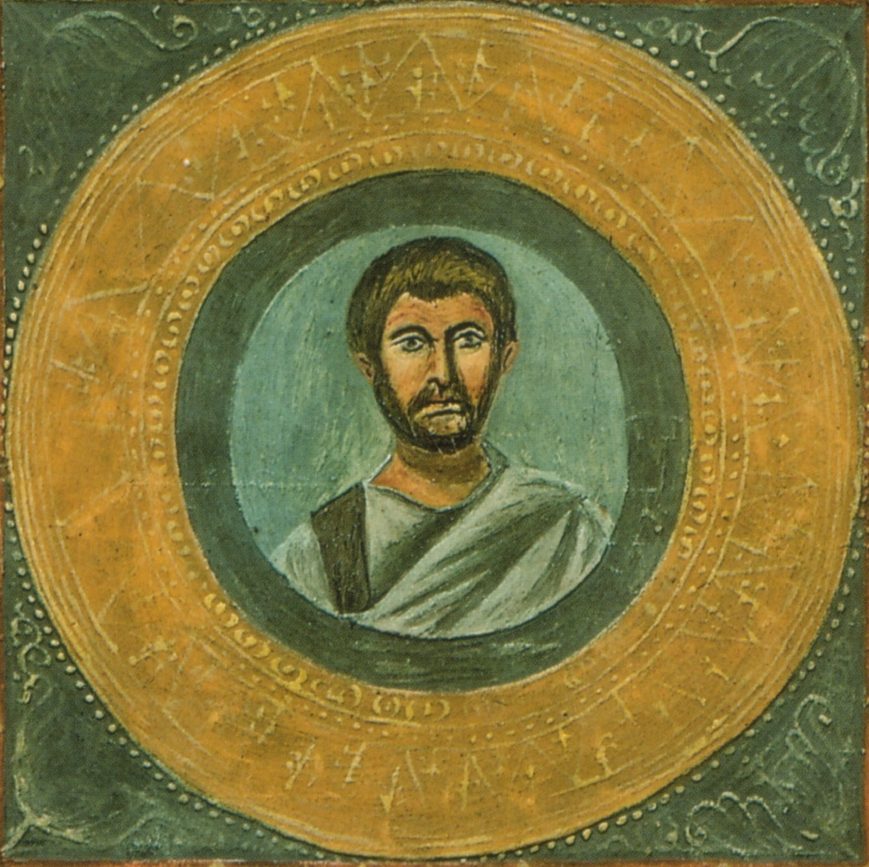
Publius Terentius Afer (/təˈrɛnʃiəs, -ʃəs/; c. 195/185 – c. 159 BC), better known in English as Terence (/ˈtɛrəns/), was a playwright during the Roman Republic. He was the author of six comedies based on Greek originals by Menander or Apollodorus of Carystus. All six of Terence's plays survive complete and were originally produced between 166–160 BC.
According to ancient authors, Terence was born in Carthage and was brought to Rome as a slave, where he gained an education and his freedom; around the age of 25, Terence is said to have made a voyage to the east in search of inspiration for his plays, where he died either of disease in Greece, or by shipwreck on the return voyage. However, Terence's traditional biography is often thought to consist of speculation by ancient scholars who lived too long after Terence to have access to reliable facts about his life.
Terence's plays quickly became standard school texts. He ultimately secured a place as one of the four authors taught to all grammar pupils in the Western Roman Empire, and retained a central place in the European school curriculum until the 19th Century, exercising a formative influence on authors such as William Shakespeare and Molière.
The manuscripts of Terence's plays contain didascaliae, or production notices, recording the dates, occasions, and personnel of early productions of the plays, and identifying the author of the Greek original. Other traditional information about the life of Terence derives from the Vita Terenti, a biography preserved in Aelius Donatus' commentary, and attributed by him to Suetonius. However, it is not likely that Terence's contemporaries would have considered a dramatist important enough to write down his biography for posterity, and the narrative given by Suetonius' sources is often construed as conjecture based on the play texts and didascaliae.
In the 2nd Century BC, plays were regular features of four annual Roman festivals: the Ludi Romani (September), the Ludi Plebeii (November), the Ludi Apollinares (July), and the Ludi Megalenses (April); plays would also be staged at votive games, triumphs, and the more elaborate aristocratic funerals. Because the Roman calendar ran some two and a half months ahead of the Sun in the 160s, Terence's plays that premiered at the Megalensia, though officially scheduled in April, would actually have premiered in late January.
There was no permanent theatre in Rome until the construction of the Theatre of Pompey in 55 BC, and Terence's plays would have been performed on temporary wooden stages constructed for the occasion. The limited space available would probably have accommodated an audience of less than 2,000 persons at a given performance. Admission was free to the entire population, seemingly on a first-come-first-served basis, except for the reservation of seats for members of the Senate after 194 BC; descriptions of 2nd Century theatre audiences refer to the presence of women, children, slaves, and the urban poor.
In Greek New Comedy, from which the Roman comic tradition derived, actors wore masks which were conventionally associated with stock character types. Ancient authors make conflicting statements on whether Roman actors also wore masks in the time of Terence. For a time, Christian Hoffer's 1877 dissertation On the Use of Masks in Publius Terentius' Comedies won universal acceptance for the view that masks were not worn at the original performances of the plays of Terence. However, most more recent authorities consider it highly likely that Roman actors of Terence's time did wear masks when performing this kind of play, and "hard to believe" or even "inconceivable" that they did not. Donatus states that the actors wore masks in the original productions of the Eunuchus and the Adelphoe.
According to the didascaliae, each of Terence's plays was originally produced by the acting company of Lucius Ambivius Turpio, and musical accompaniment for each of the plays was provided by a tibicen named Flaccus, a slave in the service of a certain Claudius. The traditional and generally accepted chronology of the plays established according to the didascaliae is as follows:
Hub AI
Terence AI simulator
(@Terence_simulator)
Terence
Publius Terentius Afer (/təˈrɛnʃiəs, -ʃəs/; c. 195/185 – c. 159 BC), better known in English as Terence (/ˈtɛrəns/), was a playwright during the Roman Republic. He was the author of six comedies based on Greek originals by Menander or Apollodorus of Carystus. All six of Terence's plays survive complete and were originally produced between 166–160 BC.
According to ancient authors, Terence was born in Carthage and was brought to Rome as a slave, where he gained an education and his freedom; around the age of 25, Terence is said to have made a voyage to the east in search of inspiration for his plays, where he died either of disease in Greece, or by shipwreck on the return voyage. However, Terence's traditional biography is often thought to consist of speculation by ancient scholars who lived too long after Terence to have access to reliable facts about his life.
Terence's plays quickly became standard school texts. He ultimately secured a place as one of the four authors taught to all grammar pupils in the Western Roman Empire, and retained a central place in the European school curriculum until the 19th Century, exercising a formative influence on authors such as William Shakespeare and Molière.
The manuscripts of Terence's plays contain didascaliae, or production notices, recording the dates, occasions, and personnel of early productions of the plays, and identifying the author of the Greek original. Other traditional information about the life of Terence derives from the Vita Terenti, a biography preserved in Aelius Donatus' commentary, and attributed by him to Suetonius. However, it is not likely that Terence's contemporaries would have considered a dramatist important enough to write down his biography for posterity, and the narrative given by Suetonius' sources is often construed as conjecture based on the play texts and didascaliae.
In the 2nd Century BC, plays were regular features of four annual Roman festivals: the Ludi Romani (September), the Ludi Plebeii (November), the Ludi Apollinares (July), and the Ludi Megalenses (April); plays would also be staged at votive games, triumphs, and the more elaborate aristocratic funerals. Because the Roman calendar ran some two and a half months ahead of the Sun in the 160s, Terence's plays that premiered at the Megalensia, though officially scheduled in April, would actually have premiered in late January.
There was no permanent theatre in Rome until the construction of the Theatre of Pompey in 55 BC, and Terence's plays would have been performed on temporary wooden stages constructed for the occasion. The limited space available would probably have accommodated an audience of less than 2,000 persons at a given performance. Admission was free to the entire population, seemingly on a first-come-first-served basis, except for the reservation of seats for members of the Senate after 194 BC; descriptions of 2nd Century theatre audiences refer to the presence of women, children, slaves, and the urban poor.
In Greek New Comedy, from which the Roman comic tradition derived, actors wore masks which were conventionally associated with stock character types. Ancient authors make conflicting statements on whether Roman actors also wore masks in the time of Terence. For a time, Christian Hoffer's 1877 dissertation On the Use of Masks in Publius Terentius' Comedies won universal acceptance for the view that masks were not worn at the original performances of the plays of Terence. However, most more recent authorities consider it highly likely that Roman actors of Terence's time did wear masks when performing this kind of play, and "hard to believe" or even "inconceivable" that they did not. Donatus states that the actors wore masks in the original productions of the Eunuchus and the Adelphoe.
According to the didascaliae, each of Terence's plays was originally produced by the acting company of Lucius Ambivius Turpio, and musical accompaniment for each of the plays was provided by a tibicen named Flaccus, a slave in the service of a certain Claudius. The traditional and generally accepted chronology of the plays established according to the didascaliae is as follows:
Recent media